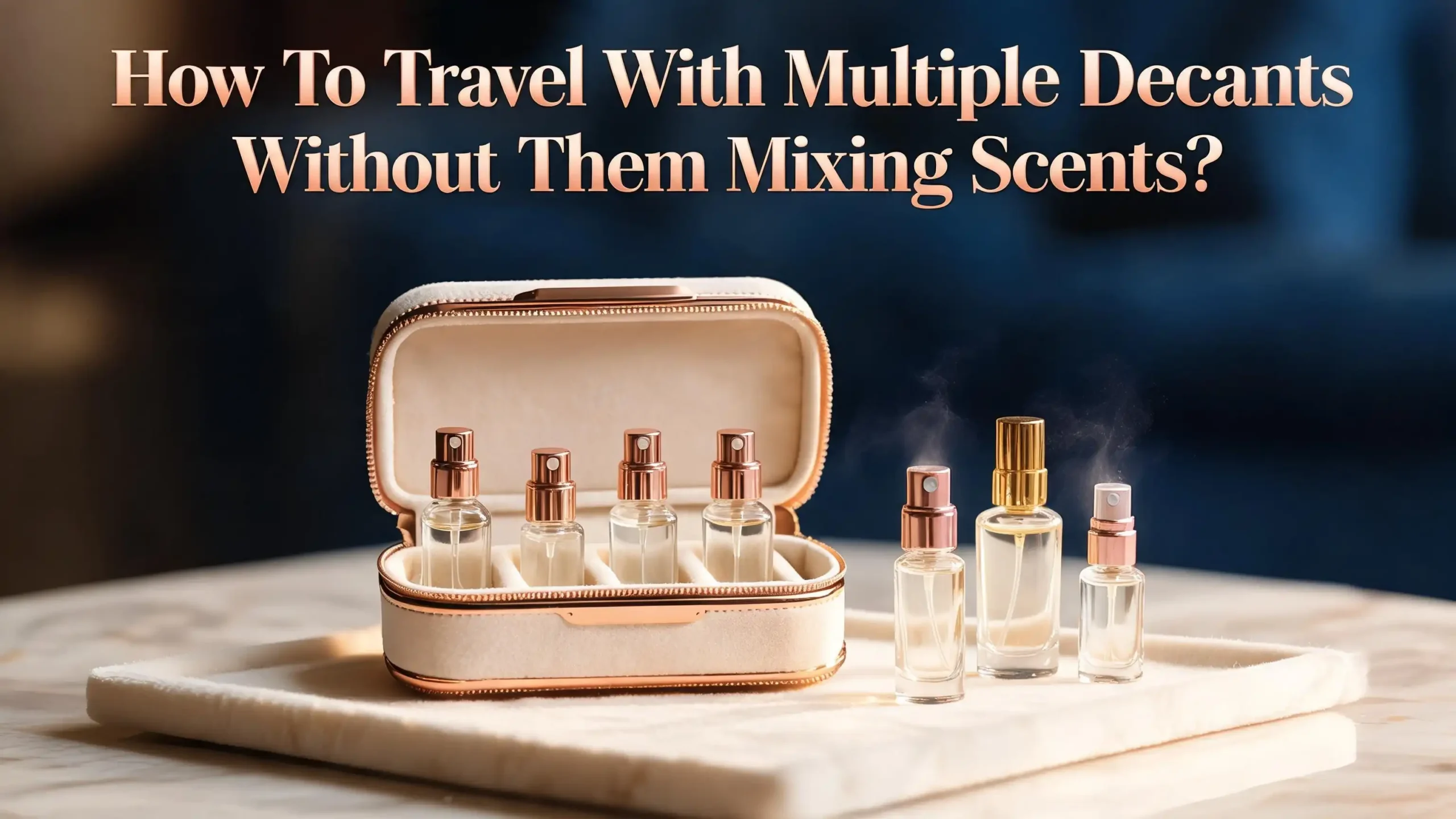
How To Travel With Multiple Decants Without Them Mixing Scents?
You spent weeks picking the perfect fragrances for your trip. You carefully filled each decant. You packed your bag with excitement. Then you arrived at your destination, opened your toiletry pouch, and discovered something awful. Your decants leaked. Your scents mixed. That warm vanilla you love now smells like a chemical experiment gone wrong.
This is a common problem for fragrance lovers who travel. Perfume decants are small, portable, and ideal for trips. But they sit close together in tight spaces. They get tossed around in bags. Cabin pressure changes push liquid through weak seals.
The good news? You can prevent all of this. With the right containers, packing methods, and a few clever tricks, you can keep every single decant smelling exactly as intended. This guide walks you through every step so your fragrances arrive in perfect condition, no matter how far you travel.
In a Nutshell
- Glass containers with tight seals are your best defense against scent mixing. Glass does not absorb fragrance molecules the way plastic does, so your scents stay pure and separated.
- PTFE (plumber’s) tape wrapped around spray nozzle threads creates an airtight seal that stops leaks before they start. This single trick can save your entire fragrance collection during a flight.
- Individual ziplock bags for each decant act as a protective barrier. Even if one decant leaks slightly, the fragrance stays contained and cannot reach other bottles.
- Filling decants to only 80% capacity leaves room for liquid expansion during air travel. Cabin pressure drops at high altitudes and causes the liquid inside your bottles to push outward against the seals.
- Labeling every single bottle clearly prevents accidental misuse and helps you identify scents quickly without opening caps and exposing the fragrance to air.
- Storing decants upright in a padded case reduces the surface area of liquid pressing against the seal and adds physical protection against impact during transit.
Why Fragrance Decants Mix Scents During Travel
The main reason your decants mix scents during travel comes down to leaking. Even a tiny amount of liquid escaping from one bottle can transfer scent molecules to nearby containers. Those molecules cling to the outside of other decants and create a blended smell that masks the original fragrance.
Cabin pressure changes during flights make this problem worse. As a plane climbs to cruising altitude, the air pressure inside the cabin drops. This pressure change causes the liquid and air inside your decant bottles to expand. If your bottle is full or has a weak seal, the expanding liquid forces its way out through any small gap it can find.
Temperature shifts also play a role. A bag left in a hot car or stored in an unheated cargo hold goes through rapid temperature swings. Heat makes liquid expand, and cold makes it contract. These repeated cycles stress the seals on your bottles and gradually weaken them over time.
Finally, physical impact matters. Your luggage gets thrown, stacked, and bounced around during transit. Each jolt pushes your decants against each other. If the caps are loose or the bottles crack, the contents spill and mix with everything nearby.
Choose Glass Decant Bottles Over Plastic
The material of your decant bottle plays a critical role in preventing scent mixing. Glass is the clear winner for travel. It is chemically inert, which means it does not react with the alcohol or fragrance oils in your perfume. Your scent stays exactly the same inside a glass bottle.
Plastic absorbs fragrance molecules. If you put a strong oud perfume in a plastic vial and later rinse it out, the plastic will still smell like oud. This leftover scent transfers to anything stored near it. When multiple plastic decants sit together in a pouch, the absorbed scents slowly release and blend in the enclosed space.
Glass also provides a better seal at the connection point with the spray mechanism. Metal crimp collars on glass atomizers create a tighter bond than the snap or twist connections found on most plastic vials.
If you must use plastic for weight or safety reasons, choose high density polyethylene (HDPE) or polypropylene containers. These plastics resist fragrance absorption better than standard PET bottles. But for the best results, always go with glass and protect it with a padded case during transit.
Use PTFE Tape to Seal Every Bottle
PTFE tape, also known as plumber’s tape or Teflon tape, is one of the most effective tools for preventing decant leaks. Plumbers use this thin white tape to seal pipe threads and stop water from leaking at joints. It works just as well on perfume bottle threads.
To apply it, unscrew the spray nozzle from your decant bottle. Wrap two or three layers of PTFE tape around the threads in the opposite direction of how you screw the nozzle back on. This ensures the tape tightens rather than unwinds when you reattach the sprayer.
The tape fills microscopic gaps between the threads and creates a nearly airtight seal. This seal prevents liquid from seeping out during pressure changes, temperature shifts, or physical jostling. Fragrance community members on forums like Basenotes and Fragrantica consistently recommend this method.
A roll of PTFE tape costs very little, weighs almost nothing, and takes up no space in your luggage. It is one of the simplest and cheapest solutions to a problem that can ruin expensive fragrances. Keep a small roll in your travel kit at all times.
Wrap Each Decant in Its Own Bag
Individual containment is your second line of defense after sealing the bottles themselves. Place each decant in its own small resealable plastic bag before putting it in your travel pouch. This creates a physical barrier between each fragrance.
If one decant does leak slightly, the bag traps the liquid and scent molecules inside. The leaked perfume cannot reach the other bottles. Without this step, a single leak spreads across every decant in your pouch and contaminates them all.
Use small snack sized bags or sample bags rather than large ones. A bag that fits snugly around the bottle reduces the amount of air inside. Less air means less room for evaporated scent molecules to float around and settle on the bag’s surface.
For extra protection, consider wrapping the capped nozzle area with a small piece of plastic cling wrap before placing the decant in the bag. This adds another seal layer right at the most likely leak point. Some fragrance collectors also use small strips of parafilm, a laboratory sealing film, around the spray mechanism for a tight, stretchable seal that conforms to any shape.
Never Fill Decants to Full Capacity
One of the most common mistakes travelers make is filling their decants completely full. A bottle with no headspace is a bottle waiting to leak. The liquid inside needs room to expand, especially during air travel.
Fill each decant to about 80% capacity. This leaves a cushion of air at the top of the bottle. As cabin pressure drops during a flight, the liquid and trapped air expand. The empty space absorbs this expansion without pushing liquid out through the seal.
You can check the fill level on most glass atomizers through the clear window built into the design. If your bottle does not have a window, estimate based on the number of sprays. Most 5ml atomizers hold roughly 50 to 60 sprays. Stop filling at around 40 to 45 sprays to stay at the 80% mark.
This rule applies to road trips and train travel too, not just flights. Temperature changes inside a parked car can be extreme. A sealed decant sitting in direct sunlight on a dashboard can build significant internal pressure even at ground level.
Invest in a Dedicated Decant Travel Case
A padded travel case designed for small bottles makes a huge difference in keeping your decants safe and separated. These cases have individual slots or elastic loops that hold each bottle in place. The bottles cannot touch each other or bounce around during transit.
Physical separation prevents cross contamination in two ways. First, it stops bottles from colliding and potentially cracking or loosening caps. Second, it keeps distance between each decant so that any faint scent escaping from one bottle cannot settle on another.
Look for a case with foam inserts or padded dividers. Some fragrance enthusiasts use small ammo boxes designed for bullet cartridges, which happen to be the perfect size for 2ml and 5ml vials. Others use pill organizer cases with individual compartments that snap shut.
The case should also be water resistant or lined with a wipeable material. If a leak does occur, you want the case to contain the damage rather than absorbing the fragrance into fabric that will then smell for weeks. A hard shell case offers the best impact protection for checked luggage.
Label Every Single Decant Clearly
Labeling seems like a minor detail, but it solves a surprisingly common problem. Without labels, you end up opening multiple decants to sniff and identify them. Each time you open a cap, you expose the fragrance to air and release scent molecules into the space around your other bottles.
Use small waterproof labels or a fine point permanent marker to write the fragrance name directly on the bottle. Include the concentration type (EDT, EDP, parfum) if you carry similar scents in different strengths. Some travelers also note the fill date so they know how long the decant has been stored.
Labels also help you organize your collection by category. You might group your fresh citrus scents in one section of your case and your heavier evening fragrances in another. This organization reduces unnecessary handling and keeps your decants sealed until the exact moment you need them.
If your glass bottles have a smooth surface that resists markers, wrap a small piece of white medical tape around the bottle and write on that instead. The tape peels off cleanly when you no longer need it.
Store Decants Upright During Transit
The position of your decants inside your bag directly affects leak risk. A bottle stored on its side or upside down puts the entire surface area of the liquid against the seal. This constant pressure increases the chance of a slow leak, especially over a long journey.
Keep all decants upright with the spray nozzle pointing up. In this position, the liquid settles at the bottom of the bottle. Only a small amount of vapor contacts the seal, not the full weight of the liquid. This dramatically reduces pressure on the weakest point of the container.
If your travel case allows it, pack it so the bottles stand vertically inside your bag. Place the case in a section of your luggage where it will not tip over or get flipped during handling. Wedging it between soft items like folded clothes helps keep it stable.
For checked luggage, consider placing the case in the center of your suitcase surrounded by clothing on all sides. This position provides the most cushioning and the least chance of shifting during rough handling by airport baggage crews.
Pack Decants in Your Carry On Bag
Checked luggage goes through extreme conditions that increase leak risk. The cargo hold temperature can drop significantly during a flight. Baggage handlers toss and stack suitcases without concern for fragile contents. Pressure changes in the unpressurized sections of some cargo holds are more severe than in the cabin.
Your carry on bag stays with you in the controlled cabin environment. Temperature remains stable. You can position the bag carefully in the overhead bin or under the seat. You avoid the rough handling that checked bags endure.
TSA rules allow you to bring perfume in carry on luggage as long as each container holds 3.4 ounces (100ml) or less and fits in your quart sized clear bag. Most fragrance decants are 5ml to 10ml, which is well under this limit. You can easily fit a dozen small decants into a single quart bag.
If you carry many decants, place your sealed travel case inside the quart bag for security screening. This keeps everything organized and visible. TSA agents can see all your bottles at a glance without needing to open individual containers, which reduces handling and keeps your seals intact.
Clean Shared Tools Between Decanting Sessions
If you use a syringe, funnel, or pipette to fill your decants, clean the tool thoroughly between each fragrance. Residue from one perfume left on a shared tool transfers directly into the next bottle you fill. This is one of the most overlooked causes of scent mixing.
Rinse the tool with high proof isopropyl alcohol after each use. Spray or pipette the alcohol through the tool several times to flush out fragrance residue. Then let it air dry completely before using it with the next scent. Do not use water alone because water does not dissolve the oil based components in many fragrances.
Some perfume enthusiasts keep separate syringes for different fragrance families. One syringe for fresh and citrus scents, another for heavy orientals, and a third for floral fragrances. This extra step reduces the chance of cross contamination even further.
Pump to fill atomizers that connect directly to your perfume bottle nozzle eliminate the need for separate tools entirely. The fragrance transfers from the original bottle to the travel atomizer without touching any intermediate surface. This is the cleanest method for filling decants.
Avoid Strong Heat and Direct Sunlight
Heat and sunlight do more than just degrade your fragrance quality. They also increase the internal pressure inside your decant bottles. A sealed glass vial sitting in direct sunlight on a hotel windowsill or a car dashboard heats up quickly. The expanding liquid pushes against the seal and can force microscopic amounts of fragrance out.
Store your decant case in a cool, dark spot during your trip. A dresser drawer, a closet shelf, or the inside pocket of a bag kept away from windows all work well. Avoid leaving your fragrances in a parked car, where interior temperatures can reach extreme levels within minutes.
UV light from the sun also breaks down fragrance molecules over time. This changes the scent profile of your perfume. What started as a bright, clean citrus scent can develop off notes or lose its top notes entirely after extended sun exposure. These degraded molecules can produce a stronger, more noticeable odor that bleeds through seals and affects nearby decants.
On the plane, tuck your decant case into the seat pocket or your personal item rather than leaving it in the overhead bin near the cabin ceiling where warm air accumulates.
What To Do If a Decant Leaks During Travel
Even with perfect preparation, accidents can happen. Knowing how to respond quickly limits the damage and prevents one leak from ruining your entire collection.
Isolate the leaking decant immediately. Remove it from your case and place it in a fresh resealable bag. Wipe the exterior of all nearby bottles with a clean tissue to remove any transferred liquid. This stops the leaked scent from settling on other containers and mixing with their fragrances.
Open your decant case and air it out in a well ventilated area. The lingering scent molecules in the enclosed space need to dissipate before you close the case again. Leave the case open for at least 30 minutes.
If the leak contaminated the padding or lining of your case, wipe it down with isopropyl alcohol on a cloth or cotton pad. The alcohol dissolves the fragrance residue and evaporates quickly. Let the case dry completely before repacking your bottles.
For the leaking bottle itself, check the seal, threads, and body for damage. If the threads are stripped or the glass is cracked, transfer the remaining fragrance to a new container using a clean syringe. Do not continue traveling with a compromised bottle.
Frequently Asked Questions
Can I bring perfume decants on a plane?
Yes, you can bring perfume decants on a plane in both carry on and checked luggage. For carry on bags, each container must hold 3.4 ounces (100ml) or less and fit inside your one quart sized clear plastic bag. Most fragrance decants are 5ml or 10ml, so they easily meet this requirement. There is no limit on the number of decants you can pack in checked luggage.
How do I clean a glass decant to use for a different fragrance?
Rinse the glass bottle and spray mechanism with isopropyl alcohol several times. Spray the alcohol through the nozzle to flush the internal tube. Then rinse with distilled water and let the bottle air dry completely. Repeat the alcohol rinse if any scent remains. Glass cleans more thoroughly than plastic, which is another reason to choose glass bottles for your decants.
Does plastic absorb perfume scent permanently?
Plastic does absorb fragrance molecules, and removing the scent completely is very difficult. Standard plastic vials often retain odors even after thorough cleaning. If you need to reuse containers for different fragrances, glass is the better choice because it does not absorb scent. Use plastic vials only for single fragrance storage where you do not plan to switch scents.
How many decants should I bring on a trip?
This depends on the length and nature of your trip. A general guideline is one to two fragrances per day of travel, with a mix of daytime and evening options. For a week long trip, five to seven decants usually provide enough variety without overcomplicating your packing. Choose versatile scents that work in multiple settings to reduce the number you need.
Is parafilm better than PTFE tape for sealing decants?
Both work well, but they serve slightly different purposes. PTFE tape wraps around the threads of the spray mechanism and fills gaps in the screw connection. Parafilm stretches and wraps around the outside of the cap and bottle neck to create a flexible, airtight barrier. Using both together provides the strongest seal. Many experienced fragrance collectors use PTFE tape on the threads first and then wrap parafilm over the cap for double protection.
Can temperature changes ruin my decanted perfume?
Extreme or repeated temperature changes can degrade fragrance quality over time. Heat accelerates the breakdown of aromatic compounds, especially delicate top notes. Cold temperatures usually do not damage the fragrance itself, but the expansion and contraction cycle from repeated temperature swings can weaken bottle seals. Store your decants at a stable, cool temperature as much as possible during your trip.

Hi, I’m Lily! I started this blog to share honest reviews, real comparisons, and helpful guides so you can find your perfect scent without the guesswork. Welcome to my scented world!