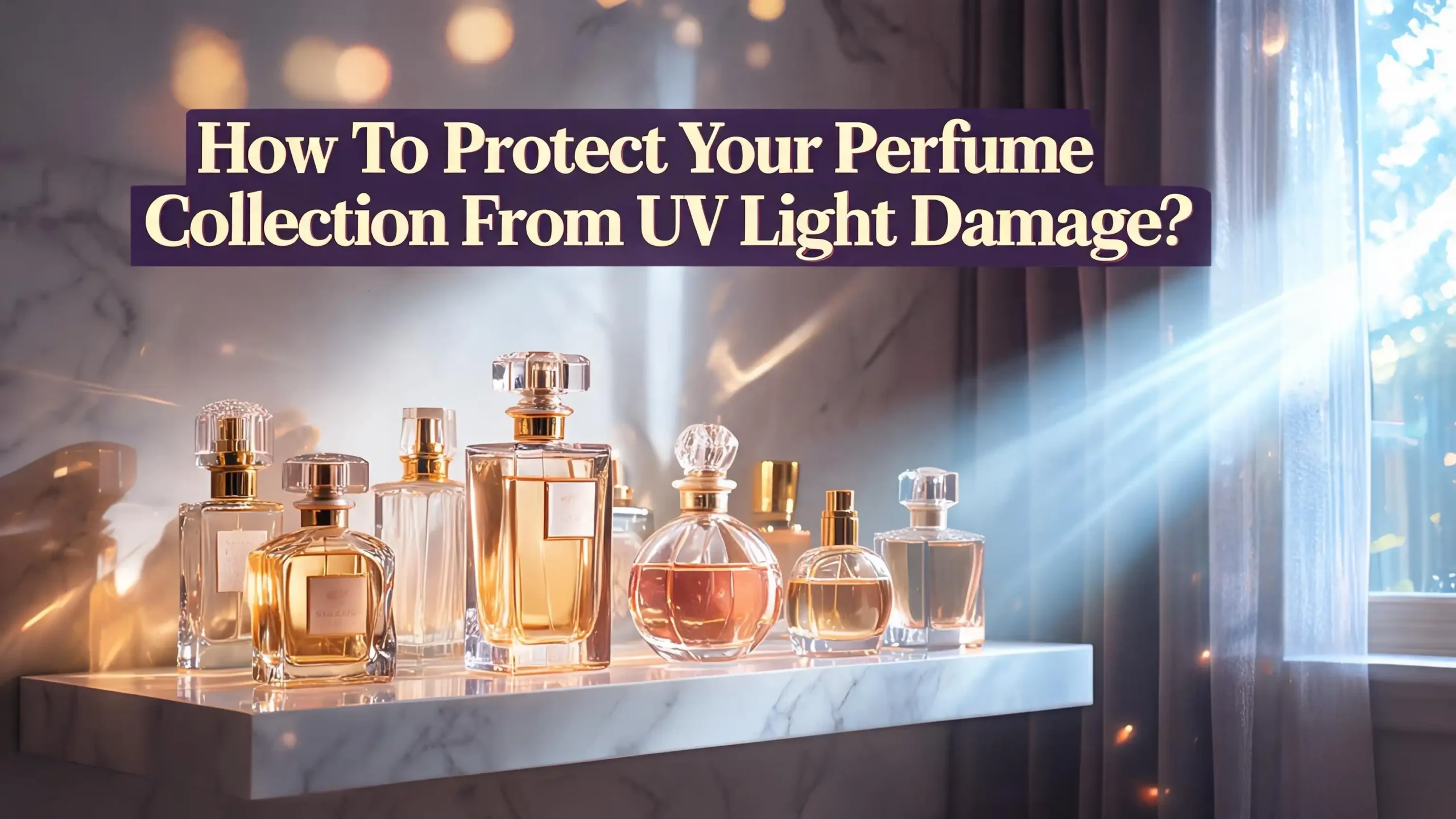
How To Protect Your Perfume Collection From UV Light Damage?
Your perfume collection is more than just a shelf of bottles. It is a curated set of memories, emotions, and often a serious investment. But there is a silent threat working against your fragrances every single day, and most collectors never see it coming.
UV light is one of the most destructive forces your perfume collection faces, and it does its damage slowly, invisibly, and permanently.
The good news is that protecting your collection does not require expensive equipment or a total room makeover. You just need the right information and a few smart habits.
This guide gives you practical, step-by-step solutions to stop UV damage before it starts, spot it early, and keep your perfumes smelling exactly as they were meant to.
In a Nutshell
- UV light breaks down fragrance molecules at the chemical level, causing permanent changes in scent, color, and performance that cannot be reversed once they occur.
- Both natural sunlight and artificial light (especially halogen and fluorescent bulbs) emit UV rays that are harmful to perfume over time, so no light source should be considered fully safe.
- Citrus, floral, and top notes are the most vulnerable to UV damage because they contain lighter, more reactive molecular structures that break down faster under UV exposure.
- Even just 2 to 3 weeks of sunlight exposure can cause visible discoloration and noticeable scent changes in an unprotected bottle, according to fragrance storage research.
- The most effective protection strategies include using original packaging, choosing dark storage spaces, applying UV-filtering window films, and switching to LED lighting in rooms where you store your collection.
- Prevention is the only real solution because UV damage is irreversible. Once a perfume’s chemical structure is altered, no amount of storage correction can restore the original scent or color.
What UV Light Actually Does to Your Perfume?
To protect your collection effectively, you need to understand exactly what you are protecting it against. UV light is a form of electromagnetic radiation that carries enough energy to break chemical bonds.
Perfumes are made up of complex blends of aromatic molecules, natural extracts, and synthetic compounds dissolved in alcohol. These molecules are held together by chemical bonds, and those bonds are what give each fragrance its unique identity.
When UV photons strike perfume molecules, they transfer energy directly into the chemical structure. This energy disrupts existing molecular bonds and triggers a process called photo-oxidation.
The result is a chain reaction where fragrance molecules break down, form new compounds, and lose the precise balance that the perfumer intended. According to research from Goldfield and Banks, even brief exposure of just 2 to 3 weeks under direct sunlight can produce measurable scent and color changes.
Studies also show that about 56% of UVA rays can penetrate clear glass bottles, which means the glass itself offers almost no protection. The damage is cumulative, meaning it builds up over time with every passing day of exposure. Once those molecular bonds are broken, they cannot be repaired.
The Difference Between UVA and UVB Damage to Fragrance
Not all UV radiation works the same way on your perfume. Understanding the difference between UVA and UVB rays helps you choose the right protection strategy for your storage setup.
UVA rays have a longer wavelength and can penetrate deeper into materials, including clear glass. They are present throughout the entire day and in all seasons, even on cloudy days. UVA rays are responsible for the slow, gradual breakdown of aromatic compounds inside a bottle.
This type of damage is particularly insidious because it happens even when there is no direct sunlight, just ambient daylight. UVB rays, on the other hand, have a shorter wavelength and carry more energy per photon. They cause faster, more intense damage when exposure is direct. UVB rays are most intense during midday hours and in summer months.
For perfume collectors, UVA rays are the bigger long-term threat because they are harder to avoid and are present even on overcast days. Standard glass windows block most UVB but allow a significant portion of UVA through.
This means a bottle sitting on a windowsill that never sees direct sunlight is still being damaged by ambient UVA radiation every single day. Your protection strategy needs to address both types to be fully effective.
How to Spot UV Damage in Your Perfume Collection?
Catching UV damage early allows you to move affected bottles to better storage and prevent further harm. There are several clear warning signs that a perfume has been compromised by light exposure.
Color change is the most visible sign. A perfume that was once clear, pale gold, or light amber may turn a darker yellow, deep brown, or even develop a greenish tint. Natural ingredients like vanilla, labdanum, and certain resins darken when their molecules break down under UV exposure.
Unnatural or rapid discoloration is a reliable indicator that something is wrong. Cloudiness or visible sediment is another red flag. When molecular structures collapse, they can form new particles that make a once-clear liquid appear hazy or murky. A change in the scent profile is the most critical sign of all.
If your fragrance smells flat, sour, metallic, plasticky, or has lost its bright opening notes entirely, UV damage is likely the cause. Top notes, especially citrus, bergamot, and light florals, are usually the first to disappear.
A perfume that once opened with a burst of fresh lemon but now smells dull or chemical has almost certainly been damaged by light. You may also notice that the fragrance performs differently on your skin, fading faster or projecting differently than it used to.
Step 1: Move Your Bottles Away From Windows and Sunlight
The single most impactful step you can take right now is to relocate any perfumes stored near windows. Direct sunlight is the most damaging source of UV radiation your collection will encounter, and even positioning bottles a few feet away from a window without moving them into full darkness still exposes them to indirect UV rays throughout the day.
Walk through your home and identify every spot where you currently store or display perfume. Any location within sight of a window, on a bathroom counter, on a windowsill, or on an open vanity table near natural light should be considered a high-risk zone.
Move those bottles immediately to an interior spot in the room, ideally inside a closed cabinet, a drawer, or a closet. The further a bottle is from any light source, the better. If you live in an apartment or room where almost every wall has a window, prioritize keeping bottles in a closed container rather than an open display.
Consistency matters here. A bottle moved to safety today but returned to a sunny spot occasionally still accumulates UV damage over time. Make the change permanent.
Step 2: Use the Original Packaging as Your First Line of Defense
One of the simplest and most effective UV protection tools is already sitting in your storage area or recycling bin. The original box your perfume came in is specifically designed to block light and protect the bottle inside.
High-end perfume brands, particularly niche and luxury houses, use opaque boxes made from thick cardboard with internal structures that hold the bottle securely. These boxes are not just decorative packaging. They function as a practical UV barrier.
The cardboard blocks both UVA and UVB radiation entirely, and many luxury boxes include additional inner wrapping or tissue paper that adds another layer of protection. Keep every original box your perfumes come in, and store each bottle inside its box when not in use.
If you have already discarded the boxes, you can substitute them with opaque pouches, cloth bags, or small wooden boxes that block light completely. Even wrapping a bottle in a piece of dark fabric or a thick paper bag will reduce UV exposure significantly compared to leaving it uncovered on a shelf.
For collectors with large numbers of bottles, labeling each box on the outside means you can still find what you need without exposing every bottle to light just to identify them.
Step 3: Choose the Right Storage Location in Your Home
The ideal storage location for your perfume collection shares three characteristics: it is cool, it is dark, and it has stable conditions. Finding or creating that kind of space at home is easier than most people expect.
A bedroom closet or wardrobe is one of the best options available in most homes. It is naturally away from sunlight, maintains a fairly consistent temperature, and keeps humidity low. A dedicated drawer inside a dresser works equally well.
Avoid storing perfumes in the bathroom, even inside a cabinet, because bathrooms experience constant temperature and humidity fluctuations from showers and baths. Research shows that bathroom storage can cause noticeable fragrance degradation in as little as three to six months.
A kitchen cupboard may seem like a good option, but the heat generated by cooking and appliances makes it a poor choice. The best temperature range for perfume storage is between 60 and 75 degrees Fahrenheit (15 to 24 degrees Celsius).
Spaces that stay within this range without significant fluctuation are ideal. If you have a dedicated dressing room or walk-in closet, that is your best option. If not, a stable interior closet or drawer in a bedroom away from exterior walls will serve your collection well.
Step 4: Apply UV-Filtering Window Film in Your Storage Room
If moving your perfume collection away from windows is not possible, or if you simply want to add a layer of protection to the room where you store your fragrances, UV-filtering window film is an excellent solution.
UV window films are thin, adhesive sheets that apply directly to glass windowpanes. High-quality films can block up to 99% of UV radiation while still allowing visible light to pass through. This means your room still looks bright and natural, but the harmful UV rays that damage perfume molecules are filtered out before they reach your collection.
Brands like 3M produce well-known UV-filtering window films that are widely available and can be installed at home with minimal tools. These films are commonly used in museums and galleries to protect artworks and artifacts from UV-related fading, and they work on the same principle for fragrance protection.
Installation involves cleaning the window surface, cutting the film to size, and applying it with a squeegee to remove air bubbles. The films are durable and typically last several years before needing replacement. This is a particularly valuable investment if your storage room or display area has large windows that let in a lot of ambient light throughout the day.
Step 5: Switch to LED Lighting Near Your Collection
Most people focus entirely on sunlight when thinking about UV protection for perfumes, but artificial lighting can also contribute to fragrance degradation over time. The type of bulb you use in rooms where you store or display your collection matters more than you might expect.
Halogen bulbs and fluorescent tubes both emit measurable amounts of UV radiation. If your collection is stored or displayed under these light sources for extended periods every day, the cumulative UV exposure adds up. LED bulbs, by contrast, emit negligible amounts of UV radiation.
Switching to LED lighting in your storage space, display area, or any room where perfumes sit out in the open is a straightforward upgrade that reduces UV exposure significantly. LED bulbs also generate much less heat than halogen or incandescent bulbs, which is an added benefit because heat is also damaging to fragrance.
Look for LED bulbs labeled with low or no UV output when shopping for replacements. This swap is especially important if you enjoy using accent lighting inside a display cabinet, where bulbs may be positioned close to bottles and running for several hours each day. Keep lights off when you are not actively viewing or using your collection to reduce UV and heat exposure further.
Step 6: Use Amber Glass or Dark Bottles for Decanting
If you transfer your fragrances into other containers for travel, daily use, or display purposes, the type of container you use has a direct impact on how much UV protection the perfume receives inside.
Amber glass is the gold standard for UV protection in bottles. Scientific research shows that amber glass blocks up to 99% of UV rays below 450 nanometers, which covers the most damaging portions of the UV spectrum. This is why amber glass is used in pharmaceuticals, essential oils, and high-end fragrance decants.
The iron-sulfur compounds in amber glass are what give it the ability to filter UV light at the molecular level. Dark cobalt blue glass also offers moderate UV protection, though not quite as effective as amber. Both are dramatically better than clear glass, which allows the majority of UV radiation to pass straight through.
If you use a travel atomizer or decant bottle, choose amber glass over clear glass or plastic. Plastic is a particularly poor choice because it not only offers no UV protection but can also allow oxygen to seep in and potentially leach chemical compounds into the fragrance.
For collectors who like to transfer samples or decants into smaller bottles, amber glass vials are an affordable and highly effective option.
Step 7: Build or Buy a UV-Safe Display Cabinet
For collectors who love to see their bottles on display, the challenge is finding a way to enjoy the visual appeal of your collection without sacrificing its protection. A thoughtfully chosen display cabinet can give you both.
Cabinets with solid, opaque doors are the safest option. They block all light when closed and allow you to open them only when you are actively choosing a fragrance to wear. Wood-fronted wardrobes, sideboards with solid panel doors, or dedicated perfume storage cabinets with non-transparent doors all qualify.
Some collectors use vintage medicine cabinets or jewelry armoires because of their solid construction and dark interiors. If you prefer a glass-fronted display cabinet to show off your collection, look specifically for cabinets that use UV-filtering glass or UV-filtering acrylic panels instead of standard glass.
These materials filter out harmful UV radiation while still allowing you to see your bottles clearly. Some specialty display case manufacturers now offer UV-protective glazing specifically designed for collectibles and fragrance displays.
When in doubt, a solid-door cabinet combined with LED lighting inside is both practical and visually appealing. You get to showcase your collection when the doors are open and protect it fully when they are closed.
Step 8: Manage Temperature and Humidity Alongside UV Protection
UV protection is the most important factor in preserving your perfume collection, but it works best when combined with proper temperature and humidity management. These three factors interact with each other, and neglecting one while managing the others still leaves your collection vulnerable.
According to the Arrhenius equation, every 10-degree Celsius increase in temperature doubles the rate of chemical reactions in a perfume. A bottle stored at 86°F (30°C) degrades roughly twice as fast as one stored at 68°F (20°C). High heat essentially accelerates the same kind of molecular breakdown that UV light causes, which means a hot storage space compounds the damage of UV exposure significantly.
Aim to keep your storage area between 60 and 75°F (15 to 24°C) consistently. Avoid exterior walls, areas near heating vents, and spaces where temperature changes dramatically throughout the day or across seasons.
For humidity, the ideal range is 40 to 60% relative humidity. High humidity triggers a chemical process called hydrolysis that breaks down the natural oils in a fragrance. You can place silica gel packets inside storage drawers or cabinets to absorb excess moisture.
A small digital hygrometer, available inexpensively at most hardware stores, lets you monitor humidity levels in your storage space accurately. Managing these environmental factors alongside UV protection gives your collection the most complete and effective long-term care possible.
Step 9: Rotate and Audit Your Collection Regularly
Even the best storage setup requires ongoing attention. Building a regular rotation and audit routine helps you catch any emerging problems early and ensures that every bottle in your collection benefits equally from your protection strategies.
Audit your collection every three to six months. Open each box, examine each bottle visually for color changes, cloudiness, or sediment, and take a quick smell of the cap or a brief spray on paper to check for scent integrity. Label the back of each box with the date you first opened the bottle and the storage location, so you can track how each fragrance is aging over time.
Rotate bottles in a display case so that no single bottle sits in a high-visibility, potentially higher-exposure spot indefinitely. Bottles you use frequently can stay more accessible, while ones you save for special occasions should remain in their boxes in your darkest, coolest storage space.
If you have a large collection with bottles you have not used in years, periodically check whether any have developed issues and consider whether to use them sooner rather than later.
Using a fragrance before it degrades is always preferable to preserving it until it becomes unwearable. An audit routine also gives you a clear picture of how your storage conditions are performing so you can make adjustments when needed.
Step 10: Special Considerations for Natural and Niche Fragrances
Not all perfumes face the same level of UV vulnerability. Natural and niche fragrances tend to be significantly more sensitive to UV damage than mainstream synthetic fragrances, and they deserve extra care in your storage strategy.
Natural perfumes contain high concentrations of essential oils, absolutes, and botanical extracts. These ingredients are composed of complex, delicate molecules that are particularly reactive to UV radiation. Citrus oils such as bergamot, lemon, and grapefruit contain compounds called terpenes that break down quickly under UV exposure, often within days of direct sunlight.
Light floral extracts like neroli, rose, and jasmine absolute are similarly fragile. Many niche and artisan perfumers use minimal synthetic stabilizers in their formulations, which means the fragrance has less built-in resistance to environmental damage.
If you invest in natural or niche fragrances, these bottles should receive your highest level of UV protection. Keep them in their original boxes at all times, store them in the darkest and coolest part of your storage area, and avoid displaying them in open cabinets.
Even a few weeks of ambient UV exposure can noticeably diminish the brightness and complexity of a natural fragrance. Synthetic fragrances are more resistant but still benefit from proper UV protection, especially when it comes to preserving lighter top notes over the long term.
Step 11: What To Do If Your Perfume Has Already Been Damaged
Despite best efforts, some bottles in a collection may already show signs of UV damage. Knowing how to respond when this happens helps you manage the situation practically and prevent further deterioration.
The first and most important thing to understand is that UV damage to perfume is irreversible. Once the molecular structure of a fragrance has been altered by UV radiation, no storage technique or treatment can restore it to its original state. There is no way to repair broken chemical bonds or remove the new off-note compounds that formed during photo-oxidation.
What you can do is stop the damage from progressing further by immediately moving the affected bottle to a dark, cool, properly managed storage space. If the fragrance still smells acceptable to you, even if slightly different from the original, it is safe to continue wearing it.
UV-damaged perfume is not harmful to apply to skin. It has simply changed character, which many collectors find disappointing but not dangerous. If the scent has become unpleasant or the discoloration is severe, consider retiring the bottle.
Document what happened and use it as motivation to improve your UV protection setup so other bottles in your collection do not face the same outcome. Going forward, the knowledge you now have about UV damage makes you a better-equipped collector.
Step 12: Long-Term Archiving for Rare and Vintage Perfumes
If you collect rare, discontinued, or vintage perfumes, your UV protection strategy needs to go a step further than standard collection care. These bottles are often irreplaceable, and a single oversight can permanently destroy something that cannot be found again.
Vintage fragrances are especially vulnerable because their formulations were created before modern synthetic stabilizers became common. Many older perfumes rely entirely on natural materials that are highly sensitive to light, heat, and oxygen.
Bottles from the 1960s through the 1990s, in particular, may already have experienced some degree of change simply due to age, making additional UV stress even more harmful.
For archiving rare and vintage pieces, consider investing in a specialized storage environment. A wine cooler or mini-fridge set to approximately 54°F (12°C) with low humidity provides near-ideal conditions for long-term preservation.
These appliances maintain consistent cool temperatures and are completely dark inside when the door is closed, naturally eliminating UV exposure. Some serious collectors go further by displacing oxygen inside bottles using inert gas such as argon, a technique borrowed from fine wine preservation.
This slows oxidation dramatically for bottles that are only partially full. Label and photograph each rare bottle carefully before placing it in archival storage, so you have a record of its original condition. Treat these pieces with the same care you would give any irreplaceable art object.
Frequently Asked Questions
Does indirect sunlight damage perfume the same way direct sunlight does?
Yes, indirect sunlight still contains significant levels of UVA radiation and can damage perfume over time. UVA rays are present throughout the entire day, in all seasons, and can penetrate through windows and bounce off reflective surfaces. While direct sunlight causes faster and more intense damage, indirect or ambient UV exposure accumulates over weeks and months and will alter a fragrance’s scent and color if the bottle is unprotected. Storing perfumes in a closed, opaque container eliminates this risk entirely.
Can I store my perfume in the refrigerator?
Yes, a standard household refrigerator or a dedicated mini-fridge can work well for perfume storage. The fridge provides cool, stable temperatures and complete darkness, which addresses two of the major threats to fragrance longevity. Set the fridge to around 54 to 60°F if possible. Be mindful of food odors in a shared refrigerator, as some fragrances may absorb strong smells through their caps over extended periods. A dedicated mini-fridge used only for fragrance storage is the safest option if you choose this approach.
How long does it take for UV light to visibly damage a perfume?
Research indicates that noticeable changes in scent and color can occur after just 2 to 3 weeks of direct sunlight exposure in an unprotected clear glass bottle. For bottles stored with some indirect light exposure, damage accumulates more slowly but is still measurable over months. The speed of damage depends on the intensity of the UV source, the type of fragrance molecules present, whether the bottle is in clear or colored glass, and how consistently the exposure occurs.
Are dark-colored perfume bottles fully UV-proof?
No, dark-colored bottles such as those made from amber or cobalt blue glass offer significantly better UV protection than clear glass but are not completely UV-proof. Amber glass can block up to 99% of UV rays below 450 nanometers, which covers the most damaging wavelengths. However, no colored glass eliminates all UV exposure entirely. For maximum protection, even dark glass bottles should be stored in their original boxes or inside a closed, opaque cabinet rather than left on open display.
Is it safe to use a perfume that has been UV damaged?
Yes, it is generally safe to apply a UV-damaged perfume to your skin. UV damage alters the scent profile and color of a fragrance but does not typically create compounds that are harmful or toxic at the concentrations present in a perfume bottle. The experience of wearing it may be disappointing if the scent has changed significantly, but there is no safety risk associated with using a light-damaged fragrance. If the smell has become strongly unpleasant or the liquid appears unusual in color or texture, you may simply choose not to use it.
What is the best affordable way to protect a large perfume collection from UV damage?
The most affordable and effective approach for a large collection is to keep every bottle in its original box and store those boxes inside a dark, cool closet or drawer. This costs nothing beyond the space you already have. If you have lost original boxes, dark fabric bags, thick paper bags, or small cardboard shoeboxes work as substitutes. Installing UV-filtering window film on windows in your storage room is a moderate-cost upgrade that protects the entire space. Switching all lighting in that room to LED bulbs adds further protection at a minimal expense.
Do perfume boxes really block UV light effectively?
Yes, the cardboard used in original perfume packaging blocks virtually all UV radiation. Cardboard is opaque and does not allow light of any wavelength to pass through. This is precisely why keeping perfumes in their original boxes is one of the most recommended and consistently effective storage strategies across fragrance experts and researchers. Luxury perfume boxes often use thick, high-density cardboard that provides additional structural protection as well. Even if the box becomes worn or slightly damaged over time, it still functions effectively as a UV barrier as long as it remains opaque and covers the bottle completely.

Hi, I’m Lily! I started this blog to share honest reviews, real comparisons, and helpful guides so you can find your perfect scent without the guesswork. Welcome to my scented world!