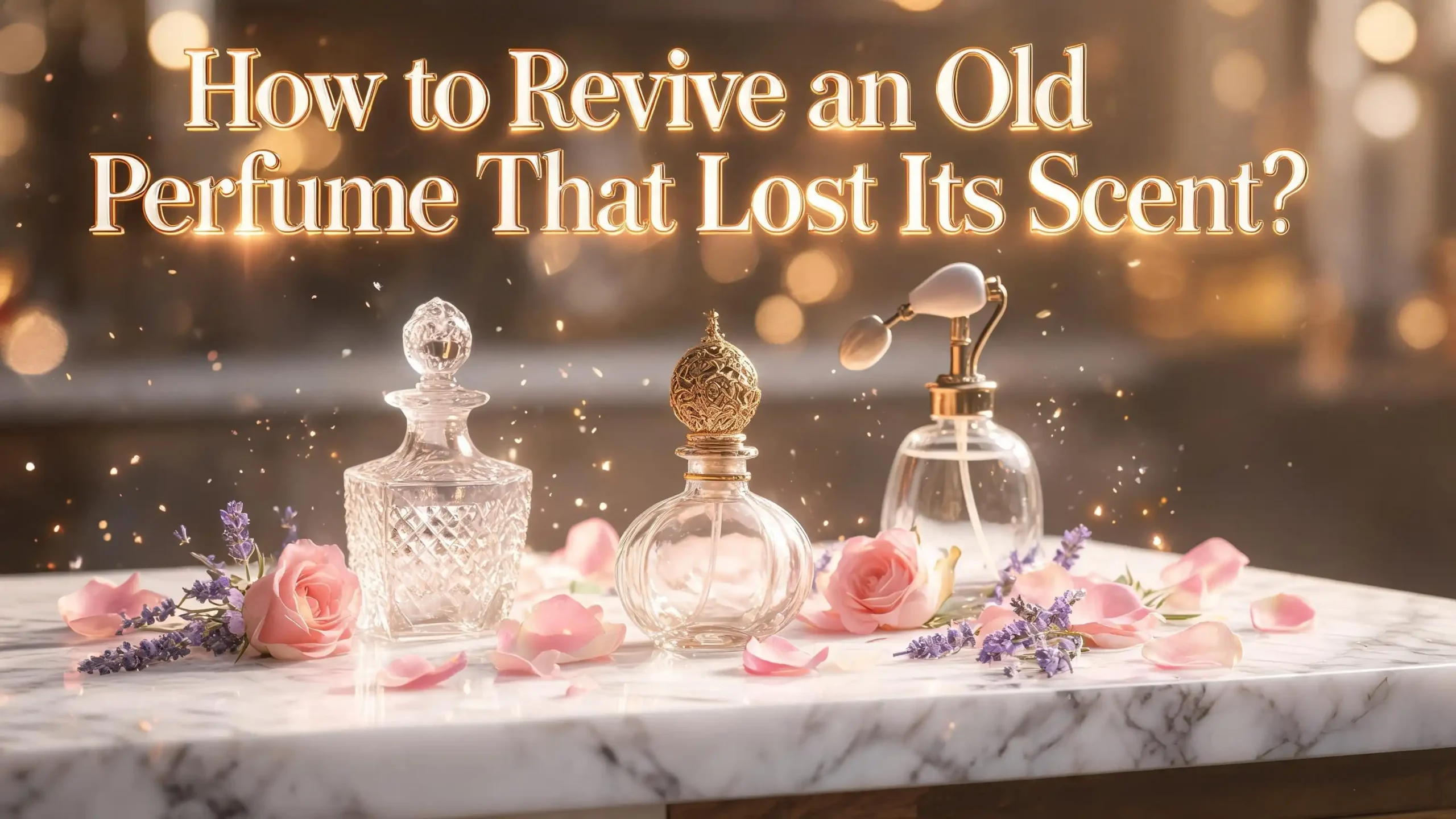
How to Revive an Old Perfume That Lost Its Scent?
You found an old bottle of perfume tucked away in a drawer. You spray it, and the magic is gone. The scent is flat, sour, or barely there. That beautiful fragrance you once loved now smells like a faded memory. This happens more often than you think, and the good news is that you may still be able to save it.
Perfume does not last forever. Heat, light, air, and time all break down the fragrance molecules inside the bottle. The top notes vanish first. The color may darken. The scent may shift from sweet and warm to sharp and metallic. But a changed perfume is not always a ruined perfume. Many bottles can be brought back to life with simple steps you can do at home.
This guide walks you through everything you need to know about reviving old perfume. You will learn why perfumes lose their scent, how to tell if yours can still be saved, and what exact steps to take to bring it back.
In a Nutshell
- Check if your perfume is truly gone or just changed. A changed scent does not always mean a dead scent. Many old perfumes still carry usable fragrance in their base notes, and a simple test can tell you if revival is possible.
- Diluting with high quality vodka can restore balance. Adding small amounts of quality vodka to concentrated, overpowering old perfume can thin it out and make it wearable again. This is one of the most popular DIY methods among fragrance collectors.
- Proper storage prevents scent loss in the first place. Cool, dark, and dry storage away from bathrooms and windowsills is the single best way to preserve perfume for years or even decades.
- Old perfume can be repurposed even if it cannot be worn. Expired fragrances work well as room fresheners, linen sprays, drawer sachets, and DIY reed diffusers.
- Not every perfume can be saved. If the oils have gone rancid and the scent is sour or vinegary, no amount of dilution will fix it. Knowing when to let go is just as important as knowing how to revive.
- Acting early gives you the best chance of saving a fragrance. The sooner you notice a change and take corrective action, the more of the original scent you can preserve.
Why Does Perfume Lose Its Scent Over Time
Perfume is a blend of aromatic oils, alcohol, and sometimes water. These ingredients are held together in a careful balance. Over time, that balance breaks down. The main cause is oxidation, which happens every time air enters the bottle.
Oxygen reacts with fragrance molecules and changes their chemical structure. The top notes are the most vulnerable because they are made of lighter, more volatile compounds like citrus and herbal ingredients. These molecules break down first, which is why an old perfume often smells flat or dull compared to its original burst of freshness.
Heat and light speed up this process significantly. UV rays from sunlight break apart delicate molecules. Temperature changes cause ingredients to separate and evaporate unevenly. A perfume stored on a sunny windowsill or in a hot bathroom will age much faster than one kept in a cool, dark closet.
Even the simple act of spraying introduces air into the bottle. As you use the perfume and the liquid level drops, more air fills the empty space inside. This increases the rate of oxidation. That is why a half empty bottle often degrades faster than a full one.
How to Tell If Your Old Perfume Can Still Be Saved
Before you try to revive an old perfume, you need to figure out if it is worth saving. Not every aged fragrance is a lost cause, but some are genuinely past the point of return. A quick inspection will help you decide.
Start with the smell test. Spray a small amount on a strip of paper or a cotton ball. If the scent is weaker than you remember but still recognizable, there is a good chance you can work with it. If it smells sour, vinegary, or like chemicals, the oils may have gone rancid. A rancid perfume cannot be fixed by dilution or any other home method.
Check the color. Many perfumes darken slightly with age, and this is normal. A pale gold turning to a deeper amber is usually fine. But if the liquid has turned very dark brown or looks cloudy with visible sediment, the chemical breakdown is advanced. This usually means the fragrance profile has shifted too far from the original.
Test on your skin carefully. Apply a tiny amount to your inner wrist and wait. If you feel any itching, burning, or redness, stop using it on your skin immediately. Degraded fragrance compounds can become irritating. In this case, the perfume may still be useful for scenting fabrics or rooms, but it should not go on your body.
The Vodka Dilution Method
This is one of the most trusted methods among perfume enthusiasts and fragrance collectors. It works best for old perfumes that have become overly concentrated because the alcohol evaporated, leaving behind a heavy, intense version of the original scent.
Here is how it works. Transfer a small amount of the old perfume into a clean sample bottle or spray vial. Add a tiny amount of high quality, unflavored vodka to the perfume. Start with very small increments. For every two sprays of perfume, try adding about half a teaspoon of vodka. Shake the mixture gently but thoroughly.
Quality matters. Use a top shelf vodka with minimal impurities. Better distilled spirits contain fewer compounds that could interact with the fragrance. Cheap vodka may introduce unwanted flavors and smells that clash with the perfume.
After mixing, store the blend in a cool, dark place for up to four weeks. Shake the bottle every few days to keep the mixture blended. This aging step allows the alcohol and fragrance oils to integrate properly. You can test it along the way to see how the scent develops.
Always experiment on a small sample first. Do not pour vodka directly into the original bottle until you are confident the method works for that particular fragrance. Some perfumes respond beautifully to dilution, while others may lose their character entirely.
How to Use Carrier Oils to Refresh Faded Perfume
If your old perfume has weakened but still carries its core scent, you can revive it using carrier oils. This method works especially well for perfumes where the alcohol has mostly evaporated and the remaining oils need a new base.
Jojoba oil is the top choice for this purpose. It is odorless, lightweight, and closely mimics the natural oils on human skin. This makes it an excellent carrier that will not interfere with the fragrance. Sweet almond oil and fractionated coconut oil are also good options.
To use this method, place a few drops of the old perfume into a small glass bottle. Add a small amount of your chosen carrier oil, about twice the volume of the perfume. Gently swirl the mixture to combine. Do not shake vigorously, as this can introduce air bubbles that speed up oxidation.
Apply the mixture to your pulse points like you would a perfume oil. The warmth of your wrists, neck, and inner elbows will help project the scent. Because oil based fragrances sit closer to the skin, they will not project as far as alcohol based ones. But they often last longer on the body because oil evaporates more slowly than alcohol.
This approach also doubles as a skin care benefit. You get a lightly scented moisturizer that keeps your skin hydrated. Just be sure to do a patch test before applying it broadly, especially with aged perfumes that may have undergone chemical changes.
Storing Perfume the Right Way to Prevent Scent Loss
Prevention is far easier than revival. The way you store your perfume determines how long it stays true to its original scent. Most perfumes have a usable shelf life of three to five years when opened and stored properly. Some well kept bottles last a decade or more.
Keep your perfume in a cool, dark, and dry location. A bedroom drawer, a closet shelf, or the inside of a cabinet are ideal spots. The temperature should stay relatively stable. Fluctuations between hot and cold cause the ingredients to expand and contract, which breaks down the fragrance over time.
Bathrooms are the worst place to store perfume. The steam from showers creates humidity spikes, and the temperature swings between hot and cool throughout the day. This environment accelerates oxidation and can cause the fragrance layers to separate.
Keeping perfume in its original box offers an extra layer of protection from light. If you have discarded the box, store the bottle behind other items on a shelf where sunlight cannot reach it. Dark or opaque glass bottles hold up better than clear ones, but all bottles benefit from darkness.
Always seal the cap tightly after each use. Every second the bottle stays open, air enters and begins the oxidation process. If your perfume has a splash style opening rather than a spray nozzle, consider transferring it into a small spray atomizer to reduce air exposure during application.
What to Do When Only the Base Notes Remain
Sometimes an old perfume loses its top and middle notes entirely. The citrus sparkle and floral heart are gone. All that remains is the deep, heavy base: the woods, the musks, the ambers. This does not mean the perfume is useless. In fact, it can still serve you well.
Base notes are the most durable part of any fragrance. They are made of larger, heavier molecules that resist evaporation and oxidation. Ingredients like sandalwood, cedar, vanilla, patchouli, and musk can remain pleasant for years, even after the lighter notes have faded away.
You can wear these remaining base notes as a subtle skin scent. Apply a small amount to your pulse points. The projection will be much softer than the original perfume, but the warmth of your body will still release the fragrance close to your skin. This works particularly well for intimate settings or office environments where a lighter scent presence is preferred.
Another option is to layer the old perfume with a newer fragrance. Apply the aged base notes first, then spray a fresh perfume on top. The old base can act as a foundation that adds depth and complexity to the newer scent. Fragrance layering is a common technique used by perfume enthusiasts to create unique blends.
If the base notes have turned unpleasant or rancid smelling, this is a sign the fragrance oils themselves have degraded. At that point, the perfume is best retired from personal wear and used only for scenting household items.
How to Repurpose Old Perfume You Cannot Revive
Some perfumes reach a point where they cannot be restored for personal use. The scent has shifted too much, or the oils have gone off. But even a degraded perfume still carries fragrance, and that fragrance can be put to good use around your home.
Make a DIY room freshener. Place a few drops of the old perfume on a cotton ball and set it in a small dish. Put the dish in your bedroom, living room, bathroom, or closet. The cotton ball will slowly release the scent into the surrounding air. Replace it every few days as the fragrance fades.
Create a linen and fabric spray. Mix the old perfume with distilled water in a small spray bottle. Use a ratio of about one part perfume to three parts water. Lightly mist your bed sheets, curtains, or throw pillows. The scent will cling to the fabric and give your space a pleasant aroma.
Scent your drawers and closets. Spray a small amount of perfume onto a piece of cloth or tissue paper. Place it among your folded clothes. Over time, your garments will pick up a gentle hint of the fragrance. This is a wonderful way to get one last use from a sentimental bottle.
Turn the bottle into a reed diffuser. Remove the spray nozzle, add a few wooden reed sticks, and let the remaining liquid wick up the reeds. This works best with perfumes that still have a noticeable scent, even if the scent has changed from the original.
The Role of Perfume Concentration in Shelf Life
Not all perfumes are created equal. The concentration of aromatic oils in the formula directly affects how long a perfume stays viable, both in the bottle and on your skin.
Parfum and extrait de parfum contain 20 to 30 percent fragrance oils. These formulations are the most concentrated and tend to have the longest shelf life. The high oil content provides a richer scent that resists fading. These bottles often last well beyond the typical three to five year window.
Eau de parfum sits at 15 to 20 percent fragrance oil. It offers a strong balance between longevity and projection. These perfumes age well when stored properly and can last for many years without significant scent loss.
Eau de toilette contains 5 to 15 percent fragrance oil. It is lighter, fresher, and more volatile. Because of the lower oil content and higher alcohol ratio, these formulas tend to lose their character faster than stronger concentrations. If you have an old eau de toilette that has faded, the loss is more likely to be permanent.
Eau de cologne has just 2 to 5 percent oils. These are the most fleeting and the most susceptible to degradation over time. An old cologne bottle is less likely to be revivable because so little fragrance material existed in the first place.
Understanding your perfume’s concentration helps set realistic expectations. A faded parfum often has more to work with than a faded cologne.
How Natural vs. Synthetic Ingredients Affect Aging
The ingredients inside your perfume bottle play a huge role in how it ages. Natural and synthetic compounds behave differently over time, and knowing this can help you understand what happened to your old fragrance.
Natural essential oils are derived from plants, flowers, woods, and resins. They contain complex organic compounds that are less chemically stable than their synthetic counterparts. Citrus oils like bergamot and lemon are especially prone to oxidation. Floral extracts like rose and jasmine can shift their scent profiles as they break down.
Synthetic fragrance molecules are engineered for consistency and stability. Modern musks, ambers, and woody accords are designed to resist degradation. Perfumes with a high percentage of synthetic ingredients often hold their scent longer in the bottle and on the skin.
This means that a vintage perfume made with natural ingredients is more likely to change over time than a modern designer fragrance loaded with synthetics. If you own an old bottle of a classic perfume known for its natural composition, expect greater scent variation as it ages.
This does not mean natural is bad or synthetic is better. Natural ingredients often provide the richness and depth that make a fragrance special. But they do require more careful storage and faster use to enjoy at their best. If you prefer natural perfumes, consider buying smaller bottles that you can finish before degradation sets in.
Signs It Is Time to Let Go of an Old Perfume
It can be hard to part with a beloved fragrance. Maybe it was a gift. Maybe it carries emotional weight. But holding onto a perfume that has gone truly bad does nobody any good. Here are the clear signs that a bottle has reached the end of its life.
A strong vinegar or sour smell is the most obvious indicator. This happens when the fragrance oils have oxidized beyond recovery. No amount of dilution, mixing, or resting will bring back the original scent once rancidity has set in.
A thick, sticky texture means the alcohol has fully evaporated and the remaining oils have begun to break down. The perfume may feel heavy or syrupy. While you can try adding alcohol to reconstitute it, the results are unpredictable and usually disappointing.
Visible sediment or floating particles indicate advanced chemical degradation. The molecules have broken apart and recombined into new, unwanted compounds. This perfume should not be applied to skin.
Skin irritation after application is a serious warning sign. Degraded fragrance compounds can cause redness, itching, or allergic reactions. If your skin reacts negatively, stop using the perfume immediately, even on clothing.
When a perfume shows multiple signs of degradation, the healthiest choice is to let it go. You can still repurpose the bottle as a decorative item or vase. And you can honor the memory of the fragrance by finding a fresh bottle or a similar scent to replace it.
How to Protect New Perfume From Losing Its Scent
Now that you know what causes perfume degradation and how to handle an old bottle, let us look at how to keep your new purchases fresh for as long as possible.
Buy the right size. If you rotate between multiple fragrances, smaller bottles are smarter. A 30ml or 50ml bottle that you finish within a year or two will stay fresher than a 100ml bottle that sits half empty for five years. Less empty space in the bottle means less air and less oxidation.
Apply without waste. Spray directly onto your pulse points from four to six inches away. Do not rub your wrists together, as the friction generates heat that breaks down the top notes instantly. Let the perfume settle naturally on your skin.
Rotate your collection wisely. If you own multiple bottles, give attention to the lighter, more volatile ones first. Use your eau de toilette and citrus based scents before they fade. Save the heavier parfum and amber based bottles for later, since they have a longer natural shelf life.
Avoid displaying bottles in the open. As beautiful as a perfume collection looks on a vanity, open air and light exposure will shorten the life of every bottle on display. Store your collection in a drawer or cabinet and bring out only the bottle you plan to use that day.
Invest in atomizer travel sprays. These small, refillable sprayers let you carry a portion of your perfume without exposing the full bottle to air repeatedly. Fill one at the start of each week and keep the main bottle sealed.
Can You Refrigerate Perfume to Extend Its Life
This question comes up often among perfume lovers, and the answer is nuanced. Refrigeration can help, but it is not always the best option.
A dedicated fragrance fridge set to a stable, cool temperature can slow down oxidation and preserve a perfume’s freshness for longer. Some serious collectors invest in small cosmetic refrigerators specifically for this purpose. The consistent cold temperature minimizes chemical reactions and keeps the fragrance stable.
However, a regular kitchen refrigerator can be problematic. The temperature fluctuates every time you open the door. Food odors can potentially affect unsealed bottles. The humidity levels may not be ideal. If you store perfume in a standard fridge, keep it in an airtight container to protect it from moisture and food smells.
Cold temperatures can sometimes cause ingredients to separate. Some perfumes, especially those with natural oils, may become cloudy or develop a different texture after refrigeration. This does not always mean the perfume is ruined. Letting it return slowly to room temperature often resolves the issue.
The bottom line is that cool and stable is better than cold and fluctuating. A dark closet in an air conditioned room works almost as well as a fridge for most perfumes. If your home is consistently warm or you live in a hot climate, a small dedicated fridge is a worthwhile investment for your collection.
Quick Step by Step Guide to Reviving Old Perfume
Here is a condensed action plan you can follow right now if you have an old perfume that needs attention.
Step 1: Remove the bottle from wherever it has been stored. Inspect the color, clarity, and overall condition of the liquid. Look for cloudiness, sediment, or dramatic color changes.
Step 2: Spray a small amount onto a paper strip or cotton ball. Smell it carefully. Determine if the scent is faded, changed but acceptable, or sour and rancid.
Step 3: If the scent is weak but still pleasant, try the vodka dilution method. Transfer a small sample into a separate vial, add high quality vodka in tiny increments, shake well, and let it rest in a dark place for several days to four weeks.
Step 4: If the scent is concentrated and overpowering, dilute with vodka or carrier oil. Test on your skin after 24 hours of resting.
Step 5: If the scent has changed but is still enjoyable, consider wearing it as a skin scent or layering it with a newer fragrance.
Step 6: If the perfume smells sour, rancid, or causes skin irritation, stop trying to wear it. Repurpose it as a room spray, linen mist, drawer sachet, or reed diffuser.
Step 7: For future bottles, store them in cool, dark locations with tight seals. Use smaller bottles when possible and finish lighter concentrations first.
Frequently Asked Questions
Does perfume actually expire?
Perfume does not have a strict expiration date like food. However, it does degrade over time. Most opened perfumes stay true to their original scent for three to five years with proper storage. Unopened and well stored bottles can last a decade or longer. The degradation process is gradual, and many perfumes remain wearable well past the typical timeframe. The key factors are storage conditions and the perfume’s concentration and composition.
Can I still wear perfume that smells different from the original?
Yes, as long as the scent is still pleasant to you and does not irritate your skin. Many aged perfumes develop a deeper, warmer character as the lighter top notes fade. Some people actually prefer the aged version of certain fragrances. Always do a patch test on a small area of skin before wearing an old perfume extensively. If there is any irritation, switch to using it only on fabrics or as a room scent.
Is it safe to put vodka in my perfume bottle?
Vodka is a commonly used dilution agent among fragrance enthusiasts because it is a neutral spirit with minimal impurities. It is safe to add to perfume. However, always test with a small sample first before adding anything to the original bottle. Use high quality, unflavored vodka for the best results. The alcohol in vodka mimics the alcohol base already present in most commercial perfumes.
Why does my old perfume smell like vinegar?
A vinegar or sour smell indicates that the fragrance oils have oxidized significantly. This usually happens when the perfume has been exposed to air, heat, or light over an extended period. Once the oils reach this stage of breakdown, the process is irreversible. The perfume cannot be restored to its original scent. You can still use it to scent rooms or fabrics, but it should not be worn on skin.
What is the best way to store perfume long term?
Store your perfume in a cool, dark, dry place with a stable temperature. A bedroom drawer, a closet shelf, or a cabinet away from windows and heat sources are all excellent choices. Keep the bottle in its original box for added light protection. Always ensure the cap is sealed tightly. Avoid storing perfume in bathrooms, near radiators, on windowsills, or in cars where temperature extremes occur.
Can I mix two old perfumes together to create a new scent?
You can try mixing old perfumes together, and many people do this successfully. This is called fragrance layering. The results depend on how the different scent profiles interact. Start by combining small amounts on a paper strip to see if the blend appeals to you before mixing larger quantities. Keep in mind that if one of the perfumes has gone rancid, mixing it with another scent will not fix the off smell.

Hi, I’m Lily! I started this blog to share honest reviews, real comparisons, and helpful guides so you can find your perfect scent without the guesswork. Welcome to my scented world!