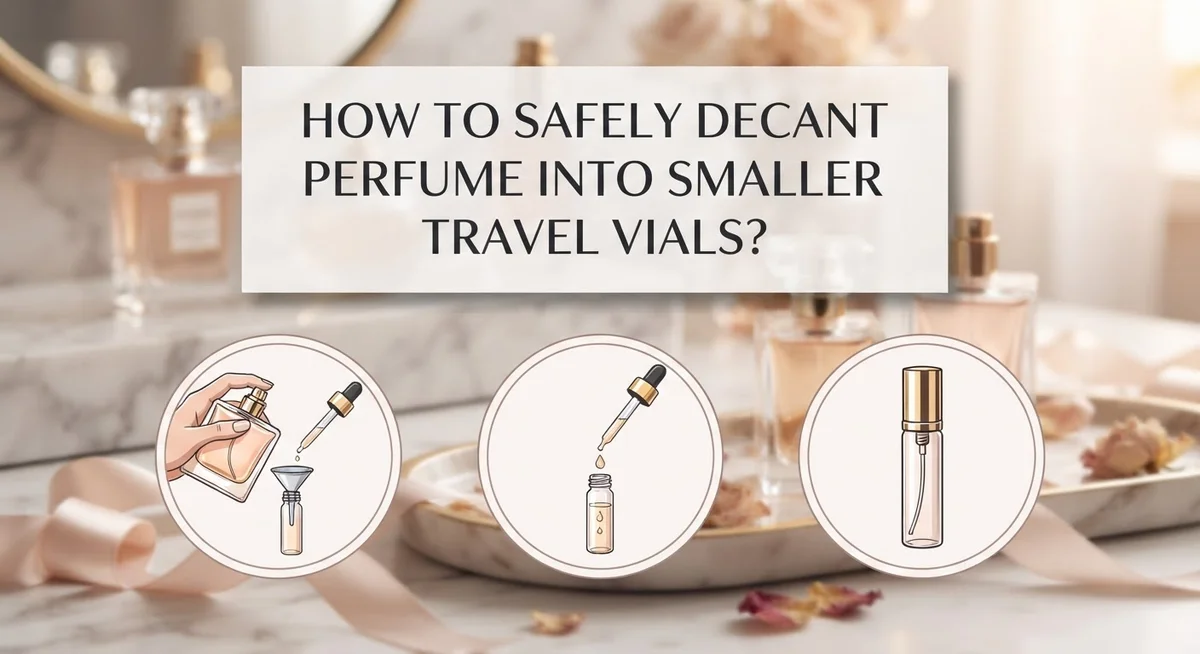
How to Safely Decant Perfume into Smaller Travel Vials?
Traveling with your favorite scent should never mean lugging a bulky bottle. That’s where perfume decanting comes in handy.
Decanting simply means transferring your fragrance from a large bottle into a smaller travel vial. It sounds easy, but small mistakes can lead to messy spills and wasted perfume.
Many people rush this process. They spray directly into the vial opening and end up with sticky fingers and a lighter bottle than expected.
The good news? You can avoid these problems with the right technique.
This guide walks you through safe and simple ways to decant perfume. We will cover the funnel method, the syringe method, and the direct spray technique.
By the end of this article, you will know exactly how to move your fragrance into a 5mL travel bottle without losing a single drop. Your perfume will stay protected and ready for any adventure.
Let’s get started.
In a Nutshell
Pick your method first. You can use a funnel, a syringe, or direct spray. Each method works, but funnels give you the most control.
Prep your tools before you start. Remove the spray cap from your travel vial. This gives you open access to pour or fill smoothly.
Pour slowly and steadily. Rushing causes spills and wastes precious perfume. Take your time with each drop.
Use a small funnel for best results. A silicone or stainless steel funnel around 1 to 1.5cm wide fits most travel vials perfectly.
Avoid direct spraying when possible. This method often leads to significant spillage. Stick to funnels or syringes for cleaner transfers.
Practice makes perfect. Your first few tries might feel messy. With patience, you will master this skill and enjoy travel sized fragrance every time.
What Perfume Decanting Means and Why It’s Useful
Perfume decanting means transferring fragrance from a large bottle into smaller containers. This simple process lets you carry your favorite scent without dragging around a heavy bottle. Travel vials typically hold 5mL, making them perfect for trips, gym bags, or daily purses.
Why is decanting useful? Portability is the main reason. A full size perfume bottle can be bulky and risky during travel. Smaller vials fit easily into luggage or a pocket. You also reduce the chance of spilling your expensive fragrance during transit.
Decanting saves money too. Instead of buying travel size versions at premium prices, you use what you already own. This approach works especially well if you have multiple fragrances you want to sample without committing to large bottles.
Safety matters when decanting. Perfume contains alcohol and volatile compounds. Improper transfer can cause spills, evaporation, or contamination. Using the right technique protects your fragrance and keeps your hands clean.
Decanting also helps you test different scents on the go. You can carry multiple vials and switch fragrances based on your mood or outfit. This flexibility is impossible with one large bottle.
Another benefit? Gifting becomes easier. You can share small amounts of your favorite perfume with friends in attractive travel vials. It’s a thoughtful, personal gift that costs far less than buying new bottles.
The process itself is straightforward once you understand the basics. You need minimal supplies and just a few minutes of your time. Most people find decanting becomes second nature after their first successful transfer. The key is working slowly and choosing the right method for your needs.
Tools and Supplies You’ll Need Before You Start
Before you start decanting, gather the right supplies. This makes the process smooth and prevents accidents.
You need a small funnel first. Look for one with a diameter between 1 to 1.5 centimeters. Silicone and stainless steel funnels work best because they fit snugly into travel vial openings. Avoid large kitchen funnels since they won’t fit properly.
Get clean, empty travel vials ready. These containers should have removable spray caps or lids. Standard travel bottles hold about 5 milliliters. Make sure each vial is completely dry before you begin.
Grab your source perfume bottle. This is the full size fragrance you want to transfer. Keep it nearby so you can work efficiently.
Consider having a syringe on hand. A clean syringe with no needle lets you extract perfume precisely. This method works well if you prefer not to use a funnel. Syringes give you better control over the amount you transfer.
Paper towels or soft cloths are essential. Perfume spills happen, and you want to clean up quickly. Keep these nearby throughout the process.
Optional but helpful: a small tray or plate. This catches any drips and protects your work surface. It also contains mess if something spills.
Wear appropriate clothing. Perfume stains can happen, so avoid wearing clothes you love. Wash your hands after decanting since perfume alcohol can dry out skin.
Check your workspace lighting. You need to see clearly when pouring. Good lighting helps you avoid mistakes and spillage.
Having these supplies ready means you can focus on the actual decanting task without stopping to find tools.
Step-by-Step Guide: Decanting with a Funnel
The funnel method is one of the most reliable ways to transfer perfume safely. This approach works well because it guides the liquid directly into your travel vial without splashing.
Start by placing your small funnel into the opening of your clean travel vial. Make sure it sits snugly and doesn’t wobble. A funnel with a diameter between 1 to 1.5 centimeters fits most travel bottles perfectly.
Hold your source perfume bottle at a slight angle. Pour the fragrance slowly into the funnel’s top opening. Speed matters here. Rushing the pour causes spillage and wastes your perfume. Take your time and let gravity do the work.
Keep a paper towel or soft cloth nearby while you pour. Even with a funnel, small drips can happen around the edges. Wipe away any spills immediately to prevent staining your work surface.
Pour only the amount you need for your travel vial. Most travel bottles hold around 5 milliliters, so you don’t need much. Stop pouring when your vial reaches about three quarters full. This leaves room for the spray cap to fit properly.
Once you finish pouring, carefully remove the funnel from your vial. Wipe the funnel clean with a cloth before setting it down. Any perfume left on the funnel can dry and become sticky.
Replace the spray cap or lid on your travel vial. Make sure it’s secure so no liquid leaks during transport. Your decanted perfume is now ready to take anywhere.
This method requires patience but delivers excellent results. With practice, you’ll become faster and more confident with each transfer.
Step-by-Step Guide: Decanting with a Syringe
A syringe offers precision when you want complete control over how much perfume enters your travel vial. This method works especially well if you’re transferring small amounts or if your source bottle has a narrow opening.
Start by removing the spray cap or atomizer nozzle from your original perfume bottle. You need direct access to the liquid inside. If your bottle has a spray pump, twist it counterclockwise to detach it completely.
Draw the plunger on your clean syringe back slowly. Insert the needle end into your perfume bottle opening. Push the plunger down gently to draw perfume into the barrel. Work at a steady pace to avoid creating bubbles or splashing.
Once your syringe fills with the amount you need, carefully remove it from the source bottle. Hold the syringe upright over your empty travel vial. Position the tip just inside the vial opening. Push the plunger down slowly and steadily to release the perfume into your container.
Take your time during this step. Rushing causes perfume to splash onto the outside of your vial or onto your hands. A slow, controlled push ensures accuracy.
If you need to fill multiple vials, repeat this process for each container. You may need to refill your syringe several times depending on vial size.
After finishing, replace the spray cap on your travel vial immediately. This prevents evaporation and keeps your perfume fresh. Clean your syringe right away with warm water. Store it in a clean, dry place for future use.
The syringe method takes slightly longer than other techniques, but it gives you the most control and minimizes waste significantly.
Direct Spray Method: When and How to Use It
The direct spray method works best when you want speed and simplicity. This approach involves holding your original perfume bottle’s atomizer nozzle directly over your travel vial opening and spraying the fragrance inside.
When to use this method depends on your situation. Choose direct spraying if you’re in a hurry or prefer minimal equipment. This technique requires no funnel, syringe, or extra tools. You simply spray and go.
However, understand the trade offs. Direct spraying causes significant spillage because the spray mist disperses into the air. Perfume lands on your hands, the vial’s exterior, and your work surface. This waste adds up quickly, especially with expensive fragrances.
How to do it safely starts with preparation. Remove the spray cap from your travel vial first. Hold your source perfume bottle steady at a slight angle above the vial opening. Position the atomizer nozzle about one inch away from the vial’s mouth.
Press the spray button gently and briefly. Use short bursts rather than holding it down continuously. This gives you better control and reduces misting. Keep paper towels nearby to catch drips and wipe your hands.
Work slowly and deliberately. Rushing increases spillage and wastes product. After each spray burst, pause and check your vial’s fill level. Stop before the vial overflows.
Best practices include working over a tray or plate to catch excess liquid. This protects your furniture and makes cleanup easier. Replace your travel vial’s cap immediately after finishing to prevent evaporation.
The direct spray method works well for quick travel preparations. Just expect some waste and accept that other methods deliver better precision. If you’re decanting expensive fragrances regularly, consider funnel or syringe methods instead for maximum efficiency.
Tips for Minimizing Spills and Preserving Fragrance Quality
Minimizing spills requires preparation before you start. Set up your workspace on a flat, stable surface away from edges. Place a tray, plate, or paper towels underneath your work area to catch drips. This simple step protects your table and makes cleanup quick.
Choose the right container size for your needs. Travel vials typically hold 5 milliliters, so measure your perfume carefully. Use a small funnel with a diameter between 1 and 1.5 centimeters for better control and accuracy. Larger funnels create wider openings that increase spillage chances.
Work slowly and deliberately throughout the process. Rush jobs lead to mistakes and wasted fragrance. Pour at a gentle angle rather than pouring straight down. This reduces splashing and keeps the liquid flowing smoothly into your vial.
Temperature matters when decanting perfume. Cool environments help prevent evaporation during transfer. Avoid working in direct sunlight or near heat sources. Fragrance components can evaporate quickly in warm conditions, affecting quality and scent strength.
Keep paper towels or soft cloths nearby while working. Wipe your hands and the outside of bottles as you go. This prevents sticky residue buildup and makes handling easier.
Secure your funnel firmly before pouring. An unstable funnel tips over easily and wastes your perfume. Hold it steady with one hand while pouring with the other.
Replace caps immediately after finishing. Open bottles allow fragrance to evaporate and lose potency. Seal your travel vials right away to lock in the scent.
Practice these techniques a few times before traveling. Familiarity builds confidence and speed. Soon you’ll transfer perfume smoothly without wasting a drop.
Common Mistakes to Avoid When Decanting
Many people rush through the decanting process and waste valuable perfume. Slow down and take your time with each step. Speed leads to spills, and spills mean losing fragrance you paid for.
Using the wrong container size causes major problems. If your travel vial is too large, you’ll have mostly empty space. Air exposure degrades perfume quality quickly. Choose a vial that fits your typical usage amount. A 5mL vial works well for most travelers.
Improper funnel placement creates mess and frustration. Your funnel must sit securely in the vial opening before you pour anything. A loose funnel tips over mid pour and wastes everything. Test the fit before bringing perfume near your setup.
Ignoring temperature changes affects your results. Warm perfume flows differently than cool perfume. If your bottle feels warm from sitting in sunlight, let it cool first. Cold perfume pours more slowly but with better control.
Forgetting to cap your vials immediately invites oxidation. Once you finish pouring, replace the cap right away. Exposed perfume loses potency within minutes. This simple step preserves your fragrance during travel.
Mixing old and new perfume in the same vial creates scent confusion. Always use clean vials for each fragrance. Residue from previous perfumes alters the original scent profile.
Avoid these common mistakes and your decanting experience improves dramatically. You’ll waste less perfume, maintain fragrance quality, and feel confident taking your favorite scents anywhere. Practice these habits before your next trip.
Troubleshooting Leaks, Clogs, and Scent Changes
Leaks happen when your vial cap doesn’t seal properly after decanting. Check that your cap screws on completely and sits flush against the bottle opening. If liquid seeps out during travel, the seal wasn’t tight enough. Always test your vial by gently squeezing it before packing.
Clogs occur when perfume residue dries inside the spray nozzle or funnel opening. This happens most often when you pause between decanting sessions. Prevent clogs by working continuously without stopping. If a clog forms, soak the affected piece in warm water for 10 minutes, then gently rinse with a soft brush.
Scent changes after decanting are normal but manageable. Perfume oxidizes when exposed to air, which slightly alters the fragrance profile over time. This process happens faster in clear vials exposed to sunlight. Store your travel vials in dark, cool places to slow oxidation significantly.
Some people notice their decanted perfume smells weaker than the original bottle. This occurs because you’ve increased the surface area exposed to air during the transfer process. The scent isn’t actually weaker; your nose simply perceives it differently in a smaller container. This perception fades after a few days as you adjust.
If your vial leaks during travel, the cap likely loosened due to pressure changes in your luggage. Wrap your vial in plastic wrap before capping it for extra security. This creates a moisture barrier and prevents accidental opening.
Temperature fluctuations also affect your decanted perfume. Heat causes the liquid to expand slightly, which can force liquid past a loose seal. Keep vials away from direct sunlight and extreme temperatures whenever possible.
Final Thoughts
Decanting perfume into travel vials becomes easy once you know the right steps. You don’t need fancy tools to get this done well. A small funnel, some patience, and a steady hand work wonders.
Start with clean, dry vials every time. Moisture inside a vial changes your perfume’s scent over time. Take your time during each pour to avoid waste.
Remember that direct spraying often causes spills. The funnel method gives you better control and less mess. Choose whichever method feels natural to your hands.
Temperature and storage matter after you finish decanting. Keep your vials away from heat and sunlight. This simple habit protects your fragrance for weeks or months.
Mistakes happen to everyone who tries this process. Spillage, clogs, and leaks are common at first. Each attempt teaches you something new about handling perfume safely.
Practice truly makes this task simpler over time. Your hands learn the right pressure and angle. Soon you decant perfume without thinking twice about it.
Travel size vials give you freedom to explore. You carry your favorite scent anywhere you go. No need to pack bulky bottles for short trips.
This skill saves money and reduces waste too. You use only what you need for each trip. Extra perfume stays safe in its original bottle.
Small vials make a big difference in how you travel. They fit easily in bags, pockets, or purses. Your signature scent travels with you effortlessly.
Keep these tips in mind next time you pack. Decanting perfume becomes second nature with practice. Soon you will do it quickly and confidently every single time.
Frequently Asked Questions
What’s the best method to avoid spilling perfume when decanting?
The funnel method works best for most people. Use a small funnel with a 1 to 1.5 centimeter diameter opening. Insert it firmly into your travel vial before you start pouring. Pour slowly and steadily from your original bottle into the funnel.
Direct spraying also works, but it causes more spillage. Hold the atomizer nozzle close to your vial opening and spray carefully. This method takes practice to master.
Keep paper towels nearby just in case. Work over a sink or tray to catch any drips.
Can I use any container for decanting perfume?
Not all containers work equally well. Your travel vial must have a tight fitting cap that seals completely. Glass vials work better than plastic because they resist perfume degradation.
Make sure your vial is clean and completely dry before you start. Any moisture or residue inside affects your perfume’s quality. The vial opening should be large enough to fit your funnel or spray nozzle.
Standard 5 milliliter travel bottles are ideal for most people.
How do I prevent my decanted perfume from leaking during travel?
A secure cap is your first defense. Screw or press your cap on firmly after decanting. Check the seal by turning the vial upside down over a sink.
Temperature changes in luggage can loosen caps slightly. Wrap your vial in a plastic bag as extra protection. Place it in the center of your luggage, surrounded by soft items like clothing.
Store your vials in a cool, dark place before traveling. Heat causes pressure inside the bottle to increase.
Why does my decanted perfume smell different from the original?
Some scent changes are normal after decanting. Your perfume may smell slightly weaker at first because the top notes are more volatile. These lighter scent layers fade faster than base notes.
Exposure to air during decanting also affects the smell. This is temporary. Your perfume will settle within a few days. If the smell changes dramatically, check your vial’s seal. A loose cap allows oxidation, which permanently alters the fragrance.

Hi, I’m Lily! I started this blog to share honest reviews, real comparisons, and helpful guides so you can find your perfect scent without the guesswork. Welcome to my scented world!