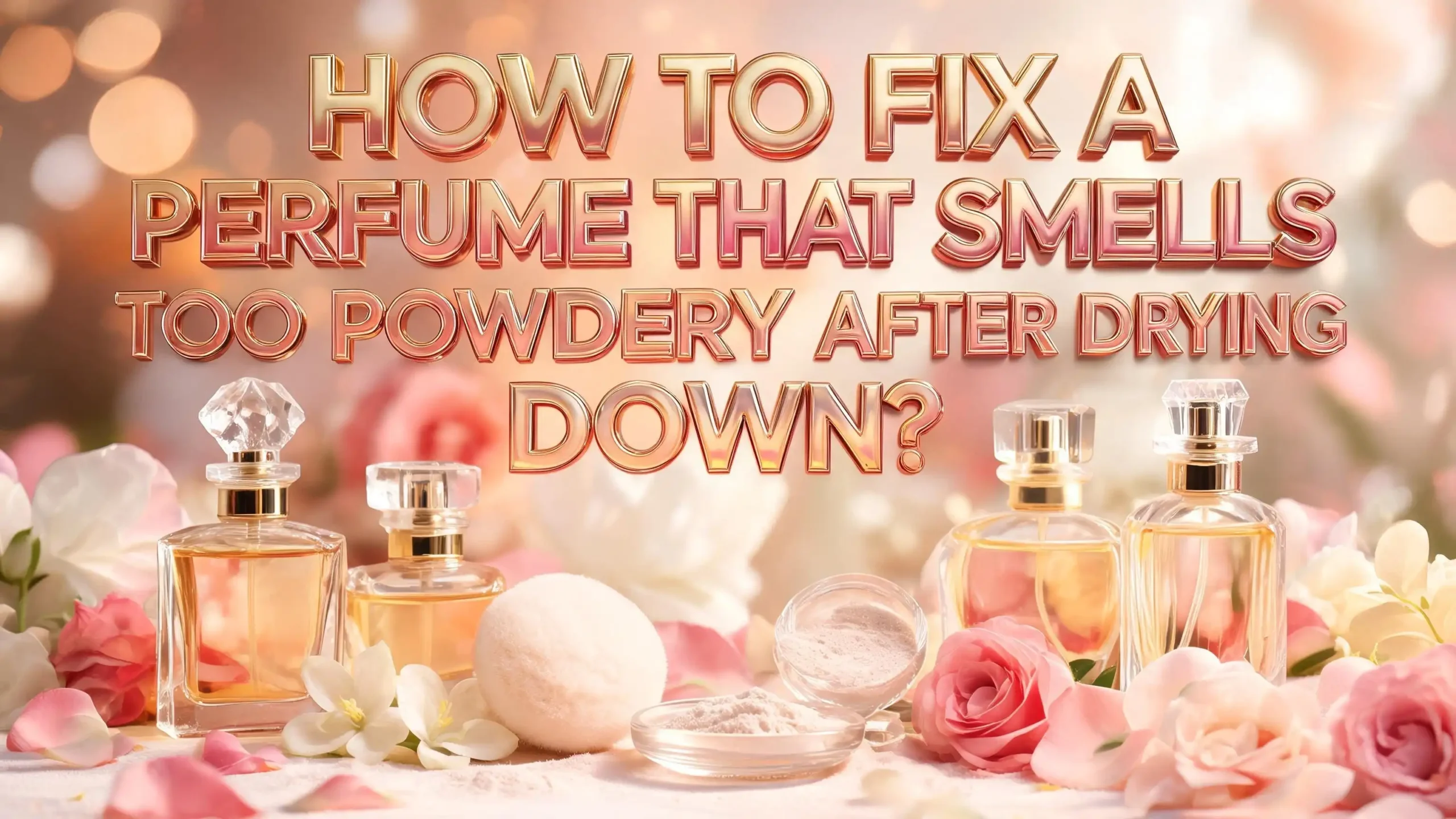
How To Fix A Perfume That Smells Too Powdery After Drying Down?
A powdery dry down is one of the most common perfume complaints. It happens when certain base notes like musk, iris, violet, heliotrope, or vanilla dominate the final stage of a fragrance.
The good news is that you do not have to throw away that bottle. There are real, practical fixes you can apply right now to reduce or eliminate that unwanted powdery effect. Some solutions involve how you apply the fragrance. Others involve layering techniques, skin preparation, or even storage adjustments.
This post will walk you through 11 proven methods to fix a perfume that dries down too powdery. Each method is easy to follow and based on how fragrance chemistry actually works on your skin.
Let’s get into the fixes.
Key Takeaways
- A powdery dry down happens because of specific base note ingredients like iris, musk, violet leaf, and heliotrope. These molecules are naturally soft and diffuse, which creates that characteristic dusty, cosmetic like finish on your skin.
- Your skin type plays a major role in how a perfume dries down. Dry skin tends to amplify powdery notes because there is less moisture to hold on to the fresher, brighter parts of the fragrance. Moisturizing before application can make a significant difference.
- Layering your perfume with complementary scents is one of the fastest ways to fix a powdery dry down. Adding a citrus body oil, a woody fragrance, or even an unscented moisturizer can shift the balance away from those soft, chalky notes.
- Where and how you spray matters more than you think. Applying perfume to pulse points, clothing, or hair changes the way the scent develops over time. Each surface interacts differently with fragrance molecules.
- Storage conditions affect fragrance performance. Heat, light, and humidity break down top and heart notes faster, which leaves the powdery base notes more exposed during the dry down phase.
- Sometimes the fix is as simple as using less perfume. Over application concentrates the base notes and makes the powdery effect stronger. One or two sprays in the right spots can produce a completely different result.
Why Does Perfume Smell Powdery After Drying Down
Perfume goes through three stages after you spray it. The top notes hit first and last about 15 to 30 minutes. The heart notes come next and last a few hours. The base notes are the final stage and can linger for 8 hours or more.
Powdery dry downs happen in the base note stage. Ingredients like orris root, white musk, violet, heliotrope, and benzoin are naturally soft and diffusive. They create a smooth, cosmetic like finish that perfumers often use to add elegance.
The problem is that some skin types amplify these notes. Your body heat, skin pH, and hydration level all change how these molecules behave. A perfume that smells bright and fresh on one person can turn chalky and flat on another.
Certain fragrance families are more prone to this issue. Floral, oriental, and classic chypre fragrances often contain high amounts of powdery base ingredients. If you notice this pattern across multiple perfumes, your skin chemistry likely emphasizes these notes.
Understanding why the powdery effect happens is the first step toward fixing it. Once you know the cause, you can target the solution with precision.
Check Your Skin Type And Hydration Level
Your skin is the canvas for your perfume. Dry skin is the number one cause of an overly powdery dry down. When your skin lacks moisture, it cannot hold on to the lighter, fresher notes in a fragrance. Those top and heart notes evaporate quickly, and the heavy, powdery base notes take over much sooner.
If your skin feels tight or flaky, your perfume is probably losing its bright opening within minutes. This leaves you with nothing but the soft, dusty finish for the rest of the day.
The fix is simple. Apply an unscented moisturizer to your skin about 60 seconds before spraying your perfume. The moisturizer creates a hydrated barrier that slows down evaporation. This gives the top and heart notes more time to develop and stay present alongside the base.
Look for moisturizers that contain glycerin or hyaluronic acid because these ingredients attract and hold water in the skin. Avoid heavily fragranced lotions because they can clash with your perfume and create unpredictable results.
People with oily skin rarely complain about powdery dry downs. The natural oils on their skin act as a fragrance amplifier that keeps all the notes balanced throughout the day. If you have dry skin, moisturizing mimics this effect and can dramatically change how your perfume smells after a few hours.
Apply Perfume To The Right Spots
Where you spray your perfume directly affects how it develops over time. Pulse points are the classic recommendation because the warmth from blood vessels helps project the fragrance. However, too much heat can also burn through the lighter notes fast and leave the powdery base exposed.
The best pulse points for a balanced dry down are the inner wrists, behind the ears, and the base of the throat. These areas produce moderate warmth without excessive heat.
Avoid spraying perfume on spots that generate a lot of friction or sweat. The inside of your elbows and behind your knees can create too much heat during movement. This accelerates the evaporation of top notes and pushes you into the powdery phase faster.
One important tip is to never rub your wrists together after spraying. This common habit breaks down the fragrance molecules through friction. It literally crushes the top notes and forces the scent into the base stage prematurely. Instead, let the perfume air dry naturally on your skin.
You can also try spraying perfume in the air and walking through the mist. This creates a lighter, more even application that does not concentrate the base notes in one spot. The result is a softer, more balanced scent throughout the day.
Use Fragrance Layering To Balance The Scent
Layering is one of the most effective ways to fix a powdery dry down. The idea is simple. You combine your powdery perfume with another product that adds brightness, freshness, or depth to counteract the dusty base notes.
Start with a scented body oil or lotion as your base layer. Citrus, green tea, or coconut based body products work especially well because they add a fresh, lively quality that fights the powdery finish. Apply the body product first and let it absorb for a minute before spraying your perfume on top.
You can also layer two perfumes together. If your main fragrance dries down powdery, pair it with a light citrus or woody cologne. Spray the second fragrance on different pulse points than the first. This allows both scents to develop separately but blend together in the air around you.
Some fragrance enthusiasts use a technique called “sandwich layering.” You apply a scented lotion first, spray your perfume in the middle, and finish with a light mist of a complementary body spray. Each layer adds dimension and prevents any single note from dominating.
The key is to choose layering products that contrast with the powdery quality. Fresh, aquatic, green, and woody notes are the best partners. Avoid layering with other soft florals or musks because they will only add to the powdery effect.
Spray On Fabric Instead Of Skin
Fabric interacts with perfume very differently than skin does. When you spray perfume on clothing, the fragrance does not go through the same evaporation stages it does on your skin. The top and heart notes last much longer on fabric because there is no body heat breaking them down as quickly.
This means the powdery dry down becomes less noticeable. The brighter notes stick around and balance out the soft base for a longer period. Cotton, wool, and cashmere hold fragrance especially well.
Spray your perfume on your shirt collar, scarf, or the inside of your jacket. Keep the bottle about 8 to 10 inches away from the fabric to avoid staining. Light colored fabrics and delicate materials like silk should be tested in a hidden spot first.
One downside is that fabric does not project fragrance as strongly as warm skin does. The scent stays closer to you and does not fill a room the way a skin application might. For many people, this is actually a benefit because it creates a more personal, intimate scent bubble.
You can combine both methods for the best result. Spray lightly on your skin for projection and then spray on your clothing for longevity and balance. This dual approach gives you the best of both approaches and minimizes the powdery dry down.
Reduce The Number Of Sprays
More perfume does not mean better perfume. Over application is a hidden cause of powdery dry downs. When you use too many sprays, you saturate your skin with fragrance molecules. The top notes evaporate quickly because there are so many of them competing for airspace. What remains is a concentrated cloud of base notes.
This concentrated base is where the powdery quality becomes overwhelming. Two sprays of perfume might give you a beautiful, balanced scent. Six sprays of the same perfume might give you a chalky, suffocating cloud.
Try cutting your spray count in half. If you normally use four sprays, drop to two. If you use two, try one. Give the fragrance 30 minutes to develop before deciding if you need more. You can always add another spray later, but you cannot remove excess perfume easily.
Eau de parfum concentrations are especially prone to this issue because they contain a higher percentage of fragrance oils. The base notes in these formulations are stronger and more persistent. A lighter application lets the full composition breathe and develop naturally.
Pulse point rotation also helps. Instead of spraying the same spot multiple times, distribute single sprays across different areas of your body. This creates a more balanced scent profile and prevents the base notes from building up in one location.
Store Your Perfume Properly
Fragrance is sensitive to environmental conditions. Heat, light, and humidity break down perfume molecules over time. The top notes and heart notes degrade first because they are made of lighter, more volatile compounds. The base notes are heavier and more resistant to degradation.
This means a poorly stored perfume will gradually lose its bright opening and develop a stronger powdery dry down. A bottle that once smelled balanced might become increasingly dusty and flat after months of improper storage.
Keep your perfume in a cool, dark place away from direct sunlight. A bedroom drawer or closet shelf is ideal. The bathroom is the worst spot because of the constant temperature and humidity fluctuations from showers.
Never leave your perfume on a windowsill or in your car. The heat inside a parked car can reach temperatures that rapidly degrade fragrance compounds. Even a few days of heat exposure can permanently alter a perfume’s scent profile.
The original box provides an extra layer of protection from light. If you still have the box, store the bottle inside it. If not, wrap the bottle in a dark cloth or keep it in a drawer where no light can reach it. These simple storage habits can extend the life and quality of your fragrance by years.
Try Spraying On Your Hair
Hair holds fragrance differently than skin or fabric. The fibers in your hair trap scent molecules and release them slowly throughout the day. This gradual release keeps the full scent profile active for longer, which means the powdery base notes never get a chance to dominate.
Hair also moves with you. Every time you turn your head or the wind blows, your hair releases a fresh wave of fragrance. This constant refreshing effect keeps the top and heart notes alive and present.
Do not spray perfume directly on your hair from close range. The alcohol in most perfumes can dry out your hair over time. Instead, hold the bottle about 12 inches away and mist lightly. Alternatively, spray perfume on your hairbrush and then run it through your hair for even distribution.
Hair mists and hair perfumes are another option. Many fragrance brands offer alcohol free formulations made specifically for hair. These products deliver the same scent without the drying effect.
If you want to use your regular perfume, spray a small amount on a silk scarf or ribbon and tie it in your hair. This protects your hair from alcohol exposure while still giving you the scent benefit. The silk also holds fragrance beautifully and adds an elegant touch to your routine.
Choose A Different Concentration
The same perfume often comes in multiple concentrations. Each concentration smells slightly different because the ratio of top, heart, and base notes changes. An eau de parfum might dry down powdery while the eau de toilette version of the same fragrance stays fresher and lighter.
Eau de toilette formulations contain a lower percentage of fragrance oils, usually between 5 and 15 percent. This lighter concentration means the base notes are less intense and less likely to overwhelm the dry down. The scent does not last as long, but the overall character stays more balanced.
If your eau de parfum dries down too powdery, try the eau de toilette version. Many people find that the lighter concentration actually smells more pleasant throughout the day. The freshness lasts longer and the base notes blend more gracefully.
Parfum or extrait concentrations can go either way. Some extraits have a smoother, more blended dry down because the higher oil content creates a richer, more complex scent. Others amplify the powdery base even more. Testing is the only way to know.
You can also explore flanker versions of your favorite fragrance. Flankers are variations that add new notes or twist the original formula. A flanker with added citrus or wood notes might solve the powdery dry down problem while still keeping the essence of the original scent you love.
Add A Primer Or Base Before Spraying
Fragrance primers work like makeup primers. They create a smooth, hydrated surface that helps perfume adhere to your skin more evenly. This even adhesion slows down the evaporation of top and heart notes, which keeps the fragrance balanced for longer.
You can buy dedicated fragrance primers from specialty brands. These products are usually unscented or lightly scented and contain ingredients like silicone, glycerin, and natural oils that form a thin barrier on your skin.
A simple alternative is to use petroleum jelly. Dab a tiny amount on your pulse points before spraying perfume. The petroleum jelly creates a sticky, occlusive surface that holds fragrance molecules close to your skin. Many perfume enthusiasts swear by this old school trick.
Coconut oil and shea butter also work well as fragrance bases. They add a subtle warmth that can complement many perfume styles. Apply a thin layer to your wrists and neck and let it absorb for a minute before applying your fragrance.
The benefit of using a primer or base is that it gives you control over the dry down. The added moisture and occlusion prevent the rapid loss of top notes that leads to a powdery finish. Your perfume develops more gradually and maintains its full character for a longer period. This is one of the easiest and most affordable fixes you can try today.
Let The Perfume Age In The Bottle
Fresh perfume sometimes smells different from a bottle that has been open for a few weeks. This process is called maceration and it changes how a fragrance develops on your skin. The molecules inside the bottle continue to blend and mature after manufacturing.
A newly opened bottle might have sharp top notes and disconnected base notes. After a few weeks of maceration, those layers merge into a smoother, more cohesive scent. The powdery dry down can become less harsh and more integrated as the perfume ages.
Leave your bottle in a cool, dark drawer for two to four weeks after opening it. Do not spray it during this time. Let the fragrance settle. When you try it again, you might notice a significant improvement in the dry down.
Some fragrance collectors report that certain perfumes need six months or more to reach their best performance. This varies by brand and formulation. Perfumes with natural ingredients tend to benefit more from aging than those made entirely with synthetic compounds.
This solution requires patience. But it costs nothing and requires no extra products. If your new perfume dries down too powdery, give it time before making a final judgment. The scent you dislike today might become your favorite in a month.
Test The Perfume In Different Weather
Temperature and humidity have a powerful effect on how perfume smells. Cold, dry air amplifies powdery notes because the lighter molecules in the fragrance cannot project as effectively. The base notes become more prominent because they are heavier and more persistent in cool conditions.
Hot, humid weather does the opposite. The warmth and moisture in the air help the top and heart notes project further and last longer. A perfume that smells powdery in winter might smell bright and balanced in summer.
If your perfume dries down powdery indoors, try wearing it outside on a warm day. The difference can be dramatic. Your body temperature rises in warm weather and this extra heat activates more of the lighter fragrance molecules throughout the day.
Humidity also adds moisture to your skin, which functions like a natural primer. People living in tropical climates often report that their perfumes last longer and maintain a more balanced scent profile than people in dry, arid environments.
This knowledge helps you make smarter choices about when to wear certain fragrances. Save your powdery perfumes for summer and humid days. Choose fresher, lighter scents for cold, dry conditions. This seasonal rotation ensures you always smell your best without fighting against your fragrance.
Know When To Move On From A Fragrance
Sometimes a perfume simply does not work with your skin chemistry. No amount of layering, moisturizing, or adjusting will fix a fundamental mismatch between a fragrance and your body. This is a normal part of the perfume experience and nothing to feel frustrated about.
Every person has a unique skin microbiome, pH level, and oil composition. These biological factors interact with fragrance molecules in unpredictable ways. A perfume that smells incredible on your friend might turn chalky and flat on you within an hour.
If you have tried all the fixes in this guide and the powdery dry down persists, it may be time to pass the bottle along. You can give it to a friend, swap it with another fragrance enthusiast, or repurpose it as a room spray or linen mist.
Do not feel guilty about letting go of a perfume that does not work for you, even if it was expensive or a gift. Wearing a scent that makes you uncomfortable defeats the purpose of wearing fragrance in the first place.
Use this experience to refine your preferences. Take note of the ingredients that cause powdery dry downs on your skin. Avoid fragrances that list those notes prominently in their base. Over time, you will build a collection of perfumes that work perfectly with your unique chemistry. This is the most rewarding part of the fragrance journey.
Frequently Asked Questions
Why does my perfume turn powdery after a few hours?
Your perfume turns powdery because the top and heart notes evaporate, leaving the base notes exposed. Common powdery base ingredients include iris, white musk, violet, and heliotrope. Your skin type, hydration level, and body temperature all influence how quickly this transition happens. Dry skin speeds up the process because it cannot hold on to the lighter notes. Moisturizing before application and reducing your spray count are two effective ways to slow down this shift.
Can I mix two perfumes to reduce the powdery smell?
Yes, layering two perfumes is a proven technique. Choose a second fragrance with fresh, citrus, woody, or green notes. Apply the second scent on different pulse points than the first. The two fragrances will blend in the air around you and create a more balanced overall effect. Avoid pairing your powdery perfume with another soft floral or musky scent because this will increase the powdery quality.
Does perfume smell different on clothes than on skin?
Perfume smells noticeably different on fabric compared to skin. Fabric does not produce body heat, so the fragrance does not go through the same rapid evaporation stages. The top and heart notes remain active much longer on clothing. This means the powdery dry down is less prominent. Cotton, wool, and cashmere are excellent at holding a balanced scent throughout the day.
How do I know if a perfume will dry down powdery before I buy it?
Read the fragrance notes before purchasing. If the base notes include iris, orris, white musk, violet, heliotrope, or benzoin, the perfume has a higher chance of drying down powdery. Always test a perfume on your skin for at least four hours before buying a full bottle. Spray it on your wrist in the morning and evaluate the scent in the afternoon. Paper strips in stores do not show you the true dry down.
Will storing my perfume in the fridge help with the powdery smell?
Storing perfume in the fridge keeps it cool and away from light, which preserves the top and heart notes. This does not directly fix a powdery dry down, but it prevents the degradation that makes the problem worse over time. A well preserved fragrance maintains its full range of notes for years. Just make sure the fridge temperature stays consistent and the bottle is sealed tightly to prevent moisture from entering.

Hi, I’m Lily! I started this blog to share honest reviews, real comparisons, and helpful guides so you can find your perfect scent without the guesswork. Welcome to my scented world!