How To Enhance The Sillage Of A Weak Eau De Toilette?
You love your eau de toilette. The scent is perfect. But there is one problem. Nobody around you can smell it. The sillage, that beautiful scent trail you leave behind as you walk through a room, feels almost invisible.
This is one of the most common frustrations in the fragrance community. Eau de toilette formulas contain around 5% to 15% fragrance oil concentration. That lower oil ratio means less projection, shorter longevity, and weaker sillage compared to eau de parfum or extrait de parfum. But does that mean you have to abandon your favorite scent? Absolutely not.
This post will give you 15 practical solutions that fragrance lovers, beauty experts, and perfumers have tested and confirmed. Every tip here is something you can start doing today with little or no extra cost. Let’s get your scent noticed.
Key Takeaways
- Moisturized skin holds fragrance longer. Dry skin causes fragrance molecules to evaporate fast. Apply an unscented lotion or petroleum jelly to your pulse points before spraying your eau de toilette. This creates a hydrated base that traps scent molecules and releases them slowly throughout the day.
- Strategic spray placement changes everything. Pulse points are helpful, but spraying on the back of your neck, behind the knees, on your stomach, and in your hair can extend sillage significantly. These areas generate heat or create movement that disperses scent into the air around you.
- Clothing is your secret weapon. Fabric fibers absorb and hold fragrance molecules far longer than skin. Spraying your eau de toilette on your clothes, scarf, or jacket lining can keep the scent trail active for many hours beyond what skin application offers.
- Layering builds intensity without changing the scent. Use a matching body lotion, shower gel, or unscented carrier oil as a base layer. Then apply your eau de toilette on top. This stacking technique increases the total amount of fragrance on your body and extends its reach.
- Weather and timing matter more than you think. Humidity helps fragrance bloom and travel. Apply more in dry or cold conditions, and carry a travel atomizer for midday touch ups. Adjusting your routine to the climate can make or break your sillage.
- Avoid rubbing your wrists together after spraying. This common habit crushes the top notes and accelerates evaporation. Let your fragrance dry naturally on the skin for full scent development and better projection.
Understand What Sillage Actually Means
Sillage is a French word pronounced “see yazh.” It means “wake,” like the trail a boat leaves in water. In the fragrance world, sillage describes the scent trail you leave behind as you move through a space. It is different from projection, which measures how far the scent radiates from your body while you are standing still.
A fragrance with strong sillage can be detected by people even after you have left the room. A fragrance with weak sillage stays close to your skin and requires someone to lean in close to notice it. Eau de toilette formulas often fall into the weak sillage category because of their lower fragrance oil concentration.
Understanding this distinction matters because the solutions for improving sillage are specific. You need techniques that help fragrance molecules lift off your body and travel through the air. Simple longevity tricks might keep the scent on your skin longer, but sillage requires dispersion and projection into the surrounding space.
Skin chemistry also plays a role. Everyone’s body heat, pH level, and oil production affect how a fragrance performs. Two people can wear the same eau de toilette, and one might get excellent sillage while the other gets almost none. This is why a multi strategy approach works best. No single trick solves the problem for everyone, but combining several methods almost always produces noticeable results.
Hydrate Your Skin Before Application
Dry skin is one of the biggest reasons eau de toilette fragrances lose their sillage quickly. Fragrance molecules need a moist surface to cling to. When your skin is dry, those molecules evaporate rapidly and disappear before they have a chance to project.
The fix is simple. Apply an unscented body lotion or moisturizer to your skin right after showering and before spraying your fragrance. Focus on the areas where you plan to apply your eau de toilette. Your neck, wrists, chest, and inner elbows are good starting points.
Unscented is important here. A heavily fragranced lotion can clash with your eau de toilette and create an unpleasant combination. Look for a basic, fragrance free body lotion or even a body oil. Jojoba oil works especially well because it mimics the natural sebum your skin produces. It absorbs quickly and creates an ideal base for fragrance.
Shea butter and cocoa butter are also effective carriers, but keep in mind that cocoa butter has its own subtle scent. Make sure it complements your fragrance rather than competing with it. The goal is to create a smooth, hydrated surface that slows down evaporation and gives fragrance molecules more time to radiate outward.
People with naturally oily skin often notice better fragrance performance. If your skin leans dry, this hydration step can close that gap and make a major difference in how far your scent travels.
Use Petroleum Jelly On Pulse Points
This is one of the oldest and most popular fragrance hacks, and it works. Apply a thin layer of unscented petroleum jelly to your pulse points before spraying your eau de toilette. The petroleum jelly acts as an occlusive barrier that traps fragrance molecules against your skin and releases them gradually.
Your pulse points include your wrists, the sides of your neck, behind your ears, inside your elbows, and behind your knees. These areas generate body heat, which helps fragrance molecules lift into the air. The petroleum jelly slows down the evaporation rate, so the scent has more time to project.
Beauty experts and fragrance enthusiasts across online communities consistently report that this method adds several hours of noticeable sillage. The key is to use only a small amount. You do not need a thick layer. A light dab is enough to create the barrier effect without feeling greasy.
One caution: petroleum jelly can transfer to clothing and leave marks on delicate fabrics. Apply it to skin areas that will not be in direct contact with your outfit. If you are concerned about greasiness, let the petroleum jelly absorb for a minute or two before spraying your fragrance on top. This simple step can turn a two hour eau de toilette into a five or six hour performer.
Spray On The Right Body Areas
Most people default to spraying their wrists and the front of their neck. These are fine locations, but they are not the best spots for maximizing sillage. Heat rises, and fragrance rises with it. Spraying lower on your body allows the scent to travel upward throughout the day.
Try spraying behind your knees, on your stomach, and on the small of your back. These warmer areas generate consistent heat that pushes fragrance molecules into the air around you. The back of your neck is another excellent spot. As you walk, the movement creates a scent trail that follows you.
Your chest is a powerhouse for sillage. The combination of body heat and the natural rise of warm air means a single spray on your chest can project scent upward toward your face and outward into the room. If you wear open collar shirts or V necks, this spot becomes even more effective.
Avoid spraying too much in one concentrated area. Instead, distribute your sprays across multiple spots. Three or four sprays placed on different parts of your body will create a wider, more noticeable scent cloud than six sprays all on one wrist. Think of it as creating a fragrance map across your body rather than a single concentrated source.
Apply Fragrance To Your Hair
Hair is one of the most underrated fragrance vehicles. Hair strands are porous and absorb fragrance molecules effectively. Unlike skin, hair does not interact with hormones or sweat, so the scent stays truer to how it smells in the bottle.
Every time you move your head, flip your hair, or walk through a breeze, those scent molecules release from the strands and create a fresh burst of sillage. This is why many perfume experts recommend hair as a primary application point for improving projection.
There is one important detail. Alcohol based fragrances can dry out hair over time. To protect your strands, spray your eau de toilette onto a brush and then run the brush through your hair. This distributes the fragrance evenly without saturating your hair with alcohol.
You can also spray lightly from a distance of about 8 to 10 inches above your head and let the mist settle onto your hair. This method gives even coverage and avoids concentrating too much product in one spot. If your eau de toilette has a matching hair mist product, that is an even better option since hair mists are formulated to be gentler on strands.
Clean hair holds fragrance best. If your hair has a lot of styling products or dry shampoo buildup, those layers can block the fragrance from absorbing properly. Freshly washed or lightly styled hair gives you the best results.
Layer With Matching Or Complementary Products
Layering is a proven technique for building fragrance intensity and extending sillage. The concept is straightforward: apply multiple products with the same or a similar scent to build up the total amount of fragrance on your body.
Start with a scented body wash or shower gel in the same fragrance family as your eau de toilette. Follow with a body lotion or cream in a matching or complementary scent. Then apply your eau de toilette as the final layer. Each layer adds fragrance molecules that reinforce the ones above.
If your brand offers a full range of ancillary products for your fragrance, this is the easiest approach. Body lotion, shower gel, and after shave products from the same line are formulated to work together and amplify the overall scent.
If matching products are not available, you can create your own layering base. Mix a few drops of your eau de toilette with an unscented body lotion in the palm of your hand. Apply this mixture to your skin before spraying the fragrance on top. This DIY method is effective and costs nothing extra.
When layering with a different fragrance, choose one in the same scent family. A vanilla base lotion pairs well with oriental or gourmand eau de toilettes. A light musk moisturizer works with floral or powdery scents. The goal is reinforcement, not competition. Each layer should support and extend the main scent rather than overpower it.
Spray Your Clothing And Accessories
Fabric holds fragrance far longer than skin. The fibers in clothing absorb fragrance molecules and release them slowly over many hours. This makes clothing one of your most powerful tools for boosting weak sillage.
Spray your eau de toilette on the inside of your jacket, on your scarf, on your shirt collar, or on the cuffs of your sleeves. These areas generate friction and movement as you go about your day, which helps disperse the scent into the air around you.
Cotton and wool hold fragrance especially well. Synthetic fabrics like polyester absorb less but can still extend your sillage compared to skin alone. Leather accessories, like watch straps and bracelets, are excellent at retaining scent for days or even weeks.
Before spraying directly on visible fabric, do a patch test on a hidden area first. Most modern eau de toilettes will not stain, but some darker or more concentrated formulas can leave marks on light colored fabrics. Spray the inside lining of your jacket or the underside of a collar to be safe.
One creative method involves soaking a cotton ball with your eau de toilette and tucking it into a pocket or inside your clothing. This creates a steady, slow release of scent throughout the day without any risk of staining. It is a simple trick that fragrance lovers have used for years with great success.
Stop Rubbing Your Wrists Together
This is one of the most common fragrance mistakes. Rubbing your wrists together after spraying breaks down the top notes of your fragrance and accelerates evaporation. The friction generates heat that pushes the lighter, more volatile molecules out of the composition before they have a chance to develop naturally.
Top notes are the first impression of your fragrance. They are the bright, attention grabbing elements that create initial sillage. When you crush them by rubbing, you skip straight to the heart and base notes, which often sit closer to the skin and project less.
The correct method is to spray and let the fragrance air dry. Simply hold your wrists apart after application and let the alcohol evaporate naturally. This takes about 30 seconds to a minute. During this time, the fragrance settles onto your skin and begins its natural development arc.
If you want to spread the fragrance from one wrist to the other, gently press them together once without any rubbing motion. This transfers some fragrance without crushing the molecules. The difference is subtle but real. People who break this rubbing habit often report that their fragrances last longer and project further within just a few days of changing their routine.
Choose The Right Time To Apply
Timing matters more than most people realize. The best time to apply your eau de toilette is right after a shower when your skin is clean, warm, and slightly damp. The warmth opens your pores, and the residual moisture on your skin helps fragrance molecules bind to the surface.
Applying to dirty or heavily sweating skin can alter the scent profile. Body odor, old fragrance residue, and oil buildup all interact with fresh fragrance application and can reduce projection. A clean canvas gives your eau de toilette the best starting conditions for strong sillage.
Apply your moisturizer within two minutes of stepping out of the shower. Then spray your fragrance immediately after. This sequence locks in the most moisture and creates the optimal base layer for scent adhesion. Waiting too long allows your skin to dry out, which reduces the effectiveness of this whole routine.
For midday reapplication, carry a travel atomizer with your eau de toilette. A quick spray on your neck and wrists after lunch can refresh your sillage for the second half of the day. This is especially helpful in dry office environments where air conditioning pulls moisture from your skin and reduces fragrance performance.
Adapt Your Application To The Weather
Climate has a direct effect on how your eau de toilette performs. Heat and humidity help fragrance molecules evaporate and travel through the air, which boosts sillage. Cold and dry conditions slow down evaporation and keep the scent closer to your skin.
In hot, humid weather, your eau de toilette may actually perform well with fewer sprays. The moisture in the air helps the scent bloom and disperse naturally. Be careful not to overspray in summer, as the heat can amplify the fragrance and make it overwhelming.
In cold or dry weather, increase your spray count by one or two. Apply to areas covered by clothing so your body heat can warm the fragrance and push it through the fabric. Spraying under a scarf or inside a jacket collar works well during winter months.
Dry climates and air conditioned environments are tough on fragrance. The lack of humidity means your skin dries out faster, and fragrance molecules evaporate with less projection. Extra moisturizing and carrying a travel sized bottle for touch ups are essential strategies in these conditions.
Wind also plays a role. A light breeze can carry your sillage further, while strong wind can disperse it too quickly. On windy days, spray closer to covered areas of your body to protect the scent from being blown away before it has a chance to develop.
Avoid Storing Your Fragrance Incorrectly
Poor storage degrades your eau de toilette over time and weakens its performance. Heat, light, and humidity break down fragrance molecules and reduce the concentration of aromatic compounds in the bottle. A degraded fragrance will always have weaker sillage than a properly stored one.
Keep your eau de toilette in a cool, dark place away from direct sunlight. A drawer, a closet shelf, or a cabinet works well. The bathroom is actually one of the worst places to store fragrance because the constant humidity and temperature changes from showers cause the formula to deteriorate faster.
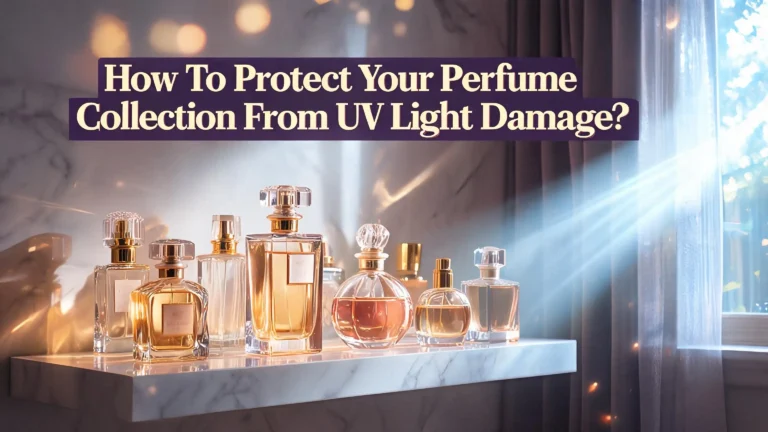
Do not leave your bottles on a windowsill or on top of a dresser near a window. UV light breaks down many of the aromatic compounds that contribute to sillage and projection. Even indirect sunlight over weeks and months can reduce the potency of your fragrance.
Temperature fluctuations are another enemy. Moving your bottle between hot and cold environments repeatedly can cause the fragrance to oxidize. Consistent, cool storage preserves the integrity of the formula and keeps your eau de toilette performing at its best for years. If you buy backup bottles, consider storing them in their original boxes in a dark closet for maximum shelf life.
Consider A Fragrance Primer Or Extender
Fragrance primers and extenders are products specifically made to boost the longevity and sillage of your perfume. These products create a base layer on your skin that anchors fragrance molecules and slows down their evaporation rate.
A fragrance primer is applied before your eau de toilette, similar to how a makeup primer goes on before foundation. Most primers are odorless and create a silicone or wax based film on the skin. This film gives fragrance molecules something to cling to, extending their release time and improving how far the scent travels.
Fragrance extenders or finishing sprays work differently. You apply them over your eau de toilette to seal in the scent. They form a breathable barrier that traps the fragrance against your skin and releases it slowly throughout the day. Some products claim to add up to 12 hours of additional wear time.
Results vary from person to person, and not every product on the market delivers on its promises. The best approach is to test a primer or extender with your specific eau de toilette before committing to daily use. Apply it on one arm and spray without it on the other. Compare the sillage and longevity over several hours to see if the product makes a meaningful difference for your fragrance.
Overspray Strategically For Better Projection
Sometimes the simplest solution is more spray. Adding one or two extra sprays to your routine can meaningfully improve the sillage of a weak eau de toilette. The additional fragrance molecules increase the total concentration on your body and create a larger scent cloud around you.
The key word here is strategic. Do not blast yourself with ten sprays in one spot. Instead, distribute extra sprays across different areas of your body. Add one spray to the back of your neck. Add another to your stomach or the inside of your elbow. This wider distribution creates a more balanced and far reaching sillage.
Keep in mind that your nose adapts to familiar scents. This phenomenon is called olfactory fatigue or anosmia. After about 20 to 30 minutes of wearing a fragrance, your brain starts to tune it out. You may think the scent has disappeared, but people around you can still smell it clearly.
Before adding more spray, ask a trusted friend or colleague if they can detect your fragrance. You might be surprised to learn that your sillage is stronger than you think. If others confirm the scent is faint, then adding more sprays is justified. A good general guideline for eau de toilette is four to six sprays distributed across your body for moderate sillage.
Pick Fragrances With Sillage Friendly Ingredients
Not all eau de toilettes are created equal. Some fragrance families and specific ingredients naturally project better than others. If you consistently struggle with sillage, consider choosing eau de toilettes that contain strong base notes known for their projection power.
Musk, amber, sandalwood, and vanilla are some of the most tenacious fragrance ingredients. Eau de toilettes built on these base notes tend to project further and leave a stronger scent trail. Aromachemicals like ambroxan, iso E Super, and cashmeran are synthetic molecules specifically valued for their ability to provide lasting, far reaching sillage.
Citrus, green, and aquatic fragrances tend to have the weakest sillage by nature. Their top note heavy compositions evaporate quickly and do not project as far. If you love these lighter scent profiles, you will need to use more of the other techniques in this guide to compensate.
Oriental, chypre, fougere, and gourmand fragrance families generally offer the best sillage performance. These categories feature heavier molecules that linger in the air longer and travel further from the body. When shopping for a new eau de toilette, reading reviews about its sillage performance from other users can save you from disappointment. Fragrance community forums and review sites provide real world performance feedback that helps you choose wisely.
Carry A Travel Atomizer For Touch Ups
Even with every optimization in place, eau de toilette will eventually fade. Carrying a small travel atomizer filled with your fragrance allows you to reapply throughout the day and maintain your sillage from morning to evening.
A travel atomizer is a small refillable spray bottle that fits in your pocket, purse, or bag. Most hold about 5 to 10 ml of fragrance, which is enough for several days of touch ups. Fill it directly from your main bottle and take it wherever you go.
The ideal time for reapplication is after four to five hours, or whenever you notice the scent has faded to a skin scent level. A quick spray or two on your neck and wrists is enough to refresh the sillage without overdoing it. Midday reapplication is especially effective because the people around you in the afternoon are different from those who encountered your morning application.
Reapplying on clothing during touch ups can be even more effective than spraying skin. A quick spritz on your scarf or jacket collar adds hours of sillage without needing to worry about skin moisture or body chemistry. This portable approach turns a weak eau de toilette into an all day performer and ensures you always leave a pleasant scent trail wherever you go.
Frequently Asked Questions
Why does my eau de toilette have such weak sillage?
Eau de toilette formulas contain a lower concentration of fragrance oils, usually between 5% and 15%. This means fewer scent molecules are present on your skin, which reduces how far the fragrance projects. Skin type also matters. Dry skin evaporates fragrance faster, and your individual body chemistry can mute certain ingredients. Environmental factors like cold weather or air conditioning further reduce projection.
Does petroleum jelly really help perfume sillage?
Yes, many fragrance enthusiasts report positive results. Petroleum jelly creates a smooth, occlusive barrier on the skin that slows down the evaporation of fragrance molecules. This gives your eau de toilette more time to project and creates a longer lasting scent trail. Apply a thin layer to pulse points before spraying your fragrance for the best effect.
Can I spray eau de toilette on my clothes without staining them?
Most modern eau de toilettes will not stain fabric, but some formulas with darker coloring or stronger dye content can leave marks. Always do a patch test on a hidden area of the fabric first. Spray the inside lining of jackets, the underside of collars, or areas not visible to others. Light colored and delicate fabrics need extra caution.
How many sprays of eau de toilette should I use for good sillage?
A general guideline is four to six sprays distributed across different body areas. Spraying on the neck, chest, wrists, behind the knees, and on clothing provides a wide and balanced scent distribution. Avoid concentrating all sprays in one area, as this does not improve projection. Remember that olfactory fatigue can trick you into thinking the scent is gone when others can still detect it.
Is it better to apply fragrance on skin or clothes for sillage?
Both have advantages, and using both together gives the best results. Skin application allows your body heat to activate and project the fragrance. Clothing application holds fragrance longer because fabric fibers absorb scent molecules and release them slowly. A combination strategy where you spray both your skin and your clothing maximizes sillage and longevity throughout the day.
Does weather affect eau de toilette sillage?
Absolutely. Heat and humidity help fragrance molecules evaporate and travel through the air, which boosts sillage. Cold and dry conditions slow evaporation and keep the scent closer to your body. In winter or dry climates, use extra sprays, moisturize heavily, and spray on clothing to compensate. In summer, your eau de toilette may perform noticeably better with standard application.

Hi, I’m Lily! I started this blog to share honest reviews, real comparisons, and helpful guides so you can find your perfect scent without the guesswork. Welcome to my scented world!