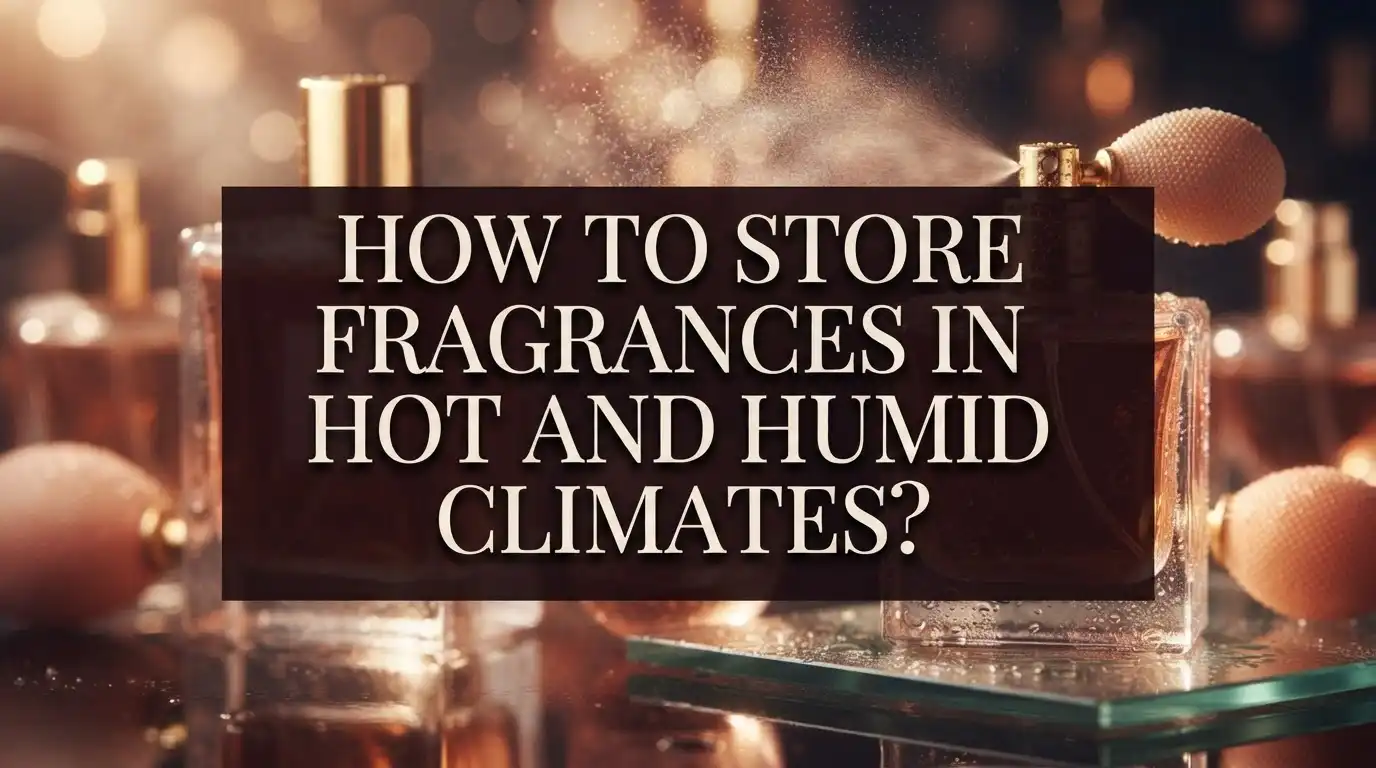
How to Store Fragrances in Hot and Humid Climates?
Your favorite fragrance can turn sour fast in hot, humid weather. Heat and moisture attack scent molecules and change how your perfume smells. This happens quicker than most people expect.
Humidity adds another layer of damage. It speeds up oxidation and breaks down the delicate balance of notes in your fragrance. Your perfume can smell flat or completely different within months.
The good news? You can protect your collection with a few simple changes. This guide covers everything you need to know about storing fragrances in hot and humid climates.
In a Nutshell
- Keep temperatures between 55°F and 70°F. This range keeps your scents stable and fresh for longer.
- Heat speeds up damage fast. Every 18°F rise above the ideal range doubles how quickly your perfume breaks down.
- Store bottles upright with caps sealed tight. This simple step stops leaks and blocks oxidation from ruining the scent.
- Choose low, cool spots away from sunlight. Floor level areas with AC circulation work best since hot air rises to the top of a room.
- Stay away from windows, heaters, and electronics. These spots create heat pockets that speed up spoilage.
- Keep backup bottles boxed and hidden. Original packaging blocks light and adds an extra layer of protection.
Why Heat and Humidity Damage Perfume
Heat and humidity create a perfect storm for fragrance damage. When temperatures rise, the chemical compounds in your perfume break down much faster. This isn’t just about losing scent strength. The actual smell changes into something unpleasant.
Heat accelerates degradation at an alarming rate. Every 18 degrees Fahrenheit above the ideal 55 to 70 degree range doubles how quickly your fragrance deteriorates. A bottle sitting in an 88 degree room breaks down twice as fast as one kept at 70 degrees. Push it to 106 degrees, and you’re looking at four times faster damage.
Humidity compounds this problem significantly. Moisture in the air seeps into bottles through tiny gaps and worn caps. Once water enters, it mixes with the fragrance oils and alcohol. This combination triggers oxidation, which changes the scent profile completely.
Oxidation is the silent killer of perfumes. When fragrance components meet oxygen and moisture, chemical reactions begin. The top notes disappear first. Middle notes become muted. Base notes shift into unfamiliar, often unpleasant scents. Your favorite fragrance literally becomes a different product.
The cap on your bottle plays a critical role here. A loose or damaged cap allows air and moisture to enter continuously. This exposure speeds up every type of damage. Even a slightly loose cap over weeks in humid conditions causes noticeable changes.
Light exposure makes everything worse. Sunlight contains UV rays that break down fragrance molecules even faster than heat alone. A bottle in direct sun near a window experiences triple damage from heat, humidity, and light combined.
Understanding these damage mechanisms helps you see why storage matters so much. You’re not just keeping bottles cool. You’re stopping chemical reactions that destroy what makes your fragrance special. Proper storage protects the investment you’ve made in your collection.
Ideal Temperature and Humidity Ranges for Fragrance Storage
Your fragrance needs specific conditions to stay fresh and smell right. The ideal storage range is 55°F to 70°F. This temperature window keeps the chemical compounds in your perfume stable and prevents breakdown.
Heat damages scent fast. Every 18 degrees Fahrenheit above 70°F doubles how quickly your fragrance degrades. In hot climates, this matters even more because temperatures can spike rapidly and stay high for months.
Humidity levels should stay below 50 percent. High moisture in the air causes oxidation, which changes how your fragrance smells over time. When water vapor mixes with fragrance components, chemical reactions begin that alter the original scent profile.
The combination of heat and humidity is especially dangerous. They work together to break down your perfume faster than either one alone. This is why hot, humid climates require extra attention to storage practices.
Air conditioning helps significantly. If you have AC in your home, use it to maintain steady temperatures and lower humidity. The key is consistency. Fluctuating temperatures cause more damage than steady warmth does.
Floor level spots stay cooler than upper areas because hot air rises naturally. Place your fragrance bottles on lower shelves or in cabinets near the ground. This simple positioning keeps them away from heat that collects near ceilings.
Dark spaces work better than bright ones. Light exposure speeds up degradation, so avoid windowsills and bright shelves. A closed cabinet or drawer provides the darkness your fragrance needs.
Keep bottles upright and caps sealed tightly. This prevents leaks and blocks air from entering the bottle. Oxidation happens faster when oxygen reaches the liquid inside.
Check your collection regularly. Even with perfect storage, fragrances have lifespans. Rotate older bottles first and use them before they age further.
Step-by-Step: How to Properly Store Your Fragrances
Proper fragrance storage requires specific actions that protect your collection from heat and humidity damage. Start by choosing your storage location first. Pick a spot on the lowest floor of your home where air conditioning runs consistently. Hot air naturally rises, so ground level stays cooler than upper floors.
Next, prepare your bottles for storage. Stand each bottle upright on a shelf or in a box. Screw caps on tightly until they stop turning. Loose caps let oxygen enter and damage the scent inside.
Keep fragrances away from direct sunlight. Store them in a dark closet, cabinet, or drawer. Sunlight breaks down fragrance molecules and fades the liquid color. Even indirect light through windows causes problems over time.
Create distance from heat sources. Move bottles away from windows, radiators, heaters, and electronics like computers or televisions. These items generate warmth that accelerates degradation. Even a lamp left on nearby can raise temperatures enough to cause damage.
Store bottles in their original boxes when possible. These boxes provide extra protection from light and temperature swings. If you removed bottles from boxes, wrap them in dark cloth or place them in opaque containers.
Check humidity levels in your storage area. Humidity should stay below 50 percent. Use a simple moisture meter to monitor this. If humidity climbs too high, consider placing silica gel packets near your bottles to absorb excess moisture.
Inspect your collection monthly. Look for color changes, cloudiness, or unusual smells. These signs indicate degradation has started. Rotate older bottles to the front so you use them first.
Keep backup bottles sealed and stored separately. This ensures you always have fresh fragrance available. Never open backup bottles until you need them.
These practical steps create an ideal storage environment that keeps your fragrances fresh and potent for years.
Best Locations in Your Home for Fragrance Storage
The location you choose for fragrance storage makes a huge difference in how long your scents last. Cool, dark spaces are your best friends when living in hot, humid areas.
The lowest floor level of your home is ideal because hot air rises naturally. Upper shelves and attics get significantly warmer, which speeds up fragrance breakdown. Ground floor closets or interior rooms without windows work wonderfully for this reason.
Avoid these common storage spots: windowsills, shelves near lamps, areas above heaters, and spaces close to electronics. Windows let in UV light and temperature swings. Heaters and devices release constant warmth that damages your bottles. Bathrooms are terrible choices because moisture levels spike every time someone showers.
Air conditioned rooms are excellent if you have them. The consistent cool temperature keeps your fragrances stable and fresh. Even a small closet with AC circulation provides better protection than an uncontrolled room.
Interior closets away from exterior walls work well too. These spaces stay naturally cooler because they’re insulated by the rest of your home. Bedrooms are generally better than living areas since they have fewer heat sources and less foot traffic.
Keep bottles upright and sealed tightly wherever you store them. This prevents the liquid from touching the cap, which reduces oxidation and leakage. Store fragrances in their original boxes when possible. The packaging provides extra protection from light and temperature changes.
Check your storage area monthly to ensure it stays cool and dry. If you notice your room getting warm or humid, consider moving your collection to a better spot. Some people use small dehumidifiers in their storage closets to maintain ideal conditions year round.
The goal is creating a stable environment where temperature stays between 55 and 70 degrees and humidity remains below 50 percent. This simple location strategy keeps your fragrances smelling amazing for years.
Tips for Protecting Fragrance Collections Long-Term
Protecting your fragrance collection long-term in hot and humid climates requires consistent attention to storage conditions. The key is preventing heat and moisture from breaking down your scents over time.
Start by understanding the damage timeline. Every 18 degrees Fahrenheit above the ideal 55 to 70 degree range doubles how fast your perfume degrades. This means summer heat in tropical or subtropical areas can destroy your collection rapidly if left unprotected.
Invest in proper storage containers. Keep fragrances in their original boxes whenever possible. These boxes provide extra insulation against temperature fluctuations and light exposure. If original packaging is unavailable, use opaque containers that block light completely.
Seal everything tightly. Loose caps allow oxygen to enter the bottle and break down the fragrance compounds. Check each cap before storage to ensure it sits snugly. This single step prevents oxidation, which is one of the main enemies of long-term fragrance preservation.
Monitor humidity levels actively. Use a hygrometer to track moisture in your storage area. Aim to keep humidity below 50 percent at all times. If your area stays naturally humid, consider using silica gel packets or small dehumidifiers near your collection.
Rotate your bottles occasionally. Even in ideal conditions, check your collection every month. This helps you spot any leaks or changes in color early. If you notice cloudiness or discoloration, move that bottle to a cooler location immediately.
Create redundancy with backups. Keep duplicate bottles sealed in their original packaging in a separate, even cooler location. This ensures you always have fresh bottles available if your primary storage fails during extreme weather events.
Avoid temperature swings. Constant changes between hot and cool damage fragrances more than steady heat does. Choose a location with consistent temperature rather than one that fluctuates throughout the day.
Common Storage Mistakes to Avoid
Many people make simple mistakes when storing fragrances in warm, humid climates. These errors can ruin your collection quickly. Understanding what to avoid helps you keep your scents fresh.
Displaying bottles openly on shelves is a major mistake. Sunlight hits the glass and heats the liquid inside. Shelves near windows are especially problematic because UV rays break down fragrance molecules. Even indirect light causes damage over time. Keep bottles hidden in dark spaces instead.
Storing fragrances near heat sources accelerates degradation. Electronics like computers and televisions release warmth constantly. Heaters, lamps, and air vents also create hot spots. Bathrooms are terrible storage locations because steam from showers increases humidity and temperature. Choose rooms away from all these sources.
Leaving caps loose is a critical error. Oxygen enters the bottle and oxidizes the fragrance compounds. This changes the scent profile and weakens the aroma. Always seal caps tightly after each use. Check that threads are secure and caps sit flush against the bottle opening.
Placing fragrances in humid environments damages them significantly. Moisture enters through loose seals and degrades the formula. Basements and bathrooms trap humidity. Kitchens near dishwashers are problematic too. Humidity also promotes mold growth on bottle exteriors.
Storing bottles on upper shelves or in attics is counterproductive. Hot air rises naturally, so upper areas stay warmer. Lower floor levels maintain cooler temperatures. Closets on interior walls work better than those on exterior walls.
Mixing fragrances together without protection causes cross contamination. Keep each bottle in its original box when possible. This provides extra insulation and prevents scents from mingling. Store backup bottles separately from your daily collection to preserve them longer.
Avoiding these mistakes keeps your fragrances potent and pleasant for years.
Troubleshooting Signs of Fragrance Degradation
Your fragrance can show clear signs that heat and humidity have damaged it. Learning to spot these warnings helps you act fast and save your collection.
Color changes are one of the first red flags. A fragrance that was clear or pale yellow may turn darker or develop a brownish tint. This happens because heat breaks down the fragrance molecules and causes oxidation. The darker the liquid becomes, the more degradation has occurred.
Smell alterations tell you something is wrong. If your fragrance smells different than when you first opened it, heat damage is likely. The scent may become weaker, smell off, or have unpleasant notes that weren’t there before. Some fragrances develop a vinegar like or sour smell when exposed to excess moisture and heat.
Consistency changes also signal trouble. A fragrance should flow smoothly. If it becomes thicker, cloudier, or develops sediment at the bottom, humidity has gotten inside. You might also notice the liquid separates or looks hazy instead of clear.
Evaporation happens faster in hot climates. Check if your bottle feels lighter than it should or if the liquid level drops noticeably without you using it. This means air is entering through a loose cap or the seal has failed.
Separation of ingredients is another warning sign. Quality fragrances have ingredients mixed evenly throughout. Heat and humidity can cause these to separate, creating layers or a cloudy appearance.
Pay attention to these changes monthly. Early detection means you can move your fragrance to a better storage spot before it becomes unusable. If you notice multiple signs together, the fragrance has likely degraded enough that it won’t perform as intended.
Final Thoughts
Storing fragrances in hot and humid climates takes a bit of extra care. But the effort pays off. Your scents stay fresh and true for much longer.
Temperature control matters most. Keep your bottles in the coolest part of your home. Floor level spots away from windows work best.
Humidity is the silent enemy. Moisture sneaks into bottles through loose caps. It changes the scent composition without warning.
Think about your daily habits too. Do you leave bottles on a sunny dresser? Small changes make a big difference over time.
Simple actions protect your investment. Seal caps tightly after every use. Store bottles upright in their original boxes.
Air conditioned rooms offer the best protection. If you have one, use it for your fragrance storage. Your collection will thank you.
Avoid bathrooms and kitchens completely. These rooms trap heat and steam constantly. They are the worst spots for perfume storage.
Consistency beats perfection here. You do not need an expensive setup. You just need a cool, dry, dark spot that stays stable.
Check your storage spot occasionally. Room conditions can shift with seasons. What works in winter may fail in summer heat.
Remember that prevention is easier than repair. Once heat and humidity damage a fragrance, you cannot reverse it. Good habits from day one save your collection.
Small steps lead to big results. Upright bottles, tight caps, cool locations. These three habits form your defense system.
Your fragrance collection deserves this attention. Hot and humid climates present real challenges. But with the right storage habits, your scents can last for years.
Stay mindful of temperature swings and moisture levels. Trust these basic principles every day. Your perfumes will stay vibrant, true, and ready to wear whenever you want them.
Frequently Asked Questions
What temperature is too hot for storing fragrances?
Every 18 degrees Fahrenheit above the ideal range doubles how fast your fragrance breaks down. The sweet spot sits between 55 and 70 degrees Fahrenheit. Once temperatures climb above 75 degrees, you’ll notice faster degradation. In extremely hot climates, your scent can deteriorate in weeks instead of months.
Think of heat like a fast-forward button for aging. The warmer it gets, the quicker the fragrance compounds separate and oxidize. This means your expensive bottle loses its character much sooner than expected.
Why should I store bottles upright instead of on their side?
Storing bottles upright keeps the liquid away from the cap seal. When fragrances sit sideways, the alcohol and oils touch the cap constantly. This contact lets oxygen seep in and damages the scent composition over time.
Upright storage also prevents leakage. If a seal weakens even slightly, lying bottles will drip. Standing bottles keep the liquid contained safely inside.
Which room in my home works best for fragrance storage?
Choose a room with air conditioning and the least sunlight exposure. Lower floors are better than upper ones because hot air rises naturally. Bedrooms work well if they stay cool and dark.
Avoid bathrooms and kitchens completely. These spaces have constant moisture and temperature swings. Closets on ground floors offer excellent protection if they’re insulated and cool. The key is finding a spot that stays consistently cool without direct heat sources nearby.
Can I store fragrances in the refrigerator?
Yes, refrigerators provide stable, cool temperatures perfect for fragrance storage. Keep bottles in their original boxes to block light exposure. Make sure caps are tight so odors don’t transfer to food.
This method works especially well in hot, humid climates. Just remember to let bottles reach room temperature before opening them. Condensation forms when cold bottles warm up, and moisture damages the fragrance.

Hi, I’m Lily! I started this blog to share honest reviews, real comparisons, and helpful guides so you can find your perfect scent without the guesswork. Welcome to my scented world!