
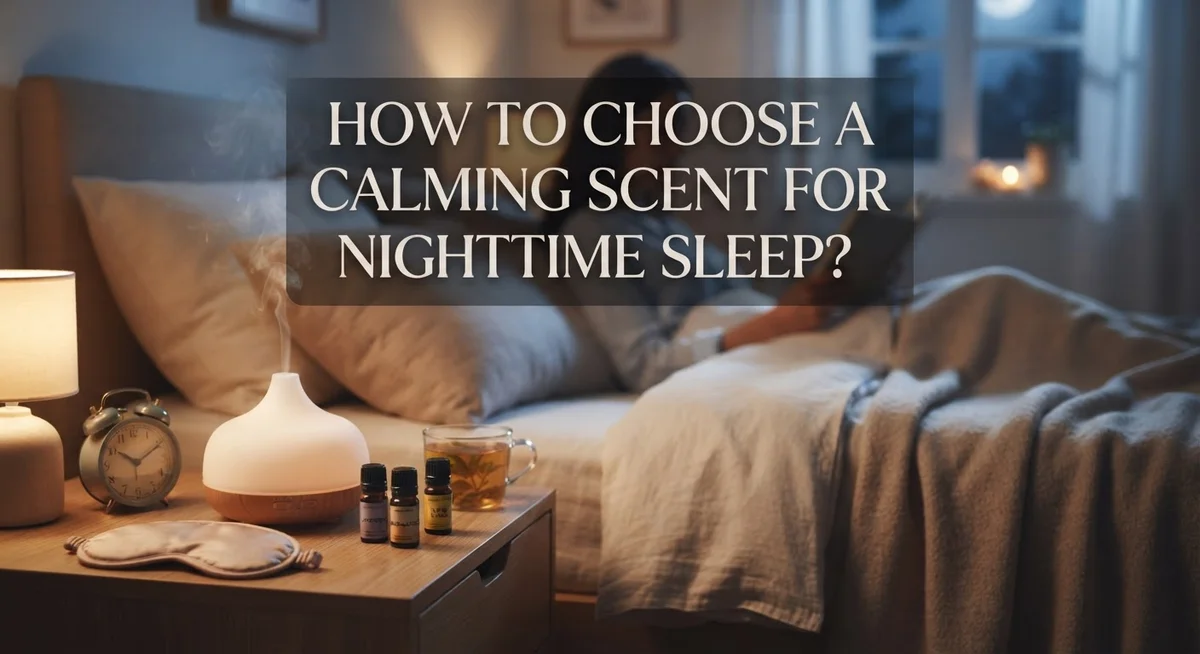
How to Choose a Calming Scent for Nighttime Sleep?
Struggling to fall asleep at night? The right scent might be your answer.
Calming scents can turn your bedroom into a peaceful space. They help your mind relax and prepare your body for rest.
But choosing the right scent is not just about picking one you like. It is about understanding how each scent works and how to use it correctly.
This guide will walk you through everything you need to know. You will learn which scents work best, how to apply them safely, and simple mistakes to avoid.
In a Nutshell
- Lavender is a top pick. It reduces nighttime wakefulness and helps you relax faster.
- Chamomile activates GABA receptors in your brain. This creates a calm feeling without any medication side effects.
- Jasmine improves sleep efficiency. It’s a gentle option if you want something different from lavender.
- Start small. Use 5 to 10 drops of essential oil in a warm bath. This is enough to feel the calming effects.
- Avoid mixing too many scents. Stick to one or two scents at a time. Too many fragrances can overwhelm your senses.
- Don’t overdo diffusion. Strong scents can irritate you or even keep you awake instead of helping you sleep.
- Try diffusers or add scents to your bedtime routine. Both methods work well for consistent results.
- Build a ritual. Pairing your chosen scent with calming habits makes it easier to fall asleep every night.
Why Scent Affects Sleep Quality
Your sense of smell connects directly to your brain’s limbic system. This is the part that controls emotions and sleep cycles. When you inhale a calming scent, it sends signals that tell your body to relax.
Scents work faster than many people realize. Your nose detects fragrance molecules within seconds. These molecules travel to your brain and trigger chemical changes. Your stress hormones drop. Your heart rate slows down. Your mind shifts into a more peaceful state.
Lavender reduces nighttime wakefulness by lowering anxiety levels. Studies show people who use lavender fall asleep more easily and stay asleep longer. The scent works on your nervous system to promote deep relaxation.
Chamomile activates GABA receptors in your brain. GABA is a chemical that calms neural activity. When GABA receptors activate, your mind quiets down. You feel drowsy and ready for bed without any medication side effects.
Jasmine improves sleep efficiency. This means you spend more time actually sleeping instead of tossing and turning. Jasmine also reduces restlessness during the night.
The key difference between scents and other sleep aids is speed and safety. Scents work through your natural senses. Your body recognizes them as harmless. There are no grogginess effects in the morning or dependency concerns.
Temperature also matters. Warm scents like sandalwood feel more comforting than cool ones. Your brain associates warmth with safety and rest.
Consistency builds the effect over time. Your brain learns to associate a specific scent with sleep. After several nights, simply smelling that fragrance triggers your body’s sleep response automatically.
This is why scent becomes such a powerful tool in your nighttime routine. You’re not forcing sleep. You’re gently guiding your body toward it through a sense that bypasses your thinking mind entirely.
Top Calming Scents and Their Benefits
Lavender stands out as a powerful option for sleep. Studies show it reduces nighttime wakefulness by calming your nervous system. You can add 5 to 10 drops to a warm bath before bed or use it in a diffuser in your bedroom.
Jasmine works differently than lavender. This scent improves sleep efficiency, meaning you spend more time in deep, restorative sleep. Jasmine also reduces anxiety, which helps you drift off faster.
Chamomile offers a gentler approach. It activates GABA receptors in your brain, the same receptors that many sleep medications target. The big advantage? You get the benefits without medication side effects or dependency concerns.
Sandalwood provides another solid choice. This scent creates a calming blend when combined with other options. Many people find its warm, woody aroma deeply relaxing before sleep.
Start with one scent before mixing. Using just one scent for two weeks lets you see how your body responds. This approach also prevents overwhelming your senses.
Once you pick your scent, consistency matters. Use it every night as part of your bedtime routine. Your brain begins to associate that smell with sleep time, making it even more effective over weeks.
Apply your chosen scent safely. Never use more than 10 drops in a diffuser, as too much fragrance can irritate your nose or actually prevent sleep. Some people prefer adding scent to their bath, while others use diffusers across the room.
Layer your scent into other calming practices. Pair it with deep breathing, gentle stretching, or reading. This combination strengthens the relaxation response.
The best scent is one that appeals to you personally. What works beautifully for someone else might not resonate with your preferences. Your emotional connection to a scent matters as much as its chemical properties for better sleep.
How to Choose the Right Scent for Your Needs
Choosing the right calming scent comes down to understanding your personal preferences and sleep needs. Start by identifying which scents naturally appeal to you. Some people love floral notes, while others prefer woody or herbal aromas. Your nose knows best, so pay attention to what makes you feel relaxed.
Consider how each scent affects your body. Lavender reduces nighttime wakefulness by calming your nervous system. Chamomile activates GABA receptors in your brain, which promotes relaxation without medication side effects. Jasmine improves sleep efficiency, meaning you spend more time in deep sleep. Sandalwood offers a warm, grounding option for those seeking something different.
Test one scent at a time for at least two weeks. This approach helps you notice real changes in your sleep quality and mood. Switching scents too quickly makes it hard to see what actually works for you.
Pay attention to scent intensity. A gentle aroma works better than an overpowering one. Too much fragrance can trigger irritation instead of relaxation. Start with 5 to 10 drops in a diffuser, then adjust based on how you feel.
Think about when and how you’ll use your scent. Some people add a few drops to a warm bath before bed. Others use a diffuser in their bedroom for 30 minutes before sleep. A third option is layering scent into your pillow or bedding.
Avoid mixing multiple scents when you’re first starting out. Stick to one or two maximum. Combining too many fragrances can confuse your senses and work against relaxation.
Your chosen scent should feel natural and inviting to you. If a scent doesn’t appeal to you emotionally, your body won’t respond as well. Trust your instincts and give yourself permission to switch if something isn’t working after a fair trial period.
Step-by-Step: Incorporating Scent Into Your Bedtime Routine
Start your bedtime routine about 30 minutes before sleep. This gives your body time to respond to the scent’s calming effects.
Begin by choosing your application method. Diffusers work well for filling your bedroom with gentle fragrance. Add 5 to 10 drops of essential oil to your diffuser and turn it on as you prepare for bed. This spreads the scent evenly throughout your space without overwhelming your senses.
If you prefer a bath, add 5 to 10 drops of your chosen oil to warm bathwater. The heat helps release the scent’s compounds into the air. Soak for 10 to 15 minutes while focusing on your breathing. This combines scent exposure with a relaxing physical ritual.
Layer your scent with other calming activities. Read a book, practice gentle stretching, or meditate while the fragrance surrounds you. This connection between scent and peaceful activities strengthens your brain’s sleep response over time.
Place your diffuser or scent source at least three feet away from your bed. This distance prevents the fragrance from becoming too strong while you sleep. You want to notice the scent, not be overwhelmed by it.
Keep your routine consistent every single night. Your body learns to associate this specific scent with sleep preparation. After two weeks, you’ll notice the scent triggers a natural relaxation response.
Avoid applying scent directly to your skin right before bed. Instead, let the fragrance fill your room gradually. This approach prevents irritation and maintains a gentle, supportive sleep environment.
End your routine 10 minutes before sleep. This allows your mind to settle into a quiet state. Your chosen scent continues working in the background as you drift off. Consistency with this exact timing strengthens the effect significantly over time.
Best Application Methods: Diffusers, Baths, and Sprays
Diffusers are one of the most effective ways to add calming scents to your bedroom. They work by breaking oils into tiny particles and releasing them into the air. This method lets you control the intensity and duration of the fragrance throughout your sleep space.
When using a diffuser, add 5 to 10 drops of essential oil to the water chamber. Never exceed this amount, as too much fragrance can actually keep you awake instead of helping you relax. Place your diffuser at least three feet away from your bed so the scent reaches you gradually without overwhelming your senses.
Baths offer another powerful application method. Add 5 to 10 drops of your chosen calming oil to warm bathwater about 30 minutes before bed. The warmth of the water helps your body absorb the scent while relaxing your muscles. This combines the benefits of both the fragrance and the soothing bath experience.
Sprays work differently from diffusers and baths. They deliver scent quickly but fade faster than other methods. You can lightly mist your pillowcase or the air around your sleeping area. Be careful not to spray directly on your skin or face right before sleep.
The key is choosing the method that fits your lifestyle. Some people prefer the passive, consistent release of a diffuser. Others enjoy the ritual of a warm bath. Sprays work best for quick application when you’re short on time.
Avoid mixing application methods on the same night when you’re starting out. Stick with one approach for at least two weeks. This helps you understand which method your body responds to best. Once you find your preferred method, keep using it every single night for consistent results.
Tips for Building a Consistent Scent Ritual
A consistent scent ritual trains your brain to recognize sleep time. Your nervous system learns to relax when it encounters the same fragrance each night. This repetition creates a powerful signal that bedtime is approaching.
Start by picking one scent and using it every single evening. Consistency matters more than perfection here. Your body needs time to build the association between that scent and sleep. Stick with your chosen fragrance for at least two to three weeks before switching.
Set a specific time each night to introduce your scent. If you use a diffuser, turn it on 15 minutes before bed. If you prefer baths, add your drops right after you draw the water. This timing helps your brain establish a predictable pattern.
Pair your scent with another calming activity to strengthen the ritual. You might read, practice gentle stretching, or meditate while your fragrance fills the room. These combined actions create a stronger sleep signal than scent alone can provide.
Keep your scent source in the same location every night. Place your diffuser on the same shelf or table. This visual consistency reinforces your routine and helps your mind shift into sleep mode faster.
Avoid changing scents frequently. Your brain needs repetition to build the sleep association. If you want to switch fragrances later, do so gradually by blending the old and new scent for a few nights.
Write down when you use your scent and how you sleep that night. Track patterns over two weeks. You’ll notice if your chosen fragrance actually improves your sleep quality or if you need to adjust your application method.
The goal is making scent feel automatic and natural. When your ritual becomes habitual, your body will begin relaxing the moment you smell that familiar fragrance. This automatic response deepens your sleep quality over time.
Common Mistakes to Avoid When Using Scents for Sleep
Using scents for sleep requires awareness of common pitfalls. Many people make mistakes that actually work against relaxation and quality rest.
Overusing oils is the biggest error. When you add too many drops to your diffuser, the scent becomes overwhelming. Your nose gets irritated instead of soothed. Strong fragrance can trigger headaches or stuffiness, making sleep harder. Stick to 5 to 10 drops maximum in your diffuser. Your bedroom should smell pleasant, not like a perfume counter.
Mixing too many scents at once confuses your senses. Your brain needs clarity to recognize sleep signals. When you blend three or four different scents, your nervous system works overtime trying to process them. Limit yourself to one or two scents per night. This gives your body a clear signal that sleep time has arrived.
Applying scent too close to bedtime prevents relaxation. Your mind needs time to adjust. Start your scent routine 30 minutes before sleep, not right when you lie down. This allows your brain to settle gradually.
Placing your diffuser too close to your bed creates an overly concentrated smell zone. Position it at least three feet away. This gives the scent room to distribute evenly throughout your space.
Switching scents constantly defeats the purpose. Your body learns to associate specific smells with sleep through repetition. If you change scents every few nights, you lose that connection. Pick one scent and use it consistently for at least two weeks before switching.
Applying oils directly to your skin before bed causes irritation. Essential oils are concentrated and can burn sensitive skin. Use diffusers, baths, or sprays instead. These methods deliver scent safely without contact irritation.
Ignoring your personal preference matters too. If a scent doesn’t appeal to you, your body won’t relax into it. Choose fragrances you genuinely enjoy. Your emotional response to a scent affects how well it works for sleep.
Final Thoughts
Choosing a calming scent for nighttime sleep comes down to knowing your senses and respecting simple limits. Lavender, jasmine, chamomile, and sandalwood each offer real benefits backed by research. None of them work like magic, though. They work best as part of a steady routine.
Your body responds well to predictability. When you pick a scent and stick with it, your brain learns to connect that smell with rest. This small habit can make falling asleep feel easier over time.
Remember that less is more with essential oils. Five to ten drops are enough for most diffusers or baths. Adding more oil does not mean better sleep. It often causes the opposite effect.
Stick to one or two scents at a time. Blending too many fragrances confuses your senses instead of calming them. Simplicity helps your mind relax faster.
Testing single scents first gives you clarity. You learn what truly helps you unwind before mixing anything new. This step saves you from wasted trials and unwanted reactions.
Pay attention to how your body feels after each session. Your own response matters more than any general guide. Some people feel calm with jasmine, while others find chamomile more soothing.
Sleep is personal, and scent preference varies from person to person. What works for a friend may not work the same way for you. Give yourself time to notice patterns.
In the end, calming scents are simple tools that support better sleep habits. They are not a cure on their own. Combine them with good sleep hygiene, a quiet room, and a steady bedtime schedule.
With patience and consistency, you can build a nighttime ritual that feels natural and calming. Small changes like these often lead to deeper, more restful sleep over time.
Frequently Asked Questions
Do calming scents actually improve sleep quality?
Yes, they do. Lavender, chamomile, and jasmine have real effects on your body. Lavender reduces nighttime wakefulness and anxiety. Chamomile activates GABA receptors in your brain, which promotes relaxation without medication side effects.
Jasmine improves sleep efficiency, meaning you spend more time in deep sleep phases. These scents work by calming your nervous system before bed.
What’s the safest way to use essential oils for sleep?
Use 5 to 10 drops in a diffuser. This amount gives you enough scent without overwhelming your senses. Add the drops to your diffuser about 30 minutes before bedtime.
A relaxing bath with 5 to 10 drops also works well. Never apply essential oils directly to your skin before sleep, as they can cause irritation. Keep your diffuser at least a few feet away from your bed to avoid concentrated exposure.
Can I mix multiple scents together for better results?
Stick to one or two scents maximum. Mixing too many scents confuses your senses and actually prevents relaxation. Your brain needs clarity to recognize sleep signals.
Start with a single scent for at least one week. Once you know how your body responds, you can experiment with combining two complementary scents like lavender and chamomile.
How long does it take for scents to improve my sleep?
Most people notice changes within three to seven days of consistent use. Your brain learns to associate the scent with bedtime through repetition.
Use the same scent at the same time each night. Keep a simple log of when you use your scent and how you sleep. This helps you track patterns and see real progress over time.

Hi, I’m Lily! I started this blog to share honest reviews, real comparisons, and helpful guides so you can find your perfect scent without the guesswork. Welcome to my scented world!