How To Fix The Spray Nozzle On A Broken Perfume Bottle?
Few things are more frustrating than pressing down on your favorite perfume bottle and getting nothing but silence. You know the scent is in there. You can see the liquid through the glass. But no matter how many times you press, the nozzle refuses to spray.
Before you toss that expensive bottle in the trash or let it collect dust on your shelf, take a breath. A broken spray nozzle is one of the most common perfume bottle problems, and it is almost always fixable at home with basic tools you probably already own.
This guide walks you through every possible fix, from a quick 30 second cleaning trick to a full nozzle replacement.
Key Takeaways
- A clogged nozzle is the most common reason a perfume bottle stops spraying. Dried perfume residue blocks the tiny opening, and a simple soak in warm water or a gentle poke with a sewing needle can fix it in minutes.
- Trapped air bubbles inside the dip tube can stop the pump from drawing liquid. Holding the bottle upright, tapping it gently, and priming the pump a few times usually removes the air lock.
- A stuck metal ball inside the spring mechanism is a frequent but overlooked cause of spray failure. You can dislodge it by removing the nozzle, exposing the ball, and using a fine needle to free it.
- Replacing the nozzle with one from another bottle is a fast and reliable fix if cleaning and adjustments do not work. Many perfume nozzles share standard sizes and can be swapped easily.
- Transferring your perfume to a new bottle is the best backup plan if the spray mechanism is beyond repair. A small syringe or funnel makes this process clean and simple.
- Regular nozzle cleaning and proper storage prevent most spray problems before they happen. Wipe the nozzle after each use and store bottles upright in a cool, dry place.
Why Your Perfume Spray Nozzle Stopped Working
Understanding the root cause is the first step to fixing any problem. Perfume spray nozzles fail for several specific reasons, and each one has a different solution. The most frequent cause is dried perfume residue clogging the nozzle opening. Perfume contains alcohol and fragrance oils. The alcohol evaporates quickly, but the oils can dry into a sticky film that blocks the tiny spray hole over time.
Another common cause is air trapped inside the dip tube or pump chamber. The dip tube is the thin straw that reaches into the liquid. If air gets locked inside, the pump cannot create enough suction to pull the perfume up and out through the nozzle.
Mechanical failure inside the pump is another possibility. Every perfume sprayer contains a small spring and a metal ball that work together to push liquid through the nozzle. If the metal ball gets stuck or the spring bends, the entire mechanism stops working. This often happens after a bottle is dropped or stored improperly.
Finally, the nozzle itself may be misaligned or physically broken. Rough handling, accidental drops, or normal wear can shift the nozzle out of position. If the cap or actuator cracks, the spray pattern becomes uneven or stops entirely. Once you identify which of these issues is affecting your bottle, you can pick the right fix from the methods below.
Tools You Will Need For The Repair
Before starting any repair, gather a few basic tools. You do not need anything special or expensive. Most of these items are already in your home. Having everything ready before you begin makes the process faster and prevents interruptions.
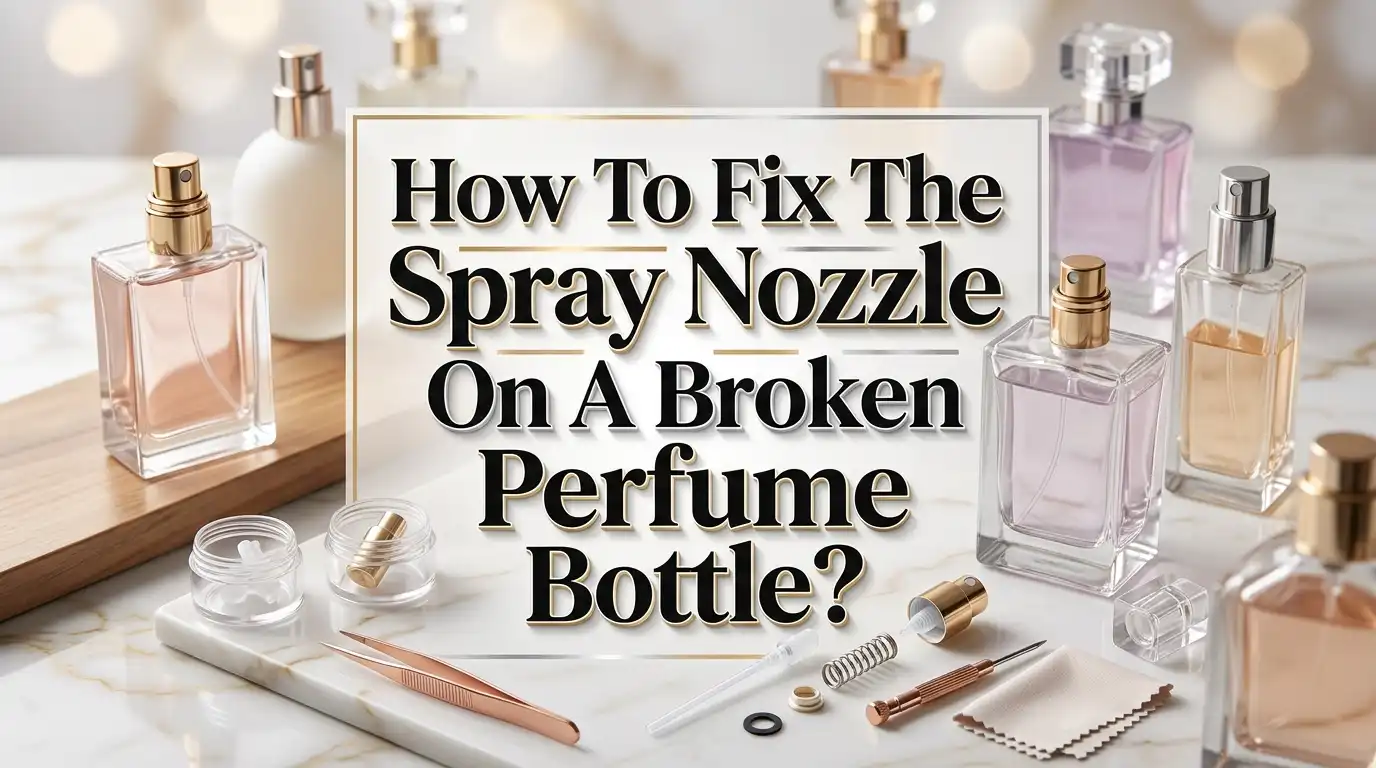
You will need a fine sewing needle or a straight pin. This is the most important tool for clearing clogs and freeing stuck metal balls. A pair of needle nose pliers helps grip and remove stubborn nozzle caps. Keep a small bowl of warm water ready for soaking clogged parts. Rubbing alcohol (isopropyl alcohol) works well to dissolve dried perfume residue.
A few cotton swabs or cotton balls help with cleaning around the nozzle and wiping away loosened residue. If you need to transfer perfume to a new bottle, grab a small syringe without a needle or a tiny funnel. A soft lint free cloth protects the glass bottle and keeps your work surface clean.
Optional but helpful: a small flathead screwdriver can assist with prying off crimped metal collars. A pair of small scissors or wire cutters may help if you need to trim a dip tube to fit a new bottle. Place all tools on a clean, dry towel before you start. This way you can see everything at a glance and avoid losing the small parts that come out during disassembly.
Method 1: Clear A Clogged Nozzle With Warm Water
This is the easiest and fastest fix. It works well for nozzles that have become blocked by dried perfume residue over time. Most perfume enthusiasts and repair guides recommend this as the first method to try because it requires zero special tools and causes no risk of damage to the bottle.
Start by removing the nozzle cap from the bottle. On most bottles, the cap pulls straight off or twists counterclockwise. Hold the nozzle under a stream of warm running water for about 60 seconds. The warmth softens and dissolves dried fragrance oils stuck inside the tiny opening.
While the water runs over the nozzle, press the pump mechanism several times. This forces water through the internal tube and flushes out any blockage from the inside. You should see small bits of residue wash away.
After rinsing, shake off excess water and let the nozzle air dry for a few minutes. Reattach it to the bottle and test the spray. In many cases, this simple flush restores full spray function immediately.
Pros: Extremely easy, no tools required, zero cost, and no risk of breaking parts. Cons: May not work for severe clogs or mechanical failures inside the pump. If the blockage is caused by something other than dried residue, you will need a more targeted approach.
Method 2: Use A Needle To Unclog The Spray Opening
If warm water alone did not solve the problem, a sewing needle provides more direct action. The spray opening on a perfume nozzle is very small. Even a tiny amount of hardened residue can completely block it. A fine needle can reach inside and physically clear the obstruction.
Remove the nozzle cap from the bottle. Look closely at the tip of the nozzle. You will see a tiny hole where the mist comes out. Carefully insert the tip of a sewing needle into this hole. Use a gentle twisting and poking motion to break up any dried material. Do not push too hard, as you could widen the opening and change the spray pattern.
After clearing the hole, run the nozzle under warm water to flush out the loosened debris. Press the pump a few times while rinsing. This combination of physical clearing and water flushing removes even stubborn clogs.
Dry the nozzle, reattach it, and test the spray. Most people find that this method fixes about 70% of clogged nozzles that warm water alone could not clear.
Pros: Very effective for dried residue clogs, uses common household items, and takes only a few minutes. Cons: Requires a steady hand and patience. If you push too aggressively, you could damage the nozzle’s internal structure. This method does not fix mechanical problems with the pump or spring.
Method 3: Fix A Stuck Metal Ball Inside The Pump
This is one of the most overlooked causes of spray nozzle failure. Inside every perfume pump mechanism, there is a small metal ball sitting on top of a spring. When you press the nozzle, the spring compresses and the ball moves, allowing liquid to flow. If this ball gets stuck, the pump cannot function.
Start by pulling the nozzle cap off the bottle. Then gently pull the nozzle assembly upward to expose the dip tube and the pump mechanism underneath. On many bottles, you will need needle nose pliers to grip the metal collar and lift the pump out. Be careful with glass bottles to avoid cracking.
Once the pump is exposed, look for the metal ball at the top of the spring. If it appears jammed or off center, insert a fine sewing needle into the opening and gently push or wiggle the ball. The goal is to free it so it can move up and down freely on the spring again.
After adjusting the ball, reassemble the pump and test the spray. You should feel a noticeable difference in how the actuator button responds. It should press down smoothly and spring back quickly.
Pros: Fixes a very common hidden problem that other methods miss entirely. Once the ball is freed, the fix is usually permanent. Cons: Requires disassembly of the pump, which can be tricky on crimped bottles. There is a small risk of losing the metal ball if you are not careful during the process. Work over a towel to catch any small parts.
Method 4: Remove Trapped Air From The Dip Tube
Air bubbles trapped in the dip tube create what is called an air lock. When this happens, the pump cannot draw liquid from the bottle no matter how many times you press it. The spray button may feel normal, but nothing comes out. This problem is especially common in bottles that have been stored on their sides or have low liquid levels.
The fix is straightforward. Hold the bottle completely upright and gently tap the bottom of the bottle against your palm a few times. This encourages trapped air to rise out of the dip tube and back into the bottle’s air space.
Next, prime the pump by pressing the nozzle 10 to 15 times in quick succession. You may hear a slight gurgling or hissing sound as the air escapes and liquid begins to fill the tube. Keep pumping until you see mist coming out.
If the air lock is severe, remove the nozzle cap, turn the bottle upside down briefly, then flip it back upright and reattach the nozzle. This repositions the liquid around the bottom of the dip tube and helps break the air seal.
Pros: Simple, fast, and requires no tools at all. This fix works instantly once the air is cleared. Cons: Only effective if trapped air is the actual problem. If the nozzle is clogged or the pump is broken, removing air will not help. This is a good diagnostic step to try early in your troubleshooting process.
Method 5: Realign A Misaligned Nozzle
A nozzle that has shifted out of its correct position can cause weak spray, uneven mist, or a complete failure to spray. This often happens when the outer cap is knocked loose or when the actuator button is pressed at an angle repeatedly. Misalignment is a mechanical issue, but it is one of the easiest to fix.
Remove the decorative outer cap from your perfume bottle. Look at the nozzle assembly from the top. It should sit centered and straight on the bottle’s neck. If it leans to one side or wobbles, the alignment is off.
Gently press the nozzle assembly downward and twist it slightly until it clicks into a centered position. On screw type bottles, turn the nozzle clockwise until it is snug. On crimp type bottles, use even pressure with your fingers to push the collar back into its seat.
Once repositioned, test the spray. You should notice a more even and consistent mist pattern. If the nozzle still wobbles, a tiny piece of clear tape around the base of the nozzle stem can provide extra stability. This is a temporary fix, but it works well.
Pros: Quick fix with no tools needed in most cases. Solves uneven spray patterns and weak mist problems immediately. Cons: Does not work if the nozzle or collar is cracked or permanently deformed. Crimp type bottles are harder to realign because the metal collar resists repositioning once it has been set during manufacturing.
Method 6: Soak The Pump Mechanism In Rubbing Alcohol
Sometimes the entire pump mechanism becomes gummed up with dried fragrance oils, not just the nozzle tip. When this happens, a deep soak in rubbing alcohol dissolves the residue throughout the internal components. Isopropyl alcohol is ideal because it evaporates quickly and leaves no residue behind.
Remove the entire spray assembly from the bottle. This includes the nozzle, pump, spring, and dip tube as one connected unit. Place the whole assembly into a small bowl filled with 70% or higher isopropyl alcohol. Let it soak for 15 to 30 minutes.
While the parts are submerged, press the pump mechanism several times to force alcohol through all the internal channels. This active flushing combined with the soaking breaks down even heavy buildup.
Remove the assembly from the alcohol, shake off the excess, and let it air dry for 10 minutes. Reattach it to the bottle and test. The spray should feel smooth and produce a fine, even mist.
Pros: Very effective for heavily clogged mechanisms and pumps that feel stiff or sticky. Alcohol dissolves fragrance oils better than water alone. Cons: Requires removing the entire spray assembly, which can be difficult on some bottle designs. The alcohol scent may temporarily mix with your perfume for the first few sprays, but this fades quickly.
Method 7: Replace The Nozzle With One From Another Bottle
If cleaning and adjusting do not restore the spray, the nozzle itself may be damaged beyond repair. The good news is that many perfume bottles use standard sized spray nozzles that are interchangeable. You can take a working nozzle from an empty or inexpensive bottle and put it on your broken one.
Find a spare perfume bottle with a working spray nozzle. Compare the neck sizes of both bottles. Most standard perfume bottles use either a 13mm or 15mm crimp neck. If the sizes match, the swap is simple. Pull the nozzle assembly off the donor bottle and press it onto your broken bottle’s neck.
For screw type nozzles, unscrew the old one and screw on the replacement. Make sure it fits snugly with no gaps or wobbling. Test the spray to confirm it works properly.
If you do not have a spare bottle handy, small empty refillable atomizer bottles sold at beauty supply stores often come with compatible nozzles. These can serve as donor parts.
Pros: A reliable fix that gives you a brand new, fully functional spray mechanism. Works when all cleaning methods fail. Cons: Requires finding a compatible replacement nozzle, which may take some trial and error. Not all nozzle sizes are universal, so the first replacement you try might not fit.
Method 8: Transfer Perfume To A New Bottle
Sometimes the spray mechanism is simply too damaged to fix. The spring may be broken, the pump housing cracked, or the crimp collar bent beyond adjustment. In these situations, transferring the perfume to a new container is the best way to save your fragrance.
Use needle nose pliers to carefully remove the spray assembly and any metal crimp collar from the original bottle. Work slowly and keep the bottle upright to avoid spilling. Once the top is open, you have direct access to the liquid inside.
Use a small syringe without a needle to draw the perfume out and transfer it into a clean empty spray bottle. A miniature funnel also works well. Pour slowly and steadily to minimize air exposure, which can affect the fragrance over time.
Choose a new bottle that is made of glass rather than plastic. Perfume chemicals can react with certain plastics and alter the scent. Dark colored glass bottles offer extra protection from light, which helps preserve the fragrance longer.
Pros: Saves every last drop of your perfume regardless of how badly the original bottle is damaged. Gives you a fresh, working spray mechanism. Cons: Requires careful handling to avoid spills and fragrance loss. Opening a crimped bottle can be tricky and risks cutting yourself on sharp metal edges. Use gloves if the metal collar has rough edges.
Method 9: Tap The Nozzle To Release Excess Pressure
This is a lesser known trick that works surprisingly well for bottles that have built up internal pressure over time. Excessive pressure inside the bottle can prevent the pump from creating the suction needed to draw liquid through the system.
Hold the bottle upright in one hand. With the other hand, gently tap the nozzle tip against a hard surface like a countertop or table edge. Use light, controlled taps. The goal is to release trapped air and equalize the pressure inside and outside the bottle.
After tapping five to ten times, try pressing the nozzle normally. You may hear a slight hiss as air escapes. This means the pressure is releasing. Continue pressing until perfume begins to spray.
This technique works best on bottles that have been stored in warm environments or in direct sunlight. Heat causes the liquid and air inside to expand, creating pressure that interferes with the pump action.
Pros: Takes only seconds and requires no tools or disassembly. A great first step before trying more involved fixes. Cons: Only helps if internal pressure is the issue. Has no effect on clogs, broken springs, or misaligned parts.
Method 10: Lubricate A Stiff Pump Mechanism
A pump that feels stiff or only travels partway down likely has dried oils jamming the moving parts. Unlike a complete clog, this issue affects the mechanical action of the pump rather than the spray opening. Lubrication restores smooth movement.
Remove the spray assembly from the bottle. Apply a tiny drop of food grade mineral oil or silicone lubricant to the stem where the actuator meets the pump housing. Work the pump back and forth several times to distribute the lubricant through the mechanism.
Do not use cooking oil or petroleum jelly. These products can degrade rubber seals and introduce unwanted odors into your perfume. Stick with products safe for skin contact and compatible with plastic and rubber components.
After lubricating, reattach the assembly and test the spray. The button should press down smoothly and spring back without resistance. The mist should come out evenly and consistently.
Pros: Restores smooth pump action and extends the life of the mechanism. Prevents future stiffness if done periodically. Cons: Requires a specific type of lubricant. Using the wrong product can damage seals or affect the perfume’s scent. This fix does not help with clogs or broken internal parts.
How To Prevent Perfume Nozzle Problems In The Future
Prevention saves time and money. Most perfume spray failures are avoidable with a few simple habits. Making these part of your routine keeps your bottles working smoothly for years.
Store bottles upright in a cool, dry place away from direct sunlight and heat sources. Temperature changes cause the liquid to expand and contract, which can force air into the dip tube and create pressure problems. A bedroom dresser or closet shelf is ideal. Avoid bathrooms, where humidity and heat fluctuate.
Wipe the nozzle tip after each use with a clean, dry cloth. This removes fresh perfume residue before it has a chance to dry and harden. It takes only two seconds and prevents the most common cause of clogs.
Replace the cap after every use. The cap protects the nozzle from dust, lint, and accidental bumps. It also reduces air exposure, which slows evaporation of the alcohol in the formula.
Avoid shaking your perfume bottle vigorously. Unlike some products, perfume does not need mixing. Shaking introduces air bubbles into the liquid, which can get trapped in the dip tube and cause air locks. A gentle swirl is fine if you feel the need, but most perfumes are ready to spray without any agitation.
Pros: These habits cost nothing and take minimal effort. They prevent the vast majority of spray problems before they start. Cons: Requires consistent daily attention. Habits take time to build, but the payoff is a perfume collection that always works on demand.
When To Seek Professional Help Or Accept The Loss
Not every perfume bottle can be saved at home. Certain types of damage go beyond what DIY methods can fix. Knowing when to stop trying prevents further damage and saves your time for better solutions.
If the glass bottle itself is cracked or chipped, do not attempt repairs. Cracked glass can break further during handling and cause cuts. Transfer the perfume to a new bottle immediately and dispose of the damaged glass safely.
If the internal pump mechanism has a broken spring or a shattered housing, home repair is unlikely to succeed. These parts are tiny and precisely engineered. Without exact replacement parts, you cannot restore proper function. Some specialty fragrance stores offer repair services for high end bottles, so this may be worth exploring for expensive perfumes.
If the metal crimp collar is severely bent or separated from the bottle, reattaching it securely is very difficult without professional tools. The collar must form an airtight seal to maintain pressure. A loose collar will leak and allow the perfume to evaporate.
For vintage or limited edition bottles, consider consulting a professional bottle restorer. These specialists have the tools and parts to repair mechanisms that home methods cannot fix. The cost is usually reasonable compared to the value of a rare fragrance.
Frequently Asked Questions
Why does my perfume bottle spray unevenly?
Uneven spray usually comes from a partially clogged nozzle or a misaligned actuator. Dried perfume residue can block part of the opening while leaving the rest clear. This creates a lopsided mist. Clean the nozzle tip with a needle and warm water. If cleaning does not help, check that the nozzle is seated straight on the bottle. A slight tilt can redirect the spray to one side.
Can I use any replacement nozzle on my perfume bottle?
Not every nozzle fits every bottle. Perfume bottles use different neck sizes, with 13mm and 15mm being the most common. You need a nozzle that matches your bottle’s neck diameter. Test fit the replacement before committing. It should sit firmly without wobbling or leaking. Nozzles from bottles of similar brands or sizes often work as direct swaps.
How do I know if the pump mechanism is broken?
Press the nozzle button and pay attention to the resistance. A working pump offers slight resistance and then springs back when you release it. If the button stays down, the spring is likely broken. If you feel no resistance at all, the pump housing may be cracked. If it feels normal but nothing sprays, the issue is likely a clog or air lock rather than a pump failure.
Is it safe to transfer perfume to a plastic bottle?
Glass is always the better choice for storing perfume. Certain plastics can react with fragrance chemicals and alter the scent over time. If you must use plastic, choose a bottle made from PET plastic, which is more resistant to chemical reactions. For long term storage, dark glass bottles protect the formula from light and maintain the original fragrance quality.
How often should I clean my perfume nozzle?
A quick wipe of the nozzle tip after each use prevents most buildup. For a deeper clean, soak the nozzle in warm water or rubbing alcohol once every two to three months. This schedule keeps the spray mechanism clear without overdoing it. Bottles you use daily may need more frequent attention, while those you use occasionally can go longer between cleanings.
Can dropping a perfume bottle break the spray mechanism?
Yes. A drop can jar the metal ball loose from the spring, crack the pump housing, or bend the dip tube. Even if the glass bottle survives the fall, the internal spray mechanism may be damaged. After dropping a bottle, test the spray immediately. If it does not work, try the metal ball fix or the pump lubrication method described above before considering a nozzle replacement.

Hi, I’m Lily! I started this blog to share honest reviews, real comparisons, and helpful guides so you can find your perfect scent without the guesswork. Welcome to my scented world!