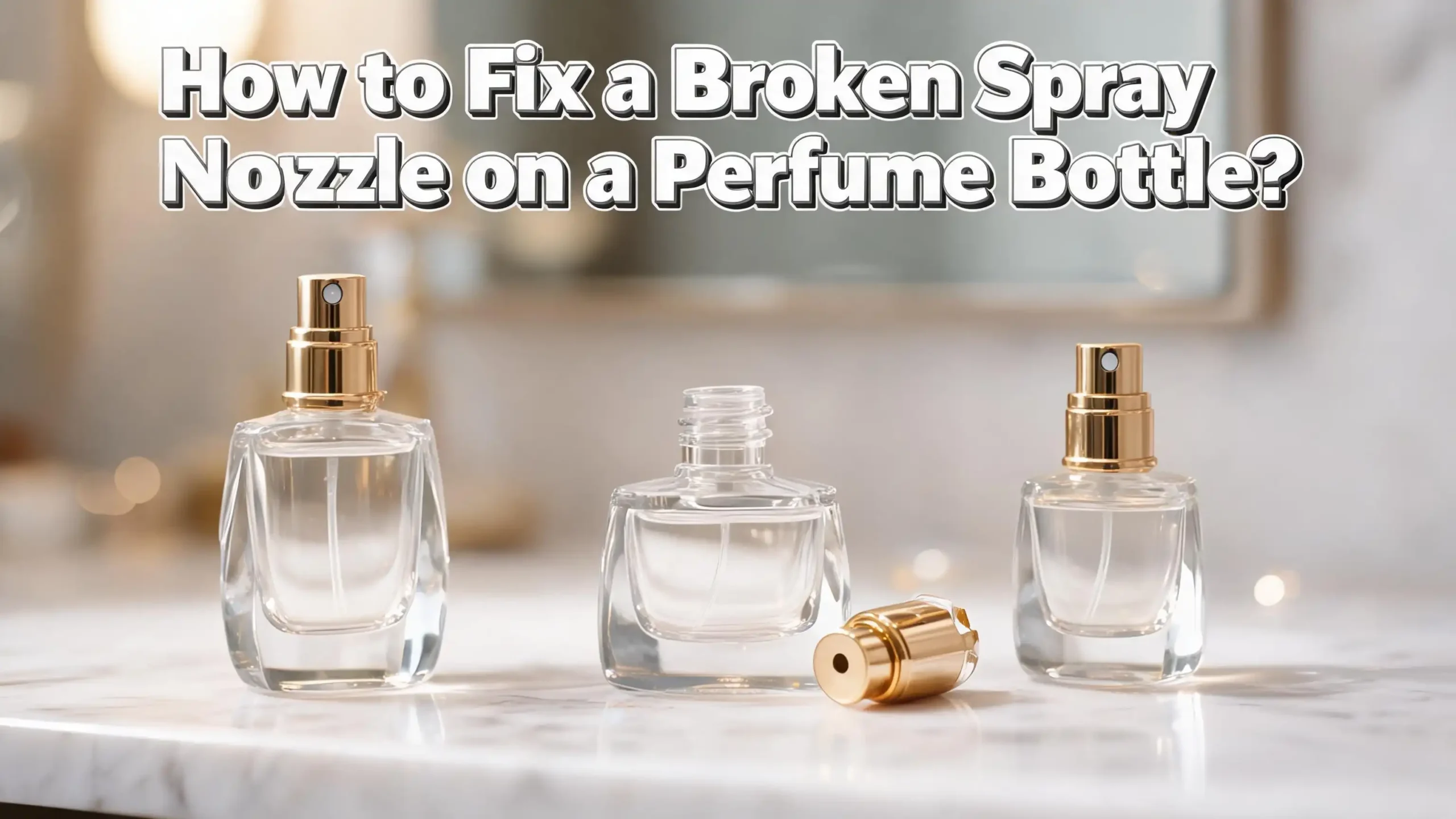
How to Fix a Broken Spray Nozzle on a Perfume Bottle?
You just picked up your favorite perfume, pressed the nozzle, and nothing happened. Maybe a weak dribble came out. Maybe the button barely moved at all. A broken spray nozzle on a perfume bottle is one of those small problems that feels surprisingly big, especially when the bottle still holds plenty of expensive fragrance inside.
The good news? Most perfume spray nozzle problems have simple fixes you can do at home in minutes. You do not need special tools. You do not need professional help in most cases.
This guide walks you through every common issue, from clogged nozzles and stuck pumps to cracked sprayer heads and misaligned tubes. Keep reading to rescue your fragrance and get that perfect mist back.
In a Nutshell
- Clogged nozzles are the most common cause of a perfume bottle that will not spray. Dried perfume residue builds up inside the tiny opening over time and blocks the mist from forming. A fine needle or warm water soak can fix this in minutes.
- A stuck or half pressing pump usually means the internal spring or piston has jammed. Priming the pump by pressing your finger over the nozzle while pumping several times can often restore full function.
- Warm water is your best friend for nearly every spray nozzle problem. Running the nozzle under warm tap water dissolves dried residue and loosens stuck parts without causing damage to the spray mechanism.
- Replacement nozzles are widely available and can save a bottle that has a physically broken sprayer. Many perfume bottles use similar nozzle sizes, so a spare from another bottle or a universal replacement can work perfectly.
- Transferring perfume to a new bottle is always an option if the original sprayer cannot be repaired. A small funnel, a syringe, or a travel atomizer makes this process clean and simple.
- Proper storage and regular cleaning prevent most spray nozzle problems before they start. Keeping the cap on, storing the bottle away from heat, and wiping the nozzle tip after use will extend the life of the sprayer significantly.
Understanding How a Perfume Spray Nozzle Works
A perfume spray nozzle, also called an atomizer, is a small but precise piece of engineering. It converts liquid perfume into a fine mist that spreads evenly on your skin. The system has several key parts: the pump mechanism (activated when you press down), a small tube (called a dip tube) that draws perfume from the bottle, and the nozzle opening where the mist exits.
When you press the sprayer, the pump creates pressure inside a tiny chamber. This pressure forces the liquid perfume up through the dip tube and out through the nozzle at high speed. The nozzle opening is shaped to break the liquid into microscopic droplets, creating that familiar fine mist.
Understanding this helps you diagnose problems faster. If the button does not press down fully, the pump is likely jammed. If it presses but nothing comes out, the nozzle is probably clogged or the tube is blocked. If liquid dribbles out instead of misting, the nozzle opening may be damaged or dirty. Each of these problems has a different fix, and knowing the basic parts makes troubleshooting straightforward.
The collar or metal crimp that holds the spray head onto the glass bottle is also important. On many perfume bottles, this collar is crimped permanently, which means you cannot simply unscrew the sprayer. You will need pliers to remove it. Other bottles have threaded tops that unscrew easily. Check your bottle first before applying force.
Identifying the Exact Problem With Your Spray Nozzle
Before you grab tools and start fixing, take a moment to figure out what is actually wrong. Different symptoms point to different problems, and the right diagnosis saves you time and effort.
Press the nozzle and observe carefully. Does the button push down fully but produce no spray? This usually means a clog in the nozzle opening or a blockage in the dip tube inside the bottle. Does the button only go halfway down and feel stuck? The pump mechanism is likely jammed due to dried residue or a displaced internal part.
If the nozzle sprays but produces a weak, uneven stream instead of a fine mist, the nozzle opening may be partially blocked or damaged. A sputtering spray that alternates between mist and liquid drops often indicates an air lock inside the bottle. This happens when air gets trapped in the pump chamber and disrupts the pressure needed for proper atomization.
Check the outside of the nozzle too. Look for visible cracks in the plastic sprayer head. Inspect the collar where the sprayer meets the bottle for any looseness. Wiggle the nozzle gently to see if it moves. A loose nozzle will not create the seal needed to build pressure. Write down your observations so you can match them to the correct fix in the sections below.
How to Fix a Clogged Perfume Nozzle With Warm Water
A clogged nozzle is the single most common reason a perfume bottle stops spraying. Perfume contains oils, alcohol, and fragrance compounds that can dry and harden inside the tiny nozzle opening over time. This residue blocks the pathway and prevents the mist from forming.
The warm water method is the safest and easiest first step. Remove the nozzle cap or sprayer head if your bottle allows it. Hold the nozzle under a stream of warm tap water for about 60 seconds. While the water runs over it, press and release the pump several times. The warm water dissolves dried perfume residue and flushes it out of the internal channels.
If you cannot remove the nozzle, hold the entire top of the bottle under the warm stream. Be careful not to let water enter the perfume bottle itself, as this will dilute your fragrance. Angle the bottle so water flows over the nozzle area only. Pump the sprayer 10 to 15 times while the water runs.
After the warm water treatment, shake off excess water and let the nozzle air dry for a few minutes. Then test the spray. In most cases, this simple fix restores the full mist immediately. If the clog is severe and warm water alone does not work, try soaking the removed nozzle in a small cup of warm water for five minutes before pumping it again.
Using a Needle or Pin to Clear a Stubborn Blockage
Sometimes warm water is not enough to remove a hard buildup of dried residue inside the nozzle. In these cases, a fine sewing needle or straight pin becomes your best tool. This method requires a gentle touch but works very well on stubborn clogs.
Look at the nozzle opening closely. You will see a very small hole where the perfume mist exits. Take a thin sewing needle and carefully insert the tip into this hole. Do not push hard or force the needle deep inside. Gently move it in a small circular motion to break up and dislodge any dried residue blocking the opening.
After clearing the visible blockage, run warm water over the nozzle again and pump it several times to flush out the loosened particles. You may need to repeat the needle and water combination two or three times for a heavily clogged nozzle.
One important warning: avoid using thick pins, toothpicks, or any tool wider than the nozzle opening. These can widen or deform the hole, which will permanently change the spray pattern. The nozzle opening is precision shaped to create a fine mist, and stretching it will cause the perfume to come out as a stream instead. Stick with the finest needle you can find. A brand new sewing needle works best because the tip is sharp, smooth, and thin enough to fit without causing damage.
Fixing a Jammed or Stuck Pump Mechanism
If your spray button only pushes down partway or feels stiff and resistant, the pump mechanism inside the sprayer head is likely jammed. This can happen when perfume residue dries inside the pump chamber, when the internal spring gets displaced, or after the bottle has been dropped.
The priming method often fixes a jammed pump. Place your finger firmly over the nozzle opening to create a seal. Now press the pump button down and release it repeatedly, about 20 to 30 times. This forces air pressure back and forth through the pump chamber, which can dislodge stuck parts and break up dried residue that is causing the jam.
If priming alone does not work, try the warm water soak combined with priming. Remove the sprayer head from the bottle if possible. Submerge the entire pump assembly in warm water for five minutes. Then pump it repeatedly while the end of the tube sits in the warm water. This flushes the internal channels and lubricates the moving parts.
For bottles where the sprayer is crimped on and cannot be removed, you can still apply warm water from the outside. Hold the nozzle area under warm running water and pump simultaneously. The combination of heat and mechanical action loosens most stuck pump mechanisms. If the pump still will not move after these attempts, the internal mechanism may be physically broken, and you will need to replace the sprayer or transfer the perfume to a new bottle.
How to Fix an Airlock in Your Perfume Bottle
An airlock occurs when a bubble of air gets trapped inside the pump mechanism or dip tube. This air bubble prevents the pump from drawing liquid perfume up from the bottle. You will notice an airlock when the button presses normally but produces little or no spray, sometimes spitting out small drops instead of a mist.
The quickest fix is to tap the nozzle gently against your palm or a soft surface several times. This can shift the air bubble and allow perfume to flow back into the pump channel. After tapping, try spraying again. You may need to pump several times before the perfume starts flowing properly.
Another effective method is to hold the bottle upside down for 10 to 15 seconds, then flip it right side up and immediately press the sprayer. This lets gravity move the perfume back toward the dip tube opening and can displace the trapped air. Repeat this flip and spray process three or four times.
If the airlock persists, remove the sprayer head and reattach it. This releases the trapped air from the pump chamber and lets you start fresh. On bottles with crimped collars, you may need to carefully pry the collar loose with pliers, reset the sprayer, and press it back into place. An airlock is rarely a permanent problem. With a bit of patience and these techniques, you can clear it without any damage to the bottle or perfume.
Reattaching a Nozzle That Has Come Off
Dropping a perfume bottle can knock the spray nozzle loose or pop it off entirely. Sometimes the nozzle separates from the collar, or the entire spray assembly detaches from the bottle neck. This looks bad but is often fixable.
First, examine all the parts. You should have the nozzle head (the button you press), the spray tube (the long thin tube that goes into the perfume), and the collar or crimp ring that holds everything onto the bottle. If all parts are intact with no cracks, you can reassemble them.
Slide the spray tube back into the bottle through the neck opening. Position the pump assembly on top of the bottle neck so the tube hangs straight down into the perfume. If your bottle has a threaded neck, simply screw the sprayer back on tightly. Make sure it is snug so the pump can build pressure properly.
For crimped bottles, press the collar back down over the bottle neck firmly with your fingers. If it will not stay, use a small pair of pliers to gently squeeze the crimp ring back into position around the glass neck. Be very careful with the pliers, as too much force can crack the glass. Wrap a small cloth around the bottle neck to protect it while you work.
After reattaching, test the spray. Pump it 10 to 15 times to prime the mechanism. If it sprays normally, the fix is complete. If the collar will not hold securely, a tiny amount of super glue applied to the outside of the collar can help. Avoid getting glue inside the sprayer or anywhere it could contact the perfume liquid.
How to Replace a Broken Spray Nozzle Entirely
Sometimes a spray nozzle is cracked, shattered, or simply beyond repair. The plastic pump head may be broken, or the internal spring may be permanently damaged. In these cases, replacement is the best option, and it is easier than you might think.
Many perfume bottles use standardized nozzle sizes. The most common diameter for the spray pump head is around 13mm to 15mm. You can find replacement spray pump heads at craft supply stores, beauty supply shops, or online. Measure the diameter of your bottle’s neck opening before purchasing to ensure a proper fit.
Another clever option is to salvage a nozzle from a finished perfume bottle. If you have empty bottles from other fragrances, check if their spray nozzles fit your current bottle. Clean the salvaged nozzle thoroughly with rubbing alcohol before using it. Soak it in warm water and pump it several times to remove all traces of the previous fragrance.
To swap the nozzle, remove the old one using pliers if it is crimped on. Grip the metal collar firmly and twist or pry it upward carefully. Once the old sprayer is off, place the replacement nozzle onto the bottle neck. Press the new collar down firmly or screw it on if threaded. Test by pumping 15 to 20 times to prime the new sprayer. A properly fitting replacement nozzle will work just as well as the original and can save an expensive bottle of perfume from going to waste.
Transferring Perfume to a New Bottle as a Last Resort
If the spray nozzle cannot be repaired or replaced, transferring your perfume to a different bottle preserves the fragrance. This is also called decanting, and fragrance enthusiasts do it regularly. You do not lose any quality or scent by moving perfume to a new container.
You will need a clean glass spray bottle or travel atomizer and a small funnel or syringe. Glass is preferred over plastic because perfume ingredients can break down certain plastics over time. Travel atomizers are an excellent choice because they are designed for fragrance and produce a good mist.
To transfer, first remove the spray head from the original bottle. Use pliers to carefully pry off the crimped collar. Once the top is off, you will have open access to the perfume inside. Place the funnel in the new bottle and carefully pour the perfume in. If you prefer more precision, use a small syringe (without a needle) to draw the perfume out and squirt it into the new container. This avoids spills entirely.
A travel atomizer with a refill opening on the bottom is another option. You press the original bottle’s exposed stem tube against the atomizer’s refill valve, and it fills automatically. This method is clean and fast. After transferring, seal the new bottle tightly and label it so you remember the fragrance name. Store the new bottle the same way you would the original: in a cool, dark place away from direct sunlight.
Preventive Tips to Keep Your Perfume Nozzle Working
Prevention is always easier than repair. A few simple habits will keep your perfume spray nozzle working smoothly for the entire life of the bottle. These tips take only seconds but save a lot of frustration.
Always replace the cap after each use. The cap protects the nozzle opening from dust, lint, and air exposure. Uncapped nozzles dry out much faster because the perfume residue at the tip is exposed to air constantly. This is the number one cause of clogged nozzles.
Store your perfume in a cool, dry location. Heat and direct sunlight can change the consistency of perfume, making it thicker and more likely to clog the sprayer. A dresser drawer or a shelf inside a closet is ideal. Avoid keeping perfume in bathrooms, where temperature and humidity fluctuate with every shower.
Do not shake your perfume bottles. Shaking introduces air bubbles into the liquid, which can cause airlocks in the pump mechanism. Most perfumes are formulated to stay blended without shaking.
Wipe the nozzle tip with a clean, dry cloth every few uses. This removes any residue before it has a chance to harden and block the opening. A quick wipe takes two seconds and is the simplest way to prevent future clogs. If you own many bottles and rotate between them, give each bottle a test spray every few weeks. Regular use keeps the pump mechanism loose and prevents the internal channels from drying out.
When to Contact the Manufacturer for Help
Some perfume bottles are too complex to fix at home, especially limited edition bottles, designer bottles with unique spray mechanisms, or bottles still under warranty. If your bottle is new and the sprayer does not work from the start, the problem is a manufacturing defect, and you should not have to fix it yourself.
Contact the brand’s customer service department. Many major fragrance houses will replace a defective bottle or send a new sprayer assembly at no cost. Keep your receipt and packaging, as most brands require proof of purchase. Some brands are very responsive to these requests. Users have reported that companies like YSL have sent replacement bottles and even issued account credits for defective atomizers.
If you bought the perfume from a department store or authorized retailer, you can also return it directly. Most retailers have return or exchange policies that cover defective products. Bring the bottle back with your receipt and explain the spray issue. They will typically offer an exchange for a working bottle.
For vintage or discontinued perfumes where contacting the brand is not possible, consider taking the bottle to a professional perfume repair service. These specialists can disassemble and rebuild spray mechanisms. This is especially worthwhile for rare fragrances where the perfume itself is irreplaceable. The cost of professional repair is almost always less than the value of the fragrance inside.
Common Mistakes to Avoid When Fixing a Perfume Nozzle
While fixing a perfume spray nozzle is straightforward, a few common mistakes can make the problem worse or damage the bottle permanently. Knowing what not to do is just as important as knowing the right fix.
Do not use excessive force when trying to remove a crimped collar. Glass perfume bottles are delicate, and too much pressure with pliers can crack the neck of the bottle. Work slowly and grip only the metal collar, not the glass. Wrapping the bottle in a cloth provides extra protection.
Never use boiling water on a perfume nozzle. While warm water is helpful, boiling water can warp the plastic parts of the pump mechanism and ruin the spray pattern permanently. Warm tap water, around 40 to 50 degrees Celsius, is the safe temperature.
Avoid pushing oversized objects into the nozzle opening. Toothpicks, paperclips, and thick pins can all widen or deform the precision opening. This changes the spray from a fine mist into an uneven stream. Always use the thinnest needle available.
Do not spray perfume with a wet nozzle. If you cleaned the nozzle with water, let it dry completely before reattaching it to the bottle. Water entering the perfume can dilute it and change the scent profile. Even a few drops of water mixed into a 50ml bottle can alter the fragrance noticeably.
Finally, do not attempt to glue internal parts of the sprayer. Super glue or other adhesives inside the pump chamber will permanently block it. Glue should only be used on the external collar to secure it to the bottle neck if absolutely needed.
DIY Tools You Need for Perfume Nozzle Repair
You do not need expensive or specialized tools to fix a perfume spray nozzle. Most repairs require items you already have at home. Here is what to gather before you start.
A fine sewing needle is essential for clearing clogs. Choose the thinnest one you can find. A pack of basic sewing needles provides several sizes, and the smallest will fit most nozzle openings without causing damage.
Small needle nose pliers are useful for removing crimped collars and reattaching them. Look for pliers with smooth jaws rather than serrated ones. Serrated jaws can scratch or dent the metal collar, while smooth jaws grip without leaving marks.
A small funnel or a disposable syringe (without a needle) helps if you need to transfer perfume to a new bottle. The syringe gives you precise control over the flow and prevents spills. You can find disposable syringes at pharmacies.
Rubbing alcohol (isopropyl alcohol) is handy for cleaning replacement nozzles or sterilizing parts before reassembly. It evaporates quickly and leaves no residue, making it safe for use around perfume components.
A soft, lint free cloth is all you need for wiping and drying parts. Microfiber cloths work well. Avoid paper towels, as they can leave tiny fibers behind that could clog the nozzle opening later. With these basic items on hand, you are prepared to handle any common perfume spray nozzle repair.
Frequently Asked Questions
Why does my perfume bottle spray a stream instead of a mist?
This usually happens because the nozzle opening is partially blocked or has been damaged. Dried perfume residue can narrow the opening just enough to change the spray pattern from a fine mist to a concentrated stream. Try cleaning the nozzle with warm water and a fine needle. If the opening has been physically widened or deformed, the nozzle will need to be replaced entirely. A properly shaped nozzle opening is essential for creating the atomized mist that perfume sprayers are designed to produce.
Can I use rubbing alcohol to unclog a perfume nozzle?
Yes, rubbing alcohol is an effective cleaning agent for clogged nozzles. It dissolves dried perfume residue quickly because perfume itself is alcohol based. Remove the nozzle and soak it in rubbing alcohol for a few minutes. Then pump the mechanism several times to flush the internal channels. Rinse with warm water afterward and let it dry completely before reattaching. Rubbing alcohol evaporates fast and leaves no residue, making it a safe option for this repair.
How do I remove a crimped collar from a perfume bottle?
Use small needle nose pliers to grip the metal collar where it is crimped onto the glass neck. Gently rock the pliers back and forth while pulling upward. Work slowly and carefully to avoid cracking the glass bottle. Some people find it helpful to wrap a thin cloth around the bottle neck for protection. The crimp ring will eventually loosen and slide off. Once removed, you can access the spray pump assembly and the dip tube for repair or replacement.
Is it safe to transfer perfume to a plastic bottle?
Glass bottles are a much better choice than plastic for storing perfume. Many perfume ingredients, including essential oils and certain synthetic compounds, can react with plastic over time. This reaction can break down the plastic and alter the fragrance. If you must use plastic temporarily, choose a high quality PET bottle and plan to use the perfume within a few weeks. For long term storage, always use a clean glass spray bottle or a glass travel atomizer.
How often should I clean my perfume bottle nozzle?
A quick wipe of the nozzle tip with a dry cloth after every few uses is a good habit. For a deeper clean, run the nozzle under warm water once every few months, especially for bottles you do not use daily. Perfume that sits unused for long periods is more likely to develop residue buildup in the nozzle. Regular cleaning prevents clogs and keeps the spray mechanism functioning at its best. If you rotate between many bottles, give each one a test spray every couple of weeks to keep the pump active.
Can I fix a perfume nozzle if the internal spring is broken?
A broken internal spring is one of the few problems that cannot be fixed with a simple home repair. The spring is a tiny component inside the pump assembly, and replacing it without the right parts and tools is very difficult. Your best options are to replace the entire spray nozzle assembly with a compatible one or transfer the perfume to a new bottle. Replacement nozzles are inexpensive, and finding one that fits your bottle is usually straightforward if you measure the neck diameter before purchasing.

Hi, I’m Lily! I started this blog to share honest reviews, real comparisons, and helpful guides so you can find your perfect scent without the guesswork. Welcome to my scented world!