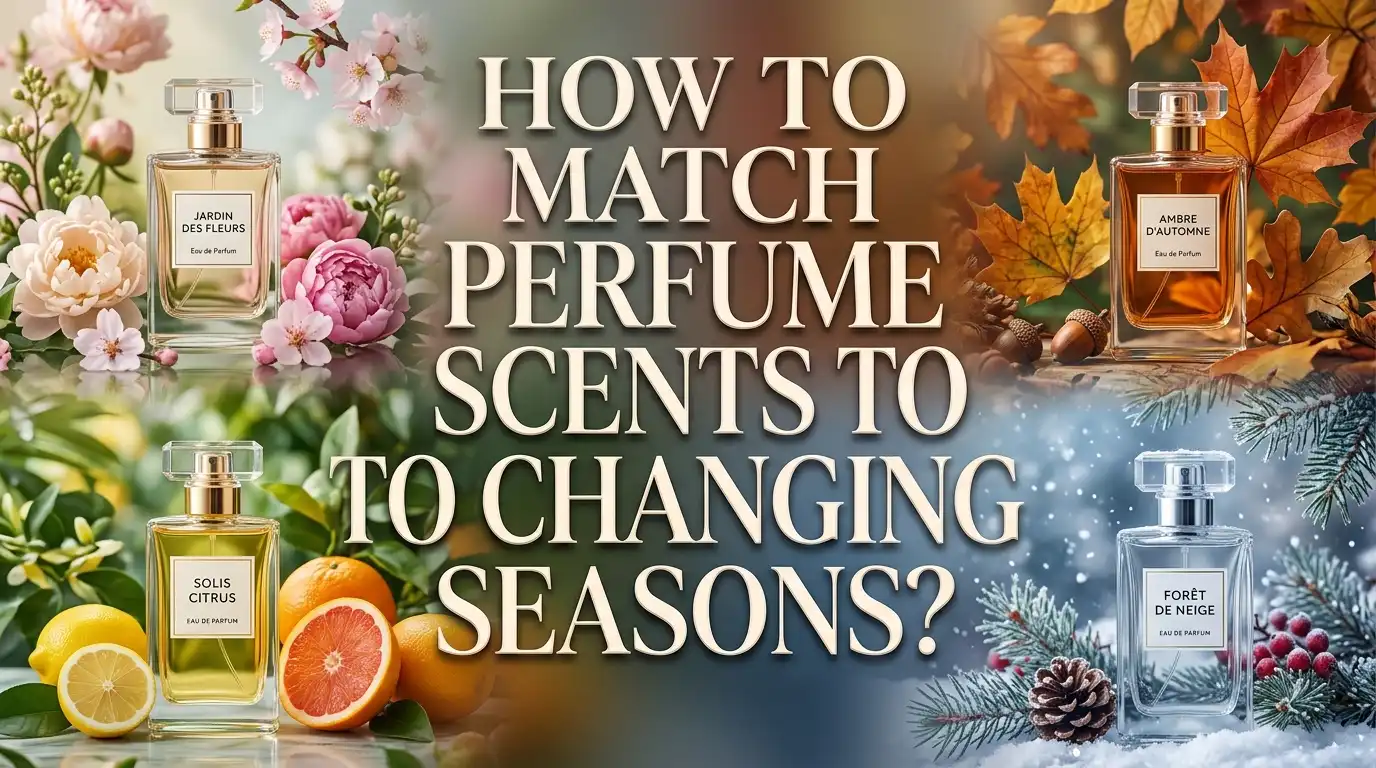
How to Match Perfume Scents to Changing Seasons?
Have you ever noticed that your favorite perfume smells completely different in July than it does in December? You are not alone. Thousands of fragrance lovers struggle with this exact problem every year. The truth is, temperature, humidity, and even your own body chemistry shift with the seasons. These changes affect how a perfume projects, how long it lasts, and how others perceive it on your skin.
Choosing the right scent for each season is not just about preference. It is about science. Warm air amplifies fragrance molecules, making heavy scents feel overwhelming in summer. Cold air does the opposite, muting lighter fragrances until they nearly disappear. This means that the perfume you love in autumn might betray you in spring.
This guide will walk you through practical, step-by-step strategies for matching your perfume to every season. You will learn which fragrance families work best in each climate, how to layer scents effectively, and how to build a seasonal rotation without breaking the bank.
Key Takeaways
- Temperature directly affects fragrance performance. Heat amplifies scent molecules, so lighter fragrances work better in summer. Cold weather suppresses projection, so richer and heavier scents are ideal for winter. Understanding this basic principle will transform how you choose perfume throughout the year.
- Fragrance families are your seasonal roadmap. Citrus and aquatic notes shine in spring and summer. Woody, amber, and oriental notes dominate fall and winter. Learning these categories makes seasonal matching simple and intuitive.
- Layering is a powerful tool for transition seasons. Spring and autumn bring unpredictable weather. Layering a light base with a richer accent lets you adapt without buying entirely new fragrances for every micro season.
- Your skin chemistry changes with the seasons too. Sweat, hydration levels, and even diet shift across the year. These factors alter how a perfume smells on your skin, which means testing fragrances in the actual season you plan to wear them is essential.
- Building a seasonal rotation saves money long term. Instead of buying dozens of bottles, focus on four to six versatile fragrances that cover the full year. Strategic purchasing eliminates waste and keeps your collection fresh.
- Sillage and longevity needs differ by season. Summer calls for moderate sillage so you do not overwhelm people in close quarters. Winter allows for stronger projection because cold air naturally reduces how far scent travels.
Why Perfume Smells Different Across Seasons
The science behind seasonal fragrance changes is straightforward. Heat causes fragrance molecules to evaporate faster. This means a perfume will project more aggressively on a hot day. In contrast, cold temperatures slow down evaporation, which reduces how far your scent reaches.
Humidity also plays a major role. Moist air carries scent particles more effectively than dry air. This is why perfumes often smell richer and fuller during humid summer months. In dry winter conditions, the same perfume can feel flat and thin on your skin.
Your body temperature rises in summer and drops slightly in winter. Since perfume reacts with your skin’s warmth, the same fragrance can produce noticeably different scent profiles depending on the month. A vanilla note might feel cozy in November but cloying and heavy in August.
Understanding these factors removes the guesswork from seasonal fragrance selection. You stop blaming the perfume and start working with the environment instead.
Understanding Fragrance Families and Their Seasonal Strengths
Fragrance families are categories that group perfumes by their dominant scent characteristics. The four main families are fresh, floral, woody, and oriental. Each one has natural strengths tied to specific seasons.
Fresh fragrances include citrus, aquatic, and green notes. They feel clean and energizing. These work best in warm weather because their light molecular structure does not become overwhelming in heat. Think lemon, bergamot, sea salt, and cucumber.
Floral fragrances range from light single notes like lily of the valley to rich compositions like tuberose and jasmine. Light florals suit spring perfectly, while heavier floral blends can transition into early autumn.
Woody fragrances feature sandalwood, cedar, vetiver, and oud. They provide warmth and depth. These notes thrive in cooler temperatures where their richness feels comforting rather than suffocating.
Oriental fragrances contain amber, vanilla, musk, and spice. They are the heaviest category and perform best in cold weather. Oriental scents need cool air to balance their intensity. Wearing them in summer often results in a scent that feels too strong for the setting.
Best Perfume Notes for Spring
Spring is a season of renewal and mild temperatures. The ideal spring fragrance mirrors this energy. Look for scents that feel fresh but carry a touch of softness. Pure citrus can feel too sharp, and heavy woods feel out of place.
Green notes are excellent for spring. They evoke fresh grass, leaves, and stems. Galbanum, violet leaf, and green tea all capture the essence of the season without feeling generic. Pair these with a light floral like peony or freesia for a well rounded spring scent.
Light musk bases work wonderfully in spring. They give your fragrance staying power without adding heaviness. White musk and skin musks create a clean foundation that lets the top notes breathe naturally.
Avoid dense amber, patchouli, and heavy vanilla during spring. These notes conflict with the season’s moderate warmth and fresh atmosphere. Save them for when temperatures drop again later in the year.
A good spring fragrance should feel like an open window on a mild afternoon. It should be noticeable without commanding attention.
Best Perfume Notes for Summer
Summer demands the lightest and most refreshing fragrances in your collection. Citrus notes are the backbone of any great summer scent. Lemon, grapefruit, bergamot, and mandarin all cut through heat and humidity with ease.
Aquatic and oceanic notes also perform well in summer. They create an impression of cool water and sea breeze. These synthetic accords have become staples in warm weather perfumery because they feel instantly refreshing on the skin.
Tropical fruit notes like coconut, mango, and passionfruit can add a playful twist to summer fragrances. They pair well with light floral hearts and sheer bases. Just be careful that the sweetness level stays low, because heat amplifies sweetness dramatically.
Concentration matters in summer. Eau de toilette and eau de cologne formulations work better than eau de parfum during hot months. Their lower oil concentration means they project gently and fade gracefully rather than becoming overpowering by midday.
Apply summer fragrances to pulse points that stay relatively cool, such as your inner wrists and behind your ears. Avoid applying to areas that generate excessive heat, like the chest or neck crease, as this can distort the scent profile.
Best Perfume Notes for Autumn
Autumn is the most exciting season for fragrance lovers. The cooling temperatures open the door to richer, more complex compositions. Warm spices like cinnamon, cardamom, and nutmeg become incredibly appealing as leaves change color and the air turns crisp.
Woody notes step into the spotlight during fall. Sandalwood provides a creamy warmth. Cedarwood offers a dry, clean structure. Vetiver adds an earthy depth that mirrors the season perfectly. These notes feel grounded and sophisticated in autumn air.
Dried fruit notes also shine in fall. Fig, plum, and blackberry add a sweet but mature quality that sits between summer’s brightness and winter’s darkness. They create a sense of harvest and abundance.
Leather and suede accords are another excellent choice for autumn. They carry a tactile warmth that pairs well with the season’s fashion of boots, scarves, and layered clothing. A soft leather note in a fragrance can tie your entire aesthetic together.
Autumn allows for moderate sillage. You can wear slightly stronger concentrations again without worrying about overwhelming people in warm, enclosed spaces.
Best Perfume Notes for Winter
Winter calls for your boldest and richest fragrances. This is the season for oriental, gourmand, and deep woody compositions. Cold air suppresses scent projection, so you need fragrances with enough power to cut through low temperatures.
Vanilla is a winter staple. It feels warm, comforting, and inviting. Rich, dark vanilla blends pair beautifully with amber, benzoin, and tonka bean. Together, these notes create a cocoon of warmth around you.
Oud is another powerhouse winter note. This resinous wood has incredible depth and longevity. It projects well even in freezing temperatures and leaves a memorable trail. Oud works with rose, saffron, and sandalwood for classic winter combinations.
Incense and smoky notes add atmosphere to winter fragrances. Think of frankincense, myrrh, and birch tar. These notes evoke fireplaces, candlelit rooms, and festive gatherings. They carry emotional weight that suits the introspective mood of winter.
Eau de parfum and parfum concentrations are ideal for winter. Their higher oil content means more staying power and better projection in cold, dry conditions. Do not be afraid to apply generously during the coldest months.
How to Transition Your Fragrance Between Seasons
Season changes do not happen overnight. March can feel like winter one day and spring the next. The key to smooth fragrance transitions is gradual adjustment rather than a sudden swap.
Start by introducing lighter layers to your winter fragrance as spring approaches. If you wear a heavy amber scent in January, try adding a citrus body lotion underneath it in March. This subtly brightens the overall impression without abandoning the warmth you still need on cold mornings.
Keep two seasonal fragrances accessible during transition months. In early October, for example, you might wear a fresh scent during an unexpectedly warm afternoon and switch to a spicy wood for a cool evening dinner. Having options prevents you from being locked into one mood.
Pay attention to the forecast, not the calendar. A warm November day calls for different fragrance choices than a cold one. Let actual weather conditions guide your selection rather than arbitrary seasonal dates.
Transition periods are also great times to experiment. Try scents you would not normally reach for. You might discover that a particular fragrance you dismissed in summer becomes your favorite layering tool in early fall.
The Art of Fragrance Layering for Seasonal Flexibility
Layering means wearing two or more scent products together to create a custom fragrance. This technique gives you enormous flexibility across seasons without requiring a massive perfume collection.
Start with a scented moisturizer or body oil as your base layer. Choose something with a neutral or complementary note, like shea butter, coconut, or light vanilla. This creates a hydrated canvas that helps your perfume last longer and project better.
Apply your main fragrance on top of this base. The interaction between the two products will create a slightly different scent than either one alone. In spring, layer a fresh citrus perfume over a lightly floral lotion. In fall, layer a spicy fragrance over a warm sandalwood oil.
Layering works especially well with minimalist fragrance lines that offer single note scents. You can combine a rose single note with a vetiver single note to build a custom blend for autumn. Swap the vetiver for neroli in spring, and you have a completely different seasonal scent using the same rose base.
The golden rule of layering is to apply lighter scents first and heavier scents last. This ensures the bolder notes do not crush the delicate ones.
How Your Skin Type Affects Seasonal Fragrance Performance
Your skin type plays a bigger role in perfume performance than most people realize. Oily skin holds fragrance longer because the natural oils bind with perfume molecules. Dry skin lets fragrance evaporate faster, which means you may need to reapply more often.
In summer, oily skin can amplify a perfume’s sweetness and intensity. If you have oily skin, choose even lighter fragrances during warm months. A scent that smells moderate on a tester strip can become quite powerful on well moisturized or naturally oily skin in the heat.
Dry skin becomes more common in winter due to low humidity and indoor heating. Moisturize your skin before applying winter perfume. Unscented lotion or a matching body cream creates a hydrated surface that locks in fragrance. Without this step, even powerful winter scents can fade within a couple of hours.
Your diet and hydration levels also shift with the seasons. Higher water intake in summer can make your skin’s scent more neutral. Heavier winter diets rich in spices and fats can subtly change how perfume interacts with your natural body chemistry.
Test perfumes on your own skin in the season you plan to wear them. Paper strips and store testers do not account for the unique combination of your body chemistry and the current climate.
Building a Seasonal Perfume Wardrobe on a Budget
You do not need dozens of bottles to smell great year round. A well planned rotation of four to six fragrances can cover every season effectively. The key is choosing versatile scents that each serve a clear purpose.
Start with one signature scent per season. Pick a light citrus or aquatic for summer, a green floral for spring, a warm spice or wood for autumn, and a rich oriental for winter. These four bottles form a solid foundation.
Add one or two versatile “bridge” fragrances. A clean musk or a light woody scent can work across spring, summer, and early fall. A soft amber can transition from late fall through winter. These crossover scents reduce the total number of bottles you need.
Buy smaller bottle sizes. A 30ml or 50ml bottle is often enough to last an entire season. You avoid the common problem of large bottles sitting unused for nine months of the year. Smaller sizes also free up budget to try new options each year.
Discovery sets and sample programs from fragrance houses offer an affordable way to test seasonal options before committing to a full bottle. Spend a few weeks wearing a sample during the appropriate season before deciding to purchase.
Decant services split full bottles into smaller portions. These let you access premium fragrances at a fraction of the full bottle cost.
Common Mistakes People Make With Seasonal Fragrances
The biggest mistake is wearing heavy fragrances in summer. A dense, sweet, or spicy perfume in 90 degree heat can become nauseating for both you and everyone around you. Always err on the lighter side during warm months.
Another common error is over applying in winter. People assume cold weather means their fragrance is not working, so they spray excessively. The truth is that you become nose blind to your own scent faster in winter because dry air reduces how much of it reaches your nose. Others can still smell you clearly.
Ignoring the indoor environment is also a frequent problem. You might choose a winter fragrance based on outdoor cold, but you spend most of your day in a heated office at 72 degrees. A very heavy scent can become uncomfortable in warm indoor spaces, even during January.
Some people refuse to rotate fragrances at all. They find one scent they love and wear it 365 days a year. While loyalty is admirable, this approach means your fragrance will underperform for at least half the year. A small seasonal adjustment can dramatically improve your scent experience.
Finally, many people test fragrances in air conditioned stores during summer and buy scents that smell great in that cool environment. Once they step outside into the heat, the fragrance transforms entirely. Always test in real world conditions.
How to Store Your Perfume Collection Across Seasons
Proper storage protects your investment and keeps every bottle fresh for its season. Heat, light, and humidity are the three enemies of perfume. All three can degrade fragrance molecules and change how your perfume smells over time.
Store bottles in a cool, dark place. A bedroom closet or dresser drawer works perfectly. Avoid bathrooms, where temperature and humidity fluctuate constantly. Never leave bottles on a windowsill where direct sunlight can break down the fragrance composition.
Keep bottles upright and tightly closed. Air exposure oxidizes perfume, which dulls the top notes and can create off putting metallic or sour tones. If you use a bottle only during one season, make sure the cap is secure before putting it away for several months.
Temperature consistency matters more than absolute temperature. A room that stays at 65 to 70 degrees year round is ideal. Rapid temperature swings cause the liquid to expand and contract, which can accelerate degradation.
If you live in an extremely hot climate, consider storing off season bottles in a dedicated box inside a closet. Some collectors even use a small cosmetics refrigerator, though this is only necessary in very warm environments.
How Climate and Geography Influence Your Seasonal Choices
Your geographic location changes the seasonal fragrance equation significantly. Someone in Miami has a different “winter” than someone in Chicago. A fragrance that qualifies as winter weight in a tropical climate might barely pass as autumn weight in a northern region.
Humid climates amplify fragrance projection year round. If you live in a coastal or tropical area, lean toward lighter concentrations and fresher notes even in your cooler months. You rarely need the heaviest oriental fragrances that someone in a dry, cold climate might enjoy from November through March.
Dry climates reduce fragrance longevity. Desert environments and high altitude cities strip moisture from your skin and the air. Moisturizing before application becomes critical in these locations. You may also find that eau de parfum performs like eau de toilette in very dry conditions.
Urban environments with pollution can interact with fragrance molecules. Some studies suggest that smog and particulate matter can alter how certain notes smell on the skin. If you live in a dense city, you may prefer clean and simple compositions that cut through background environmental smells.
Travel between climate zones requires fragrance planning. Pack lighter options if you are flying from a cold city to a tropical vacation. Your winter signature scent will likely feel oppressive at a beach resort.
Testing and Choosing Seasonal Fragrances the Right Way
The process of selecting a new seasonal fragrance should be deliberate. Never buy a full bottle based on a single test. Wear a sample for at least three full days during the target season before committing.
Apply the fragrance in the morning and check on it throughout the day. Note how it changes after two hours, four hours, and eight hours. The dry down phase, which is the final stage of a fragrance’s evolution on skin, reveals the true character of a scent. Some fragrances smell fresh and bright on first spray but dry down to something heavy and musky.
Ask a trusted friend for their opinion. Your own nose adapts to whatever you are wearing within about 30 minutes. Other people can give you honest feedback about projection, pleasantness, and overall impression that you simply cannot assess yourself.
Consider the occasions you will wear the fragrance. A summer scent for outdoor weekend activities can be more casual and bold than one for a summer office environment. Match the scent to your lifestyle, not just the weather.
Read reviews from other users who live in similar climates. Their experiences will be more relevant than reviews from someone in a completely different geographic region. Look for specific comments about seasonal performance rather than generic praise.
Final Thoughts on Seasonal Fragrance Matching
Matching perfume to the seasons is one of the simplest ways to elevate your personal style. It shows attention to detail and an awareness of your environment. The small act of switching fragrances with the weather makes each season feel distinct and intentional.
Start simple. Choose one fragrance for warm weather and one for cold weather. As your confidence and knowledge grow, expand into spring and autumn specific options. Add layering products. Experiment with concentrations. The process should feel enjoyable, not stressful.
Trust your nose, but also trust the science. Light molecules in warm air, heavy molecules in cold air. Fresh notes for sunshine, rich notes for frost. These basic principles will guide you correctly in almost every situation.
Your fragrance is an invisible accessory that people remember long after they forget what you wore. Make sure that memory matches the season beautifully.
Frequently Asked Questions
Can I wear the same perfume all year round?
You can, but your experience will vary dramatically across seasons. A single fragrance will project differently in summer heat versus winter cold. If you prefer simplicity, choose a versatile scent with moderate weight, such as a clean woody or soft floral musk. These middle ground fragrances perform reasonably well across most conditions, even if they are not perfectly optimized for any single season.
How many perfumes do I need for a seasonal rotation?
Four bottles provide solid coverage, one for each season. However, you can start with just two: a lighter option for warm months and a richer option for cold months. Most fragrance experts recommend between four and six bottles as the ideal range for a complete yet manageable seasonal wardrobe.
Does perfume expire if I only use it one season per year?
Most perfumes last three to five years when stored properly. Using a bottle only during its designated season means it will last multiple years before you finish it. Keep it away from heat, light, and air exposure to maximize shelf life. Smaller bottle sizes help you use up the product before any degradation occurs.
Should I apply perfume differently in summer versus winter?
Yes. In summer, apply to cooler pulse points like inner wrists and use fewer sprays. In winter, you can apply to warmer areas like the neck and chest and use a couple of extra sprays. The goal is to compensate for how temperature affects projection so you maintain a pleasant and consistent presence.
What fragrance concentration works best for hot weather?
Eau de toilette and eau de cologne are ideal for hot weather. Their lower perfume oil concentration means they project gently and do not overwhelm in the heat. Eau de parfum can work in summer if the composition itself is light and fresh, but heavy eau de parfum formulas should be reserved for cooler months.
How do I know if my perfume is too strong for the season?
If people comment on your scent from more than an arm’s length away in an indoor setting, it is likely too strong. In summer, your fragrance should create a subtle personal bubble. Ask someone you trust for honest feedback, or apply one fewer spray than usual and see if the scent still feels present after two hours.

Hi, I’m Lily! I started this blog to share honest reviews, real comparisons, and helpful guides so you can find your perfect scent without the guesswork. Welcome to my scented world!