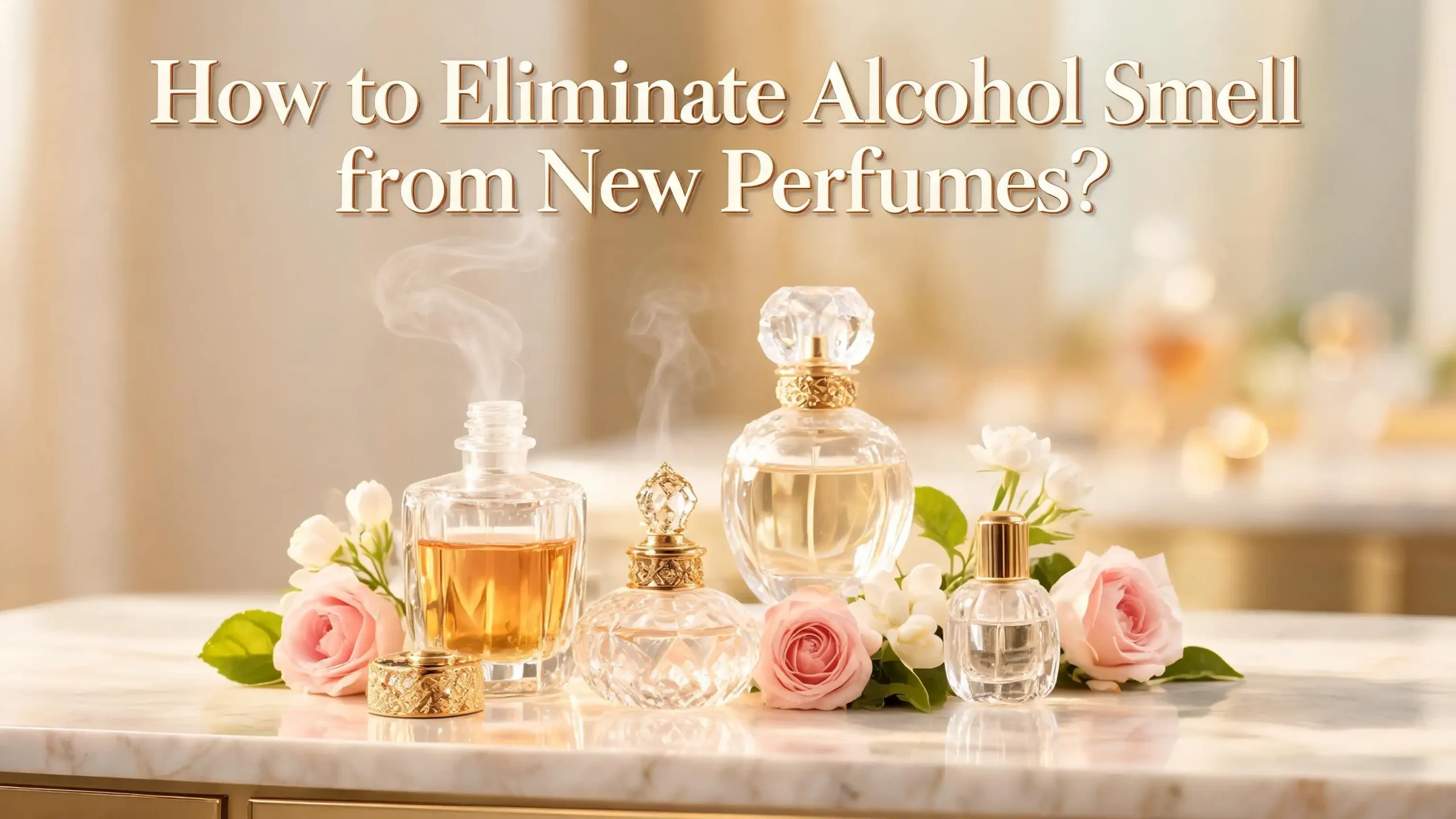
How to Eliminate Alcohol Smell from New Perfumes?
You just bought a brand new perfume. You were excited. You sprayed it on your wrist. But instead of that gorgeous scent you expected, all you got was a sharp, stinging blast of alcohol. Sound familiar?
This is one of the most common frustrations among perfume lovers. A new fragrance often smells strongly of alcohol right out of the box. The beautiful notes you tested in the store seem buried under a harsh, chemical smell.
The alcohol smell in a fresh bottle of perfume is completely normal. Alcohol is the main carrier ingredient in most fragrances. It dissolves fragrance oils, helps them spread evenly on your skin, and allows the scent to project into the air.
The good news? You can fix this. There are several practical and easy methods to reduce or eliminate the alcohol smell from your new perfumes. This guide covers each method in detail so you can enjoy your fragrances the way they were meant to smell.
Key Takeaways
- New perfumes smell like alcohol because the fragrance oils and alcohol have not fully blended together yet. This is a normal part of the perfume manufacturing process, and it does not mean your perfume is fake or low quality.
- Maceration is the most effective solution. Letting your perfume sit unopened in a cool, dark place for two to four weeks allows the alcohol and oils to integrate. This process dramatically reduces the harsh alcohol scent.
- Spraying your perfume a few times and then storing it can speed up the process. Pumping the nozzle five to ten times introduces a small amount of air into the bottle. This encourages oxidation and helps the fragrance settle faster.
- Proper storage matters more than most people realize. Heat, sunlight, and humidity all degrade perfume and can make the alcohol smell worse. Always keep your bottles in a cool, dry, dark location.
- Choosing perfumes with higher oil concentrations reduces the problem at the source. Eau de parfum and parfum formulas contain more fragrance oil and less alcohol than eau de toilette or eau de cologne products.
- Allowing the perfume to dry down on your skin for at least ten minutes gives the alcohol time to evaporate. Never judge a fragrance within the first few seconds of application.
Why New Perfumes Smell Like Alcohol
Alcohol serves as the backbone of most modern perfumes. Ethanol, the type of alcohol used in fragrances, acts as a solvent that dissolves concentrated fragrance oils. It also helps the scent project from your skin into the surrounding air. Without alcohol, the oils would sit heavily on the skin and barely spread.
A freshly bottled perfume has been recently mixed at the factory. The fragrance oils and alcohol exist together in the bottle, but they have not had sufficient time to chemically bond. Think of it like a fresh salad dressing that has just been shaken. The oil and vinegar are mixed, but they have not married together.
The sharp alcohol smell you notice is the ethanol asserting itself over the fragrance oils. This is especially common with mass produced perfumes that move quickly from factory to store shelf. The fragrance simply has not aged enough for the alcohol to blend smoothly with the scent compounds.
Temperature changes during shipping can also make this worse. When perfumes travel long distances, they experience heat and cold fluctuations that can temporarily separate the alcohol from the oils.
Understanding the Role of Alcohol in Perfume
Before you try to eliminate the alcohol smell, it helps to understand why alcohol is there in the first place. Alcohol performs several essential jobs in a perfume formula. It dissolves the fragrance oils so they can be sprayed evenly. It evaporates quickly on the skin, which creates that initial burst of scent projection. It also acts as a preservative that keeps the fragrance stable over months or years.
The type of alcohol used in perfumes is typically denatured ethanol. Perfume makers add small amounts of other chemicals to make the ethanol undrinkable. This is required by law in most countries. The denaturing agents can sometimes contribute to the harsh initial smell.
Different perfume concentrations contain different amounts of alcohol. Eau de cologne contains about 2% to 4% fragrance oil and a very high percentage of alcohol. Eau de toilette contains 5% to 15% oil. Eau de parfum contains 15% to 20% oil. Pure parfum contains 20% to 30% oil. The higher the oil concentration, the less noticeable the alcohol becomes.
Understanding these ratios gives you a practical advantage. If alcohol smell is a frequent problem for you, choosing perfumes with higher oil concentrations will reduce the issue significantly.
The Maceration Method: Your Best Solution
Maceration is the single most effective way to eliminate alcohol smell from a new perfume. This process allows the fragrance oils and alcohol to fully integrate over time. Professional perfume houses macerate their fragrances for weeks or even months before selling them. But sometimes, a newly purchased bottle still needs additional maceration.
Here is how to macerate your perfume at home. First, remove the cap and pump the nozzle five to ten times into the air. This introduces a tiny amount of oxygen into the bottle. Next, replace the cap tightly. Place the bottle back in its original box. Store the box in a cool, dark place like a bedroom drawer or the back of a closet.
Leave the perfume undisturbed for two to four weeks. During this time, the alcohol and fragrance oils will slowly bond at a molecular level. The harsh edges will soften, and the scent will become richer, deeper, and more balanced.
After the maceration period, spray the perfume again. You will likely notice a dramatic improvement. The alcohol smell should be significantly reduced, and the true fragrance notes should come through clearly.
Proper Storage to Reduce Alcohol Scent
How you store your perfume directly affects how it smells. Heat, light, and humidity are the three biggest enemies of perfume quality. Each of these factors can break down the fragrance compounds and cause the alcohol to become more dominant.
Store your perfumes in a cool, dark place with a consistent temperature. A bedroom dresser drawer, a linen closet, or a dedicated perfume cabinet works well. The ideal temperature range is between 15 and 20 degrees Celsius (59 to 68 degrees Fahrenheit).
Avoid keeping perfumes in the bathroom. Steam from showers creates humidity that degrades the fragrance. The temperature swings between hot showers and cooler periods also stress the chemical bonds in the perfume.
Keep the original box whenever possible. The box provides protection from both light and temperature fluctuations. It also reduces the amount of air that reaches the bottle, which slows down unwanted oxidation.
Always close the cap tightly after each use. Air exposure speeds up the evaporation of top notes and can leave the alcohol smell more pronounced over time.
Let the Perfume Dry Down Before Judging
One of the most common mistakes people make is judging a perfume within seconds of spraying it. The initial spray is dominated by alcohol and volatile top notes. This first impression does not represent the true character of the fragrance.
When you spray perfume on your skin, the alcohol begins evaporating immediately. Within the first 30 seconds to two minutes, most of the alcohol will have evaporated. The light, volatile top notes follow next, fading over the first 10 to 20 minutes.
The heart notes emerge after about 15 to 30 minutes. These are the core of the fragrance. The base notes, which provide depth and longevity, appear after 30 to 60 minutes.
To properly evaluate a new perfume, spray it on your wrist and wait at least 10 minutes before smelling it. Better yet, wait 30 minutes. This gives the alcohol plenty of time to evaporate and allows the true scent to develop on your skin.
Do not rub your wrists together after spraying. This friction creates heat that can break down fragrance molecules and distort the scent profile.
Apply Perfume to Pulse Points for Faster Evaporation
Your body’s pulse points generate natural warmth. This warmth helps alcohol evaporate more quickly and allows the fragrance oils to develop on your skin. Applying perfume to pulse points is one of the simplest ways to reduce the initial alcohol blast.
The main pulse points include the inner wrists, the sides of the neck, behind the ears, the inside of the elbows, and behind the knees. These areas have blood vessels close to the surface, which produces gentle, consistent heat.
When you spray perfume on a pulse point, the warmth accelerates the evaporation of ethanol. The alcohol dissipates faster, and the fragrance notes emerge sooner. This means you spend less time smelling alcohol and more time enjoying the actual scent.
Apply perfume from a distance of about six to eight inches. This creates a fine mist that settles evenly on the skin. Spraying too close produces a concentrated wet spot that takes longer for the alcohol to evaporate from.
You can also spray perfume into the air and walk through the mist. This distributes the fragrance lightly across a larger area of skin, which gives the alcohol more surface area from which to evaporate quickly.
Choose Higher Concentration Perfumes
The concentration level of a perfume directly determines how much alcohol it contains. If you consistently struggle with alcohol smell, switching to a higher concentration formula can solve the problem at its source.
Eau de cologne has the highest alcohol content and the lowest oil content. It contains roughly 2% to 4% fragrance oil. The alcohol smell in these products is often very noticeable.
Eau de toilette is a step up, with 5% to 15% fragrance oil. The alcohol is still prominent but less overwhelming.
Eau de parfum strikes a popular balance with 15% to 20% fragrance oil. The higher oil content means the scent has more body and depth, and the alcohol plays a less dominant role.
Parfum or extrait de parfum contains 20% to 30% fragrance oil. These products have the least alcohol and the richest, most long lasting scent. The alcohol smell is minimal because there is simply less alcohol in the bottle.
While higher concentration perfumes cost more per bottle, they also last longer on the skin. You need fewer sprays per application, which means the bottle lasts longer.
Try the Refrigerator Technique
Some fragrance enthusiasts swear by the refrigerator method to speed up maceration and reduce alcohol smell. The cool, dark, and consistent environment inside a refrigerator mimics ideal storage conditions.
Place your new perfume bottle in the refrigerator for 12 to 24 hours. The cold temperature slows down molecular movement, which can help the alcohol and fragrance oils settle into a more uniform mixture. When you remove the bottle and allow it to return to room temperature, the rewarming process encourages further integration.
Some perfume collectors on fragrance forums report that this technique noticeably improves the scent quality of new bottles. The cold seems to calm the harsh alcohol notes and bring forward the middle and base notes of the fragrance.
However, avoid freezing the perfume. Extreme cold can damage certain fragrance compounds and alter the scent permanently. The regular refrigerator compartment provides the right level of cool without the risks of freezing.
This technique works best as a complement to traditional maceration. Use the refrigerator for the initial 12 to 24 hours, then store the perfume in a cool, dark drawer for an additional two to three weeks.
Moisturize Your Skin Before Application
Dry skin absorbs and dissipates fragrance faster than moisturized skin. When your skin is dry, the alcohol evaporates unevenly, and the fragrance oils have nothing to cling to. This can make the alcohol smell more noticeable and cause the overall scent to fade quickly.
Apply an unscented moisturizer or body lotion to your skin before spraying perfume. The moisturizer creates a smooth, hydrated base that helps the fragrance oils adhere to your skin. The alcohol still evaporates, but the scent molecules stay locked in place longer.
Some people use a thin layer of petroleum jelly on pulse points before applying perfume. This creates an even more effective barrier that traps fragrance oils and extends the scent’s longevity.
Choose an unscented moisturizer so it does not interfere with your perfume’s scent profile. Scented lotions can clash with the fragrance notes and create an unpleasant combination.
Apply the moisturizer a few minutes before the perfume so it has time to absorb into the skin. Then spray the perfume directly onto the moisturized areas.
Consider Oil Based Perfume Alternatives
If the alcohol smell is a persistent problem that bothers you across multiple fragrances, oil based perfumes offer a complete solution. These products use carrier oils like jojoba, coconut, or sweet almond oil instead of alcohol to dissolve and deliver fragrance oils.
Oil based perfumes produce zero alcohol smell because they contain no alcohol. The scent sits closer to the skin, creating a more intimate fragrance experience. They also tend to last longer because oils evaporate much more slowly than alcohol.
Roll on perfume oils are the most common format. You apply them directly to your skin using a rollerball applicator. This gives you precise control over where and how much product you use.
Oil based perfumes are also gentler on sensitive skin. Alcohol can cause dryness, irritation, and redness, especially on delicate skin. Perfume oils eliminate these issues entirely.
The trade off is that oil based perfumes have less projection. They stay close to the skin rather than projecting outward into a room. If you prefer a fragrance that others notice from a distance, this may not be the best choice. But for personal enjoyment and close encounters, perfume oils are excellent.
Spray and Wait: The Aeration Approach
Aeration is a quick technique that helps new perfumes release excess alcohol smell. The idea is simple: spray the perfume several times into the air right after opening the bottle. This exposes the liquid to oxygen and begins the blending process.
Remove the cap from your new perfume. Press the nozzle firmly and spray five to ten times into open air, away from your face and clothes. Each pump draws a tiny amount of air back into the bottle through the tube. This small amount of oxygen helps trigger the initial stages of oxidation.
After the sprays, replace the cap tightly and store the bottle as you normally would. The oxygen you introduced will continue to work inside the sealed bottle over the following days and weeks.
This technique is especially useful if you want to start using the perfume sooner rather than waiting a full month for maceration. It will not produce the same results as a full maceration period, but it provides a noticeable improvement within just a few days.
Many fragrance experts recommend this as the first step with any new purchase. It primes the perfume and kickstarts the settling process.
Avoid Common Mistakes That Make the Problem Worse
Several common habits can actually increase the alcohol smell in your perfumes. Avoiding these mistakes will help your fragrances smell better and last longer.
Do not store perfumes near windows or on vanity tables that receive direct sunlight. UV rays break down fragrance molecules and accelerate the degradation of the scent. This leaves the alcohol more dominant because the fragrance oils lose their potency.
Do not shake your perfume bottles. Shaking introduces excess air and disrupts the balance between the alcohol and fragrance oils. Unlike salad dressing, perfume does not benefit from shaking.
Do not leave the cap off the bottle for extended periods. Exposure to air causes the alcohol to evaporate unevenly and can change the scent composition over time.
Avoid applying perfume immediately after a hot shower when your pores are wide open. The heat and moisture on your skin can amplify the initial alcohol burn. Wait a few minutes for your skin to cool and dry before applying fragrance.
Do not overspray. Using too much perfume floods your senses with alcohol fumes. Two to three sprays are enough for most situations.
When to Worry About Alcohol Smell in Perfume
In most cases, the alcohol smell in a new perfume is completely normal and will resolve on its own. However, there are situations where a persistent alcohol smell could indicate a genuine problem.
If the alcohol smell does not improve after four to six weeks of proper maceration and storage, the perfume may have been improperly formulated. Some lower quality fragrances use cheap synthetic alcohols or an excessive amount of solvent to reduce production costs. These products may never develop a smooth scent profile.
A perfume that smells only of alcohol with no fragrance notes at all might be expired or stored improperly before you purchased it. Extreme heat during shipping or warehouse storage can degrade the fragrance oils while leaving the alcohol intact.
Check the color of the liquid. A perfume that has turned very dark or cloudy may have oxidized beyond repair. A slight darkening over time is normal and often indicates healthy maceration. But dramatic color changes suggest degradation.
If you suspect the perfume is counterfeit, compare the packaging, bottle design, and batch code with official sources. Counterfeit perfumes often use inferior ingredients and may smell predominantly of alcohol with weak or inaccurate fragrance notes.
FAQs
Is it normal for new perfumes to smell like alcohol?
Yes, this is completely normal. New perfumes often have a noticeable alcohol scent because the ethanol and fragrance oils have not fully blended together. The manufacturing process mixes these ingredients, but full integration requires time. Most perfumes improve significantly after two to four weeks of resting in a cool, dark place. The alcohol smell fades as the fragrance oils and the solvent form stronger chemical bonds through the maceration process.
How long does it take for the alcohol smell to go away?
The timeline depends on the perfume’s concentration, quality, and storage conditions. Most perfumes show noticeable improvement within one to two weeks of maceration. Full integration typically occurs within three to six weeks. Higher quality perfumes with greater oil concentrations tend to settle faster. Proper storage in a cool, dark place speeds up the process. Techniques like the initial spray method and refrigerator storage can also help accelerate improvement.
Can I speed up the maceration process?
You can encourage faster maceration with a few techniques. Spray the nozzle five to ten times into the air to introduce oxygen into the bottle. Store the bottle in the refrigerator for 12 to 24 hours, then move it to a cool, dark drawer. These steps create conditions that help the alcohol and fragrance oils bond more quickly. However, true maceration takes time, and patience will always produce the best results.
Does expensive perfume have less alcohol smell?
Generally, yes. Expensive perfumes tend to have higher concentrations of fragrance oil relative to alcohol. Eau de parfum and parfum formulations contain 15% to 30% fragrance oil, which naturally reduces the prominence of the alcohol smell. Premium brands also macerate their fragrances for longer periods before shipping, so the bottles arrive in a more settled state. However, even high quality perfumes can exhibit some alcohol smell when freshly opened.
Are oil based perfumes better than alcohol based ones?
It depends on your preferences. Oil based perfumes eliminate the alcohol smell entirely and tend to last longer on the skin. They are also gentler on sensitive skin. However, they have less projection and sillage compared to alcohol based perfumes. Alcohol based fragrances create a stronger scent trail that others can notice from farther away. Many fragrance lovers use both types for different situations, choosing oil based perfumes for intimate settings and alcohol based perfumes for social events.
Should I return a perfume that smells like alcohol?
Not immediately. Give the perfume at least two to four weeks of maceration before making a judgment. Most new perfumes improve dramatically with proper resting and storage. However, if the alcohol smell persists after six weeks of maceration in ideal conditions, or if the perfume shows signs of degradation like extreme discoloration or cloudiness, contact the retailer about a return or exchange. Always buy from authorized retailers to avoid counterfeit products.

Hi, I’m Lily! I started this blog to share honest reviews, real comparisons, and helpful guides so you can find your perfect scent without the guesswork. Welcome to my scented world!