How to Apply Perfume Oil Correctly Without Staining?
Perfume oil smells amazing. But it can also leave annoying stains on your clothes or skin if you apply it the wrong way.
Many people treat perfume oil like a spray. They rub their wrists together or apply too much in one spot. This causes marks and wastes product.
The good news? Applying perfume oil correctly is simple once you know the right steps.
This guide will show you exactly how to do it. You will learn where to apply oil for the best scent throw. We will cover the right technique to avoid rubbing and staining.
Ready to get it right? Let us walk through each step together.
In a Nutshell
- Dab, don’t spray. Perfume oil works best when you dab it gently onto your skin. Rubbing it in breaks down the scent and causes stains.
- Target your pulse points. Apply oil to your wrists, neck, behind your ears, and inside your elbows. These warm spots help the fragrance bloom naturally.
- Hydrate your skin first. Clean and damp skin absorbs oil better. This simple step makes your scent last much longer through the day.
- Keep some distance. Hold the oil about 15 to 20 cm away when applying. This spreads the fragrance evenly and avoids heavy, concentrated spots.
- Skip the wrist rub. Rubbing your wrists together might feel natural, but it actually weakens the scent molecules and can leave marks on your skin.
- Layer with care. You can mix a few oils to create your own signature blend. Just apply each one lightly for the best result.
Understanding Perfume Oils: How They Differ from Sprays
Perfume oils and sprays work in completely different ways. Understanding these differences helps you apply oils correctly and avoid stains.
Sprays release fragrance as a fine mist that spreads across your skin and clothing. Oils, however, come as a concentrated liquid that you apply directly to your body. This means oils require a different application technique altogether.
Oils are much more concentrated than sprays. A small amount of oil delivers powerful scent, while sprays contain more water and alcohol to help them disperse. This concentration is why oils last longer on your skin. It also means you need less product per application.
Sprays work best on clothing and hair because the mist covers a larger area quickly. Oils work best on skin, especially at pulse points where your body heat naturally releases the fragrance. Your wrists, neck, and behind your ears are ideal spots.
The key difference affects how staining happens. Spray formulas are diluted, so they typically don’t leave marks on fabric. Oils are thicker and can stain if you’re not careful with application. Rubbing oil into your skin or applying too much in one spot increases staining risk.
Sprays dry quickly because they contain alcohol. Oils absorb slowly into your skin, which is actually beneficial. This slower absorption means the fragrance lasts much longer than spray perfumes.
Understanding these differences changes how you use the product. You won’t spray an oil like you would traditional perfume. Instead, you’ll dab it gently, use smaller amounts, and focus on specific areas. This approach gives you better results and prevents unwanted stains on your skin or clothes.
Why Skin Preparation Matters Before Application
Your skin’s condition before you apply perfume oil makes a real difference in how well it works and whether it stains. Clean, damp skin absorbs oil much better than dry skin.
When your skin is hydrated, the oil molecules penetrate deeper into your skin layers. This means the fragrance lasts longer and develops better throughout the day. Dry skin tends to hold oils on the surface, which can lead to visible marks and uneven color patches.
Start by washing the area where you plan to apply the oil. Use warm water and a gentle cleanser to remove dirt, sweat, and old product buildup. Pat your skin dry, but leave it slightly damp to the touch.
This light moisture creates the perfect base for oil application. The dampness helps the oil spread evenly and absorb smoothly without sitting in concentrated spots that cause staining.
If your skin feels very dry, apply a lightweight moisturizer first. Wait a few minutes for it to set, then apply your perfume oil. This two step approach prevents the oil from sitting on top of your skin where it can stain.
Temperature matters too. Warm skin absorbs fragrance faster than cold skin. If your wrists feel cool, run them under warm water briefly before applying oil.
Never apply perfume oil to freshly lotioned skin that is still greasy or slick. The oil will slide around instead of absorbing, creating dark patches on your clothing and skin.
Clean, slightly damp skin is your best friend. It allows proper absorption, prevents staining, and helps your fragrance perform exactly as intended. This simple preparation step takes just seconds but delivers noticeable results.
Step-by-Step Guide: Applying Perfume Oil the Right Way
Applying perfume oil correctly keeps your skin clean and your fragrance lasting longer. The process is simple once you understand the basic technique.
Start by preparing your skin. Wash the area where you will apply the oil with gentle soap and water. Pat your skin until it feels slightly damp, not dripping wet. This moisture helps the oil absorb properly into your skin layers.
Next, uncap your perfume oil bottle. Hold it about 15 to 20 centimeters away from your skin. This distance ensures even distribution and prevents concentrated spots that could stain.
Apply the oil to your pulse points. These include your wrists, neck, behind your ears, and inside your elbows. Body heat from these areas helps release the fragrance throughout the day.
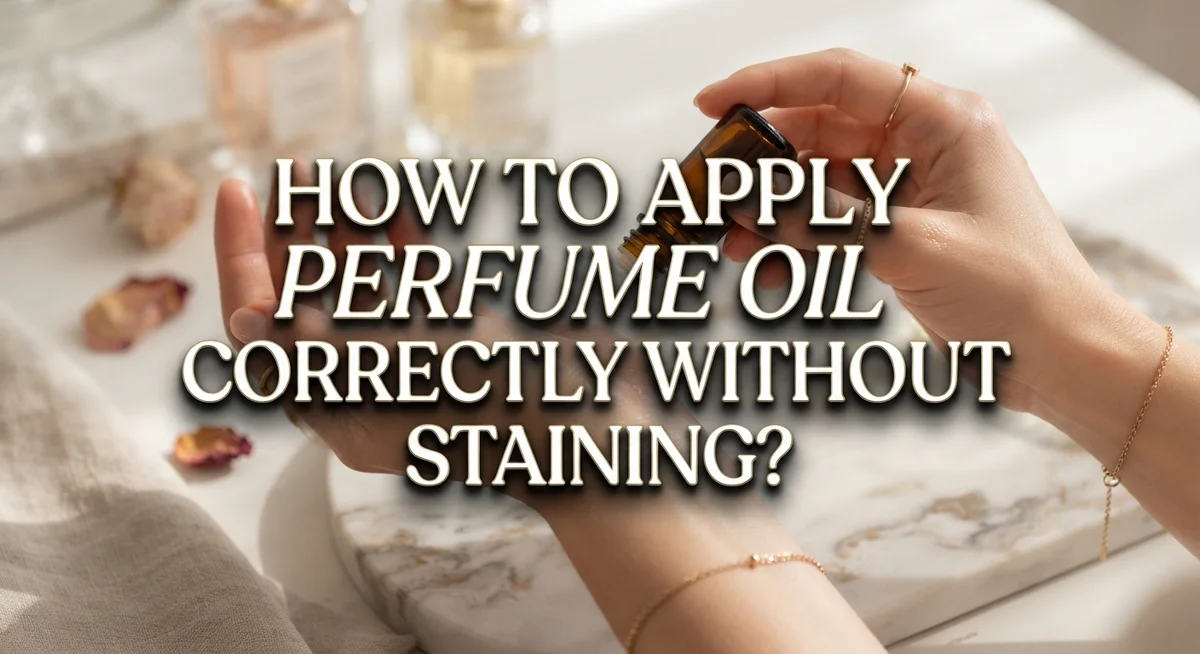
Here comes the critical step: dab the oil gently onto your skin. Do not rub your wrists together or massage the area. Rubbing breaks down the scent molecules and increases the chance of staining your skin or clothing.
If you want a softer scent trail, you can lightly mist the oil onto your hair or a scarf. Keep the same distance and avoid oversaturating any single area.
Let the oil dry naturally on your skin. This usually takes just a few minutes. Avoid touching the area immediately after application.
Layering different oils is optional but fun. You can combine two or three oils to create a custom blend that suits your mood.
Follow these steps consistently, and you will enjoy beautiful fragrance without marks or waste. The key is gentle application and proper skin preparation before you start.
Choosing the Right Pulse Points for Maximum Scent Longevity
Your pulse points are areas where blood vessels sit close to your skin surface. These spots naturally generate heat, which amplifies fragrance release throughout the day.
The primary pulse points include your wrists, neck, behind your ears, and inside your elbows. Each location offers different benefits for scent longevity and projection.
Your wrists are the most popular application spot. The constant movement of your wrists helps diffuse the fragrance as you go about your day. When you bring your wrists near your face, you catch subtle scent notes. This spot works especially well for oils because the warmth continuously activates the fragrance molecules.
The neck and collarbone area project scent upward toward people you interact with. Apply oil here for better fragrance presence in social situations. The neck generates consistent warmth, making it ideal for long lasting scent.
Behind your ears is a delicate zone that releases fragrance gradually. This location works best when you want a subtle, personal scent that only close contacts notice. The area stays warm throughout the day without much movement.
Your inner elbows are often overlooked but highly effective. The skin here is thin and warm, perfect for oil absorption. This spot keeps fragrance close to your body, creating an intimate scent experience.
Apply oil to at least two pulse points for balanced fragrance distribution. Using multiple locations prevents over concentration in one area, which reduces staining risk. The heat from different body zones keeps your fragrance active for hours.
Avoid applying perfume oil to pulse points on your hands or fingers. These areas touch everything you touch, transferring oils to surfaces and potentially causing marks on fabrics or items you handle.
How to Prevent Staining on Skin and Fabric
Perfume oils require a different approach than traditional sprays to keep your skin and clothes stain free. The key difference is how you apply them. Oils need to be dabbed or rolled directly onto skin rather than sprayed, which gives you much more control over placement and prevents oversaturation.
Dab, don’t rub. This is the most important rule for preventing stains. When you rub perfume oil into your skin, you create friction that can push the oil deeper into fabric fibers or leave visible marks. Instead, gently press the oil onto your pulse points using your fingertip or the applicator. Hold it there for a few seconds, then lift away. This method deposits fragrance exactly where you want it.
Distance matters when applying. If your bottle has a spray nozzle, hold it 15 to 20 centimeters away from your skin. This distance ensures even distribution and prevents concentrated spots that stain easily. A light mist covers a larger area with less product, reducing the chance of marks.
Apply to skin, not fabric directly. Perfume oils can leave permanent stains on delicate textiles like silk or linen. Always apply to bare skin first. Once the oil absorbs into your skin, the scent naturally transfers to clothing as you move. If you want fragrance on a scarf or hair, apply a tiny amount only after the oil has absorbed fully into your skin.
Avoid layering on the same spot. Multiple applications to one area create buildup that stains easily. Spread your applications across different pulse points instead. This approach prevents concentrated oily patches while giving you better scent distribution throughout the day.
Common Application Mistakes and How to Avoid Them
Many people make simple mistakes when applying perfume oil. Understanding what goes wrong helps you avoid stains and wasted product.
Rubbing your wrists together is the biggest error. This habit feels natural, but it damages your fragrance. When you rub, you break down the scent molecules. Your perfume fades faster, and the friction creates dark marks on your skin. Instead, dab the oil gently and let it sit.
Applying to completely dry skin reduces how long your fragrance lasts. Oils absorb better into hydrated skin. Wash your wrists or neck with water before application. Pat your skin slightly damp, then apply your oil. This simple step makes a real difference in longevity and absorption.
Over concentrating oil in one spot causes visible staining. When you apply multiple dabs to the same wrist area, the oil builds up and leaves marks. Spread your applications across different pulse points instead. Use one dab on each wrist, one behind each ear, and one on your neck.
Spraying or applying from too close creates dark patches. If your bottle has a spray nozzle, maintain 15 to 20 centimeters distance. This ensures even distribution rather than a concentrated pool of oil.
Applying directly to delicate fabrics is another common mistake. Perfume oils stain silk, linen, and wool permanently. Always apply to your skin first, never to clothing. If you want scent on fabric, apply oil to your skin and let the fragrance naturally transfer.
Skipping the drying time leads to accidental smudging. Let the oil absorb fully before touching your wrists or neck. Wait at least one minute before getting dressed.
Layering and Customizing Your Fragrance Safely
Layering perfume oils lets you create a fragrance that matches your mood and style. The key is building your custom scent without causing stains or overwhelming your senses.
Start with a light base layer on one pulse point. Apply a small amount to your inner elbow or wrist using the dabbing method. Wait 2 to 3 minutes for the oil to settle into your skin. This gives you time to assess the strength before adding more.
Add a second fragrance oil to a different pulse point. Try your neck or behind your ear. This combination creates depth and prevents the scent from becoming too heavy in one area. Your body heat will blend these oils naturally throughout the day.
Layer strategically by choosing complementary scents. Citrus oils pair well with floral notes. Woody scents work with spice or vanilla undertones. Start with lighter scents first, then add richer ones. This prevents the stronger fragrance from overpowering the delicate layers.
Apply each layer to clean, slightly damp skin. Moisture helps oils absorb evenly and reduces staining risk. Pat your skin dry gently before applying the next layer.
Space out your applications. Don’t apply multiple oils to the same wrist. Concentrate your layers on different body areas instead. This keeps buildup minimal and prevents dark marks on your skin.
Test your layered combination for 15 minutes. Some oils intensify as they warm on your body. You can always add more, but removing excess is difficult.
Remember that less is more with layering. A subtle blend lasts longer than an overly concentrated application. Your custom fragrance should enhance your presence, not announce it.
Troubleshooting: When Your Perfume Oil Isn’t Performing as Expected
When your perfume oil isn’t performing as expected, several factors could be at play. Understanding what went wrong helps you fix the issue and enjoy better results next time.
Scent fading too quickly suggests you applied the oil to dry skin. Perfume oils need moisture to absorb properly and last longer. Dampen your skin with water or apply a light moisturizer before dabbing your fragrance. This simple step makes a noticeable difference in longevity.
Weak scent projection means people around you can’t smell your fragrance. You may have applied too little oil or chosen the wrong pulse points. Wrists, neck, behind ears, and inside elbows generate body heat that amplifies scent release. These spots work best for maximum fragrance throw.
Staining or discoloration appears when you apply too much oil in one area or rub the application spot. This concentrates the oil and creates visible marks on skin. Always dab gently without rubbing, and space multiple applications across different pulse points.
Scent smells different than expected could mean the fragrance hasn’t fully settled on your skin. Perfume oils need time to warm up and develop their true scent profile. Wait 15 to 20 minutes before deciding if you like how it smells.
Inconsistent performance day to day happens when your application technique varies. Stick to the same pulse points and use the same amount of oil each time. This consistency helps you understand how the fragrance truly performs on your body.
Buildup or residue on skin indicates you’re applying too frequently or layering too heavily. Space out your applications throughout the day and avoid reapplying to the same spot within a few hours.
Final Thoughts
Applying perfume oil correctly comes down to a few simple habits. Dab, don’t rub. Choose hydrated skin over dry skin. Give each pulse point room to breathe instead of crowding one spot.
These small changes make a big difference. Your fragrance lasts longer. It smells the way it should. Your clothes and skin stay free from marks.
Good technique takes practice. You might need a few tries to find your perfect routine. Pay attention to how your skin reacts and adjust from there.
Every person’s skin is different. What works well for a friend may not work the same way for you. Test different pulse points and see which ones hold scent best on your body.
Patience matters just as much as technique. Perfume oil needs time to settle and blend with your natural skin chemistry. Give it a few minutes before you judge the final scent.
Remember that less oil often gives better results than more. A light touch on two or three pulse points beats heavy application in one place.
Keep your bottle clean and store it away from heat and sunlight. This keeps the oil fresh and helps it perform well each time you use it.
With the right approach, perfume oil becomes easy to enjoy. You get a scent that lasts through your day without leaving stains behind.
Practice these steps regularly and they will become second nature. Soon you won’t even think about the process. You will simply apply your oil with confidence and enjoy the results.
Good application is a skill anyone can learn. Start simple, stay consistent, and let your fragrance work the way it’s meant to.
Frequently Asked Questions
Why do perfume oils stain when traditional perfumes don’t?
Perfume oils contain a much higher concentration of fragrance molecules than sprays. They sit directly on your skin and clothing as liquids, so they can leave marks if you rub them or apply too much in one spot.
Traditional sprays mist over a wider area, spreading the product thin. This distribution reduces the chance of visible staining. Oils need a gentler touch to avoid discoloration.
Can I apply perfume oil to my clothes instead of skin?
Yes, you can dab perfume oil on fabric, but be careful. Oils can leave permanent stains on delicate materials like silk or suede. Test on a hidden area first.
Applying to skin works better because body heat helps release the scent gradually. If you use fabric, stick to sturdy materials like cotton or denim. A light touch prevents marks.
What’s the best way to apply perfume oil without leaving marks?
Dab the oil gently onto pulse points using the roller ball or applicator. Do not rub your wrists together. Keep your hands still and let the oil settle for a few seconds.
Apply from a distance of 15 to 20 centimeters if you’re using a spray version. This spreads the product evenly and prevents concentrated spots. Always use less than you think you need.
How long does perfume oil last on skin compared to spray?
Perfume oils typically last 6 to 8 hours or longer because they contain more fragrance concentrate. Spray perfumes usually fade after 4 to 6 hours.
Applying oil to clean, slightly damp skin extends longevity even further. Moisture helps your skin absorb and hold the fragrance better throughout the day.

Hi, I’m Lily! I started this blog to share honest reviews, real comparisons, and helpful guides so you can find your perfect scent without the guesswork. Welcome to my scented world!