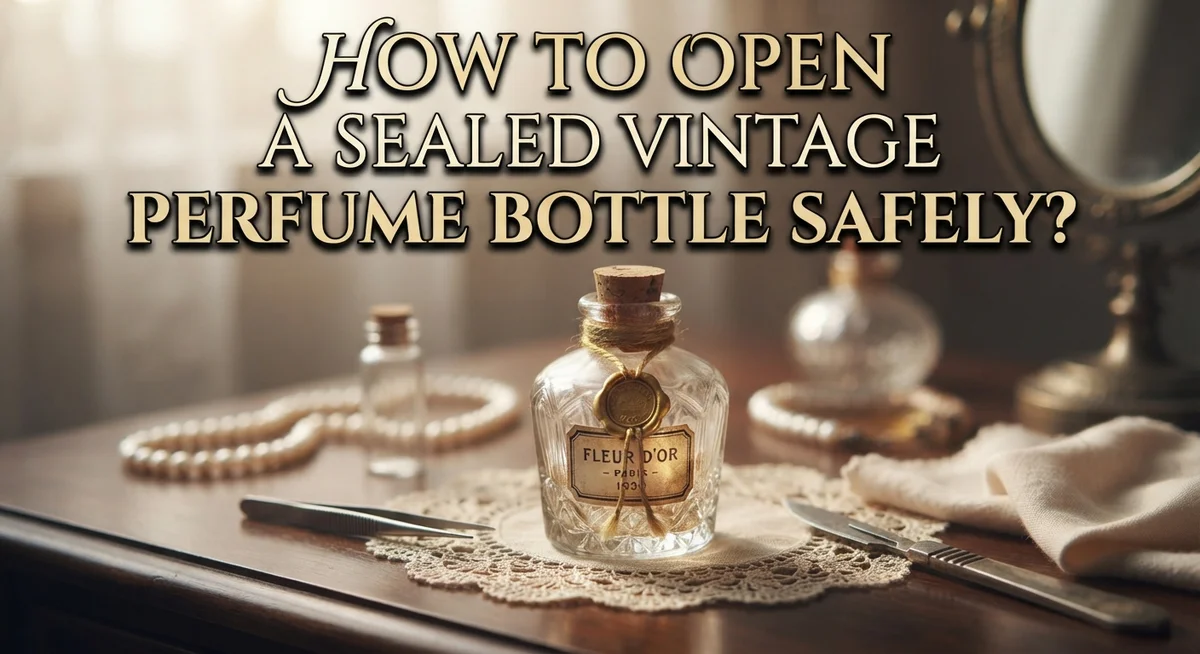
How to Open a Sealed Vintage Perfume Bottle Safely
Vintage perfume bottles hold beautiful scents from the past. But their stoppers often get stuck tight over time.
Dried perfume acts like glue inside the neck. Temperature changes make the seal even tighter. This leaves many collectors stuck with a bottle they cannot open.
Do not force it. Pulling hard can crack the glass or snap the stopper. That mistake often ruins a rare find forever.
The good news is that safe methods exist. Simple tools and gentle heat can loosen even the most stubborn seals.
This guide walks you through each step. You will learn how to spot the ring or collar at the base. You will also learn how to apply gentle warmth without damaging the perfume inside.
By the end, you will know how to open a sealed vintage perfume bottle safely. You will do this with patience and the right technique, not brute force.
In a Nutshell
- Start gentle: Remove the outer cap first, then find the ring or collar near the sprayer base.
- Use heat wisely: Warm water or a hair dryer softens dried perfume that sticks like glue. This makes the stopper easier to move.
- Try temperature contrast: A warm compress followed by a short freezer soak can help loosen tough seals. This trick works well on very old bottles.
- Pick the right tools: Long nose pliers grip the ring safely. A small flathead screwdriver helps pry crimped seals without cracking glass.
- Twist slowly: Once the seal loosens, twist and pull the stopper with light pressure. Rushing this step often causes breakage.
- Avoid quick temperature shifts: Sudden hot to cold changes can crack glass instantly. Always transition gradually between heat and cold.
Why Vintage Perfume Bottles Get Stuck
Vintage perfume bottles get stuck for several specific reasons. Understanding why helps you open them safely without damage.
Dried perfume residue acts as a strong adhesive. Over decades, tiny amounts of fragrance seep into the neck area around the stopper. When this liquid evaporates, it leaves behind sticky deposits that bond the stopper to the glass. This natural glue hardens over time and becomes extremely difficult to break free.
Temperature changes play a major role too. Vintage bottles experience expansion and contraction as rooms heat and cool. Glass and metal respond differently to these shifts. The stopper may tighten further as materials contract, creating an even more stubborn seal.
Metal corrosion affects older bottles with metal components. Stoppers made from metal can oxidize or develop patina over decades. This corrosion creates microscopic rough spots that grip the glass more firmly.
Evaporation of the fragrance itself concentrates the remaining liquid. As perfume slowly evaporates through microscopic gaps, the remaining scent becomes thicker and stickier. This concentrated residue acts like super glue around the seal.
Dust and debris settle into the neck over time. Particles combine with dried perfume to form a compound seal that resists opening.
Age of the bottle matters significantly. Bottles from the 1950s or earlier face more severe sticking issues simply because more time has passed for these processes to occur.
The good news is that gentle heat softens dried perfume effectively. Warm water or a hair dryer can break down the adhesive properties without damaging the fragrance inside. This is why heat treatment works so well for stuck vintage bottles.
Tools and Supplies You’ll Need
Gathering the right supplies makes opening a sealed vintage perfume bottle much easier. You don’t need expensive or specialized equipment. Most items sit in your home already.
Warm water is your first line of defense. Fill a bowl or sink with warm (not boiling) water. This softens dried perfume that acts like glue inside the neck. A standard kitchen bowl works perfectly for this task.
A hair dryer offers another heating option. Set it to low or medium heat. Point it at the bottle neck for 30 to 60 seconds. This gentle warmth helps loosen stubborn seals without risking perfume damage.
Long nose pliers are essential for gripping the ring or collar. These pliers give you leverage without slipping. Choose ones with a comfortable grip. The extended nose reaches into tight spaces around the sprayer base.
A small flathead screwdriver helps with crimped seals. Use it gently to pry under the metal edge. Never force it or you’ll damage the vintage glass. Light pressure is all you need.
Soft cloth or towel protects your hands and the bottle. Wrap it around the glass to prevent slipping. It also provides cushioning if the stopper suddenly releases.
Ice pack or freezer access creates temperature contrast. After warming, place the bottle neck in a freezer for 15 to 20 minutes. This temperature shift can loosen tight seals.
Keep a small bowl of water nearby for soaking the neck. Submerge just the sealed area for several minutes. This softens residue buildup effectively.
Patience is your most valuable tool. Set aside 30 minutes for this task. Rushing causes breakage and disappointment with these fragile bottles.
Step-by-Step Guide to Safely Opening a Sealed Stopper
Start by removing the outer cap. This gives you clear access to the ring or collar sitting at the sprayer base. Set the cap aside in a safe spot.
Apply gentle heat first. Soak a soft cloth in warm water and wrap it around the bottle’s neck for two to three minutes. The warmth softens dried perfume that acts like glue. Alternatively, use a hair dryer on low heat, holding it six inches away for one to two minutes.
Once heated, try twisting the stopper gently. Use light pressure and rotate slowly in both directions before pulling upward. Many stoppers release after this simple step.
If the stopper stays stuck, use long nose pliers to grip the ring or collar carefully. Apply steady, gentle pressure as you pull upward. Avoid sudden jerking motions that risk breaking the glass or stopper.
For crimped seals, a small flathead screwdriver helps. Insert it gently between the seal and bottle neck, then pry with minimal force. Work around the entire seal gradually rather than forcing one spot.
Try temperature contrast if heat alone doesn’t work. Apply a warm compress for three minutes, then place the bottle in a freezer for twenty minutes. The expansion and contraction cycle loosens stubborn seals naturally.
Soak the neck in warm water while you wait. This softens residue buildup around the opening. Change the water every few minutes to maintain warmth.
Work slowly throughout the process. Patience prevents accidents. If resistance continues after several attempts, stop and let the bottle rest overnight. Sometimes seals loosen on their own after heat treatment breaks the initial bond.
Using Heat and Cold to Loosen a Stubborn Seal
Heat and cold work together to break the grip that holds vintage perfume bottles shut. When you alternate between warm and cool temperatures, the materials expand and contract at different rates. This movement creates tiny gaps that help release stubborn seals.
Start by applying warm water to the bottle’s neck. Wrap a soft cloth soaked in warm water around the area where the stopper meets the bottle. Leave it there for two to three minutes. The heat softens dried perfume residue that acts like cement.
After warming, try twisting the stopper gently with your hands. Many seals loosen at this stage. If nothing happens, move to the next temperature shift.
Cold temperatures create the opposite effect. Place an ice pack against the neck or put the entire bottle in your freezer for about twenty minutes. The cold makes materials contract slightly. This contraction can break the seal’s hold.
Repeat this cycle if needed. Warm the neck again with your cloth. Wait a few minutes. Then apply cold. Do this two or three times before attempting to open the stopper.
Why does this method work? Vintage bottles contain glass, metal components, and dried perfume. Each material responds differently to temperature changes. The repeated expansion and contraction creates stress on the seal itself.
Important: avoid sudden extreme temperature shifts. Never pour boiling water directly on the bottle. Never move it straight from boiling water to freezing temperatures. These drastic changes can crack the glass instantly.
Work slowly and let each temperature stage do its job. Patience prevents costly damage to your vintage treasure.
Handling Crimped Metal Seals and Sprayer Collars
Crimped metal seals and sprayer collars require a specific approach. These components sit at the base of the sprayer and often become locked due to dried perfume and oxidation over decades.
Start by examining the collar closely. Look for small ridges or crimped edges that hold the sprayer in place. This design was common on vintage bottles because it prevented leaks during storage and shipping.
Apply warm water around the neck where the collar meets the bottle. Let the heat soak into the dried residue for two to three minutes. This softens the perfume buildup that acts as an adhesive between the metal and glass.
Grip the collar gently with long nose pliers. Position the pliers so they hold the ring without slipping. Pull slowly and steadily rather than jerking. Many collectors make the mistake of pulling too hard, which can crack the glass or bend the metal permanently.
For deeply crimped seals, use a small flathead screwdriver. Insert the flat edge gently between the collar and the bottle neck. Apply light pressure to ease the seal open gradually. Work your way around the entire collar, not just one spot.
Twist the stopper while applying upward pressure. The combination of heat, moisture, and mechanical assistance usually works together. If resistance continues, soak again and repeat.
Never force a stuck collar. Patience prevents costly damage to valuable vintage pieces. Some seals may require multiple heating cycles over several hours. The dried perfume inside needs time to soften completely before the seal releases.
Mistakes That Can Damage Your Bottle or Perfume
Damaging your vintage perfume bottle during opening happens quickly. The biggest mistake is using too much force. When you pull or twist hard, the glass neck can crack, or the stopper can shatter inside the bottle. Once this happens, recovery becomes nearly impossible.
Rapid temperature changes cause real problems too. Jumping from boiling water directly to ice creates stress on the glass. The sudden shift makes the material contract and expand too fast. This stress can cause hairline fractures that aren’t visible at first but grow over time.
Skipping the heat treatment altogether is another common error. Many people try to force open a sealed bottle right away. The dried perfume acts like glue, so mechanical force becomes your only option. This approach almost always leads to breakage.
Using the wrong tools damages both the bottle and the seal. Sharp or rough tools scratch the vintage glass or gouge the stopper. Avoid using screwdrivers directly on the bottle’s surface. Metal-on-glass contact leaves permanent marks.
Ignoring the neck area causes problems too. The seal tightens most around where the stopper meets the bottle. If you focus only on the stopper itself, you miss the real problem. The residue in this zone needs softening first.
Impatience ruins more vintage bottles than anything else. Rushing the process means skipping steps that actually work. Each heating or cooling cycle needs time to do its job. Waiting 5 to 10 minutes between attempts prevents damage.
Finally, applying heat directly to the perfume inside is risky. The liquid inside can degrade from excessive warmth. Always heat the outside of the bottle, not the contents. This protects both the fragrance and the glass.
Troubleshooting Especially Stubborn or Fragile Bottles
When a vintage perfume bottle refuses to budge, you’re likely dealing with dried perfume residue that acts like glue. This situation requires patience and the right approach to avoid costly damage.
Start by identifying what type of seal you’re facing. Some bottles have simple stoppers, while others feature crimped metal collars or rings. Look closely at the neck area to determine your next move.
For extremely stubborn bottles, combine heat with gentle mechanical pressure. Soak a cloth in warm water and wrap it around the neck for five to ten minutes. This softens the hardened perfume without exposing the liquid inside to excessive heat.
Next, try twisting gently with your hands. If nothing moves, use long nose pliers to grip the stopper ring carefully. Apply steady upward pressure while twisting slowly. The key is consistency, not force.
For crimped seals that won’t budge, a small flathead screwdriver can help. Insert it gently under the crimped edge and apply light leverage. Work your way around the seal gradually rather than forcing one spot.
If you hit resistance, stop immediately. Applying excessive force breaks glass and ruins stoppers. Instead, repeat the warm water soak and wait longer.
Never apply direct heat to the perfume itself. This damages the fragrance composition. Stick to warming only the exterior neck and seal area.
Some bottles need multiple cycles of heat and patience. Soak, wait, twist gently, then repeat if necessary. Rushing this process turns a salvageable bottle into a broken one.
Remember that vintage bottles are fragile. Taking an extra thirty minutes beats replacing an irreplaceable piece.
Caring for Your Bottle After It’s Opened
Once your vintage perfume bottle is finally open, proper care keeps it in excellent condition. The glass may feel fragile after years of being sealed, so handle it with respect.
Store your opened bottle in a cool, dark place away from direct sunlight. Heat and light break down perfume over time and fade the liquid. A closet, cabinet, or drawer works perfectly. Avoid windowsills and bathroom shelves where temperature swings happen constantly.
Keep the stopper clean and dry before replacing it. Perfume residue on the stopper can harden again and make future opening difficult. Wipe the stopper gently with a soft, dry cloth. Let any moisture evaporate completely before sealing the bottle.
If your bottle originally had a spray mechanism, test it carefully with gentle pressure. Some vintage sprayers work beautifully after opening. Others may need occasional priming. Never force a stuck sprayer, as the mechanism inside can break easily.
Consider storing your perfume in its original box if you have it. The box provides extra protection from light and temperature changes. This also helps preserve any historical value the bottle might have.
Check the seal regularly even after opening. If you notice the stopper feels loose, you can gently reseal it by twisting. Don’t apply force. A loose stopper allows perfume to evaporate faster, which changes the scent over time.
For particularly valuable vintage bottles, store them upright in a stable location. Laying bottles on their side risks leaking if the seal isn’t perfect. Keep the bottle away from extreme cold or heat.
These simple habits keep your vintage perfume fresh and your bottle safe for years to come.
Final Thoughts
Opening a sealed vintage perfume bottle takes patience and a gentle touch. Rushing the process often leads to broken stoppers or cracked glass. Slow and steady wins every time.
Heat and cold cycles remain your best friends here. Warm water, a hair dryer, or a brief freezer soak all help loosen dried residue. These simple methods work better than force ever will.
Remember that every bottle tells a different story. Some open easily after one heat treatment. Others need several rounds of warming and cooling before the seal finally gives way.
Long-nose pliers and small flathead screwdrivers help you handle stubborn rings and crimped seals. Use these tools with care and light pressure only. They should assist you, not replace patience.
Your goal is simple: protect the bottle and the fragrance inside. A cracked bottle or damaged stopper cannot be undone. Taking extra time now saves heartbreak later.
Vintage perfume bottles carry history and value. Many are decades old and hard to replace. Treating them gently honors their age and craftsmanship.
If a bottle feels too risky to open alone, consider asking someone experienced with antique glass for guidance. There’s no shame in seeking extra hands or advice.
Once open, proper storage keeps your perfume safe for years. Cool, dark spaces work best for both scent and bottle.
In the end, opening a sealed vintage perfume bottle is about respect. Respect for the glass, the fragrance, and the process itself. Move slowly, stay calm, and let heat do the hard work.
Your reward is a beautifully preserved bottle and a scent that has waited patiently to be enjoyed again.
Frequently Asked Questions
Why does my vintage perfume bottle stay sealed so tightly?
Vintage bottles seal themselves over time. Dried perfume residue hardens around the stopper and acts like adhesive. Temperature shifts inside cabinets or storage spaces also cause the glass and stopper to expand and contract differently, making them grip each other tightly. This is completely normal for old bottles that haven’t been opened in years.
Can I use heat without damaging the perfume inside?
Yes, you can use gentle heat safely. Warm water works best for loosening the seal without overheating the fragrance. Soak a cloth in warm (not boiling) water and wrap it around the bottle neck for a few minutes. A hair dryer on low heat also works well. Avoid direct flame or extreme temperatures, which can alter the scent.
What tools should I use to open a stuck stopper?
Long-nose pliers are ideal for gripping the ring or collar at the sprayer base. Wrap a soft cloth around the pliers first to protect the glass. For crimped seals, a small flathead screwdriver helps gently pry without forcing. These simple tools give you better control than using bare hands.
What should I do if the bottle won’t budge after trying heat?
Stop and wait. Repeat the heat cycle. Apply warm water again, wait 10 minutes, then try gentle twisting. Patience prevents breakage. If it still resists after several attempts, the seal may need professional help. Never force it, as vintage glass breaks easily and repair costs are high.
Is it normal for vintage perfume to smell different after opening?
Yes, some change is normal. Sealed bottles preserve scent better, but old perfume naturally fades over decades. The top notes may have oxidized. The fragrance should still smell pleasant, just perhaps lighter or slightly different than when first bottled.

Hi, I’m Lily! I started this blog to share honest reviews, real comparisons, and helpful guides so you can find your perfect scent without the guesswork. Welcome to my scented world!