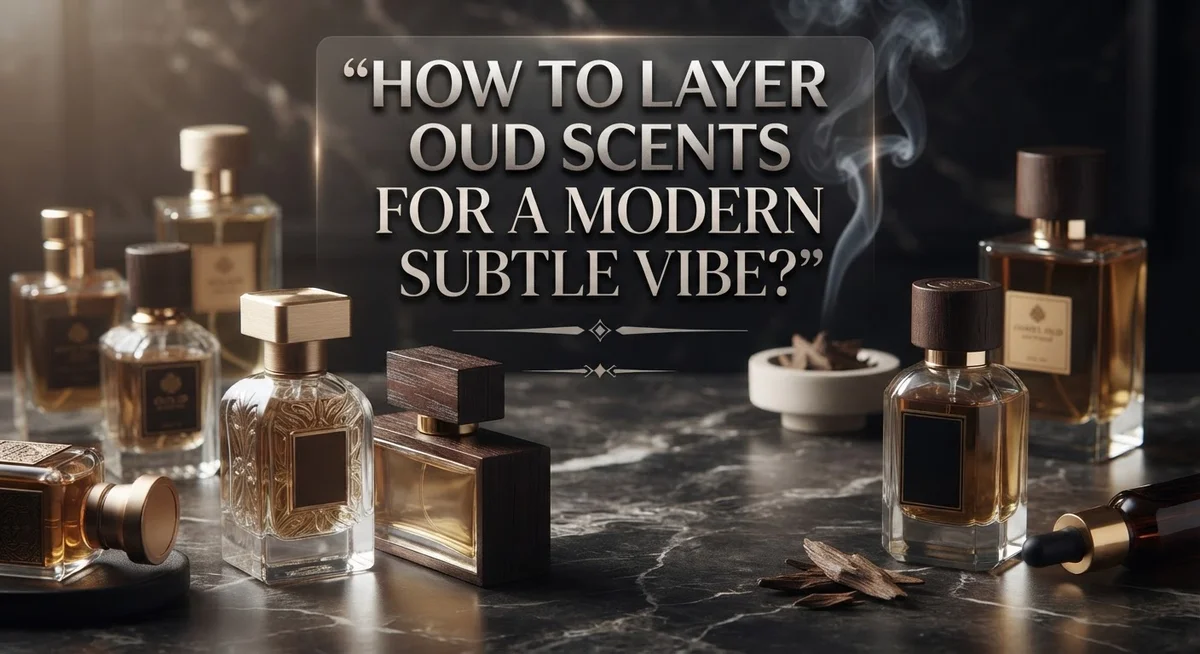
How to Layer Oud Scents for a Modern Subtle Vibe?
Oud has a bold, deep smell. Many people love it but worry it feels too strong for daily wear.
The good news is you can soften oud without losing its charm. Layering is the secret trick perfumers use every day.
When you layer scents the right way, oud turns into something smooth and modern. It stops feeling heavy and starts feeling elegant.
This article will show you how to layer oud for a subtle, wearable vibe. You will learn the correct order to apply your scents.
By the end, you will know how to build your own signature oud scent. It will feel personal, modern, and never overpowering.
In a Nutshell
- Start with clean skin. Moisturized skin holds scent better and helps oud blend smoothly.
- Apply oud first. It works as your base layer. Always put deep, heavy scents down before lighter ones.
- Wait about 60 seconds. Let the oud settle on your skin before adding another layer on top.
- Add a lighter scent next. A dab of rose, vanilla, amber, or sandalwood pairs beautifully with oud.
- Use pulse points. Wrists, neck, and behind your ears help fragrance diffuse naturally through the day.
- Keep it light. One swipe per layer is enough. Too much product overwhelms the balance you are trying to build.
Understanding Oud as a Layering Base
Oud works best as your layering foundation because of its deep, complex character. This heavy scent anchors everything else you add on top. Think of oud like the base coat in painting. It sets the tone for your entire fragrance experience.
The reason oud functions so well as a base layer comes down to its molecular structure. Oud contains woody, resinous compounds that sit close to your skin. These compounds develop and deepen as they warm up. Lighter scents would disappear quickly without this foundation beneath them.
When you apply oud first, you create what fragrance experts call a “scent profile.” Your skin becomes the canvas. The oud settles into your pulse points and creates a stable platform. This stability lets you add complementary fragrances without them clashing or fading.
The depth of oud also means it won’t get overpowered by lighter layers. A floral or citrus scent on top will shine without being absorbed into the background. Instead, these lighter notes dance above the oud base. You get dimension and complexity without chaos.
Starting with oud also gives you control over your final scent’s intensity. A subtle oud base means your whole fragrance stays understated. You can wear it to professional settings or casual outings. The oud provides richness without screaming for attention.
Understanding this base layer concept changes how you think about fragrance. You’re not just spraying random scents together. You’re building a structure. Oud provides the framework. Everything else you layer becomes part of a cohesive whole.
This approach also saves you money on fragrance. You use less product overall because each layer serves a specific purpose. The oud does the heavy lifting. Your complementary scents enhance rather than replace it.
Step-by-Step Guide to Layering Oud Scents
Start by preparing your skin. Wash your wrists and neck with gentle soap, then pat dry. Apply a light, fragrance free moisturizer to these areas. Hydrated skin holds scent better and helps your layers stay put throughout the day.
Next, apply your oud oil or oud based fragrance to your pulse points. These warm spots include your inner wrists, the base of your neck, and behind your ears. Use just one small swipe or single spray per location. The warmth from these areas helps the scent develop naturally on your skin.
Wait approximately 60 seconds before moving to the next step. This pause lets the oud settle and begin bonding with your skin. You’ll notice the scent starts to evolve during this time. Rushing this step weakens your layering effect.
Now apply your complementary fragrance with a light touch. Choose something lighter or sweeter than your oud base. A single dab on each pulse point works perfectly. Avoid spraying multiple times or applying thick amounts.
Press your wrists together gently, but do not rub them. Rubbing breaks down fragrance molecules and speeds up scent fade. Instead, let the warmth from your body do the work.
The key is restraint. Many people layer too heavily and create an overwhelming scent cloud. Subtle layering means people notice your fragrance only when they’re close to you. This modern approach feels sophisticated and controlled.
Allow 2 to 3 minutes for your complete layered scent to fully develop. Your skin chemistry will continue blending the layers together. The final result should smell like one cohesive fragrance, not separate scents competing for attention. This seamless blend is what makes layering so effective for creating your personal signature scent.
Best Complementary Notes to Pair with Oud
Oud pairs beautifully with specific notes that enhance its depth without overwhelming your skin. Understanding these complementary pairings helps you build a modern, subtle scent that feels intentional and balanced.
Rose stands as the classic pairing with oud. The floral sweetness of rose softens oud’s woody intensity while adding elegance. This combination creates a sophisticated, timeless effect that works for both day and evening wear. The result feels refined rather than heavy.
Vanilla brings warmth and coziness to oud’s complex character. Vanilla adds sweetness that makes oud feel more approachable and wearable. This pairing works especially well if you want oud to feel comforting rather than bold. The combination appeals to people who prefer gourmand scents.
Amber creates a mysterious, deeper layering option. Amber amplifies oud’s richness without adding lightness. Use this pairing when you want maximum impact and don’t mind a stronger presence. Both notes share similar intensity levels, so they blend seamlessly.
Sandalwood offers a smooth, creamy complement to oud. Both are woody notes, but sandalwood feels softer and more refined. This pairing creates harmony because the notes speak the same fragrance language. The result feels cohesive and intentional.
Citrus notes like bergamot or lemon provide a fresh contrast. Citrus cuts through oud’s heaviness and adds brightness. This pairing works best for people who want oud with a modern, airy quality. The freshness prevents the scent from feeling dated or overly traditional.
Spices such as cardamom or pepper add intrigue without sweetness. Spices warm up oud while maintaining its sophisticated edge. This pairing appeals to people who want complexity without florals or gourmand elements.
When choosing your complementary note, consider your personal style. Do you prefer sweetness, freshness, or spice? Match the intensity of your chosen note to your oud base. This balance ensures your layered scent feels modern and wearable rather than confused or clashing.
How to Balance Intensity and Projection for Subtlety
Achieving subtlety with oud scents comes down to one principle: less is more. Many people think layering means adding more fragrance. In reality, it means strategic application with restraint.
The first step is understanding your fragrance intensities. Oud oils tend to be strong and long lasting. Your complementary layer should be noticeably lighter. If you pair two equally intense scents, you create an overwhelming effect instead of a subtle one.
Start by applying your oud to pulse points with just one swipe. This is crucial. One swipe, not multiple applications. Your wrists, neck, and behind your ears are ideal spots because body heat helps diffuse the scent gradually throughout the day.
Wait the full 60 seconds before adding your second layer. This pause lets the oud settle into your skin. Rushing this step causes the scents to blend chaotically rather than layer cleanly.
When you apply your complementary fragrance, use an even lighter touch. A single dab works better than a spray for layering purposes. Sprays tend to be harder to control and often result in too much product.
Temperature and humidity matter too. On warm days, scents project more strongly. In these conditions, reduce your application amounts further. On cooler days, you can apply slightly more without overwhelming those around you.
The time between applications also affects subtlety. Waiting 2 to 3 minutes between your first and second layer allows proper settling. This prevents the scents from competing with each other.
Test your layering on yourself first. Spend a few hours wearing your combination before wearing it around others. You’ll notice how the scent evolves. Many layered combinations smell better after an hour than they do immediately after application. This development is what creates that modern, subtle vibe you’re seeking.
Tips for Building a Modern, Understated Signature Scent
Building a modern, understated signature scent requires intentional choices about which fragrances you combine and how much you use. The goal is creating something that whispers rather than shouts.
Start by selecting only two fragrances for your layering routine. One should be your oud base, and the other should be a cleaner or sweeter complement. This simplicity keeps your scent from becoming muddled or heavy. More layers mean more complexity, which can actually work against subtlety.
Pay close attention to matching intensity levels between your two choices. If you pair a concentrated oud oil with a light cologne, the balance shifts awkwardly. Instead, match similar strength fragrances so neither one dominates your skin. This creates harmony rather than conflict.
Application restraint makes the biggest difference in achieving an understated vibe. Use just one swipe of oud on your pulse points. After waiting 60 seconds, apply your complementary fragrance with an even lighter touch. Think of it as a single dab rather than a spray. Your goal is a scent that only people close to you can detect.
Consider your daily environment when building your signature scent. Office settings call for lighter applications than evening events. Warm weather requires less fragrance overall since heat amplifies scent projection. Cold seasons allow slightly more generous layering.
Test your combinations on yourself before wearing them into public. Spend a full day with your layered scent to see how it develops on your skin. Notice whether it fades appropriately or lingers too long. Pay attention to how your body chemistry affects the blend.
Consistency matters when building a signature scent. Wear the same combination regularly so your nose adjusts to it. This familiarity helps you recognize when your layering technique is working perfectly. Over time, you’ll develop an intuition for exactly how much of each fragrance creates your ideal modern, subtle result.
Common Mistakes to Avoid When Layering Oud
When layering oud scents, several mistakes can ruin your subtle effect. Understanding these pitfalls helps you create a balanced, modern fragrance experience.
Applying scents in the wrong order is the most common error. Many people spray their lighter fragrance first, then add oud on top. This reverses the proper foundation. You should always apply your heaviest scent (oud) first. Then add lighter, complementary notes afterward. Think of it like building a house. You need a strong base before adding walls.
Using too much product per layer destroys subtlety immediately. One swipe of oud oil is enough. One light spray of your second fragrance completes the job. More product does not mean better results. It creates an overwhelming cloud that announces your presence from across the room. This defeats the modern, understated goal.
Mismatching fragrance intensities causes an unbalanced blend. Pairing a heavy, intense oud with a delicate, airy fragrance creates conflict. Your scents compete rather than complement each other. Choose fragrances with similar strength levels. If you use a bold oud, pair it with another moderately strong scent.
Skipping the settling time prevents proper blending. After applying oud, wait a full 60 seconds. This lets the scent develop and bond with your skin. Then apply your second layer. Rushing this step means your fragrances never truly merge.
Layering too many scents confuses the overall effect. Beginners especially struggle with this. Start with just two fragrances. Master that combination before experimenting with three or more layers. Two well-chosen scents create sophistication. Four or five create chaos.
Not testing on yourself first leads to public disappointment. Always test your combination at home. Wear it for several hours. Notice how it develops and projects. This prevents awkward surprises when you’re out in the world.
Troubleshooting Overpowering or Uneven Scent Layers
When your oud layers smell overpowering or uneven, the problem usually stems from application technique rather than the fragrances themselves. Let’s fix this.
Overpowering scent happens when you apply too much product. Each layer should use only a tiny amount. One swipe of oud oil or one light spray of complementary fragrance is enough. If you’ve already applied too much, don’t add more layers on top. This makes the problem worse, not better.
Uneven scent distribution occurs when you skip pulse points. Your body heat activates fragrances at these locations (wrists, neck, behind ears). Apply your oud directly to these spots. Wait 60 seconds. Then apply your second fragrance to the same pulse points. This ensures both layers diffuse evenly across your body.
Check your settling time between layers. If you rush and layer too quickly, the scents don’t blend properly. They smell like separate fragrances fighting each other instead of one cohesive scent. The full minute of waiting time matters more than you think.
Intensity mismatch causes uneven projection too. If your oud is very strong but your complementary fragrance is light, the oud dominates and overpowers everything. Match the intensity levels of both fragrances. Both should be similarly strong or similarly subtle.
If your layers already smell bad, start fresh. Shower or wash your skin to remove the fragrance. Let your skin dry completely. Then begin again with smaller amounts. Apply oud first with just one swipe. Wait the full 60 seconds. Apply your complementary scent with an equally light touch.
Remember that less product always produces better results with oud. The goal is a subtle modern vibe, not maximum projection. Your nose adjusts to scent quickly, so what feels light to you actually projects more than you realize.
Final Thoughts
Layering oud scents is a simple way to create a modern and subtle signature scent. You don’t need many products or complicated steps.
Start with clean skin and apply your oud oil first. Let it settle before adding your second fragrance.
The key to success is balance. Match your fragrance intensities so one layer doesn’t overpower the other. Use small amounts on pulse points for the best diffusion.
Oud pairs beautifully with rose, vanilla, amber, or sandalwood. Each combination creates a different mood. Rose feels elegant. Vanilla feels warm. Amber feels bold. Sandalwood feels smooth and creamy.
Remember that subtlety comes from restraint. Less product always works better than more. A single swipe per layer gives you a refined scent without overwhelming those around you.
Practice makes this process easier over time. Test your combinations at home first. Notice how the scents blend and change throughout the day.
Your body chemistry affects how oud layers develop on your skin. What works for someone else may smell different on you. This is normal and expected.
Building your own signature scent takes patience. Start simple with two fragrances. Once you feel comfortable, you can experiment with new combinations.
The goal is a scent that feels personal and modern. It should complement you, not distract from you. Subtle layering achieves this balance perfectly.
Oud offers depth and richness as a base note. When paired thoughtfully with lighter fragrances, it creates something unique and wearable. This makes it a wonderful foundation for any modern scent wardrobe.
Take your time exploring different pairings. Trust your nose and adjust as needed. With practice, oud layering becomes an easy and enjoyable ritual that reflects your personal style every day.
Frequently Asked Questions
How long should I wait between applying each oud layer?
Wait about 60 seconds between layers. This gives your first scent time to settle into your skin. If you layer too quickly, the fragrances won’t blend properly. Your skin chemistry needs a moment to activate the oud before you add the next scent.
Can I layer oud with any fragrance type?
Not really. Match your fragrance intensities for the best result. Heavy scents work with heavy scents. Light, fresh fragrances work with light fragrances. If you combine a strong oud with a delicate citrus, one will overpower the other. The goal is balance, not chaos.
What’s the best way to apply each layer without overdoing it?
Use one small swipe of oud oil on your pulse points first. Then apply just one light dab or spray of your second fragrance. Think minimalist. A tiny amount goes a long way with oud because it’s concentrated. More product doesn’t equal better scent. It equals overwhelming everyone around you.
Should beginners start with two scents or more?
Start with just two fragrances. One oud based product and one cleaner or sweeter scent. This keeps things simple while you learn how they interact on your skin. Once you master two layers, you can experiment with additional scents. Complexity comes later, not first.
How do pulse points help my oud layers smell better?
Pulse points have higher skin temperature. This heat activates fragrances and helps them diffuse naturally. Apply to your wrists, neck, and behind your ears. These spots create the best projection without you having to reapply throughout the day.

Hi, I’m Lily! I started this blog to share honest reviews, real comparisons, and helpful guides so you can find your perfect scent without the guesswork. Welcome to my scented world!